
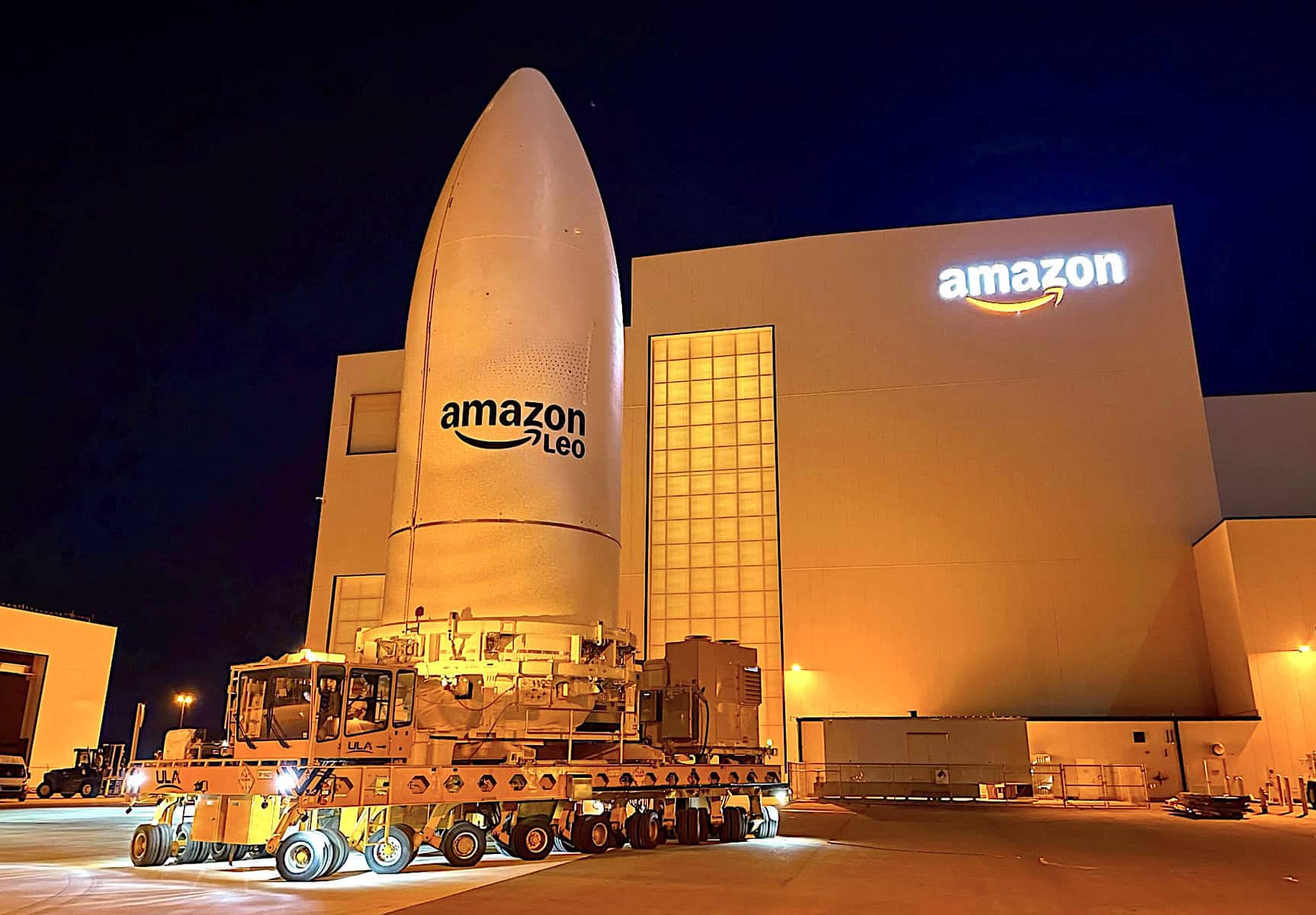
Credit: Amazon Leo
LA PLATA, Maryland — Amazon Leo officials outlined the multiple advantages their broadband constellation will have from its ties with AWS and said the constellation’s deployment in 2026 will accelerate with “bigger, badder rockets.”
The company has opened an Enterprise Preview website at LEO.Amazon.com to give prospective corporate customers an early sense of how subscriptions will work, but has not yet included any pricing details.
With the Dec. 16 launch of 27 satellites on a United Launch Alliance Atlas 5, Amazon Leo now counts 180 satellites in low Earth orbit. Under its US and International Telecommunication Union (ITU) license, it must launch half its 2,232-satellite network by July 31.
That’s 1,436 satellites in the next seven months, which will be challenge even if 2026 is the year when three new vehicles — Europe’s Ariane 64, Blue Origin’s New Glenn and ULA’s Vulcan Centaur — are scheduled to increase their launch cadence.
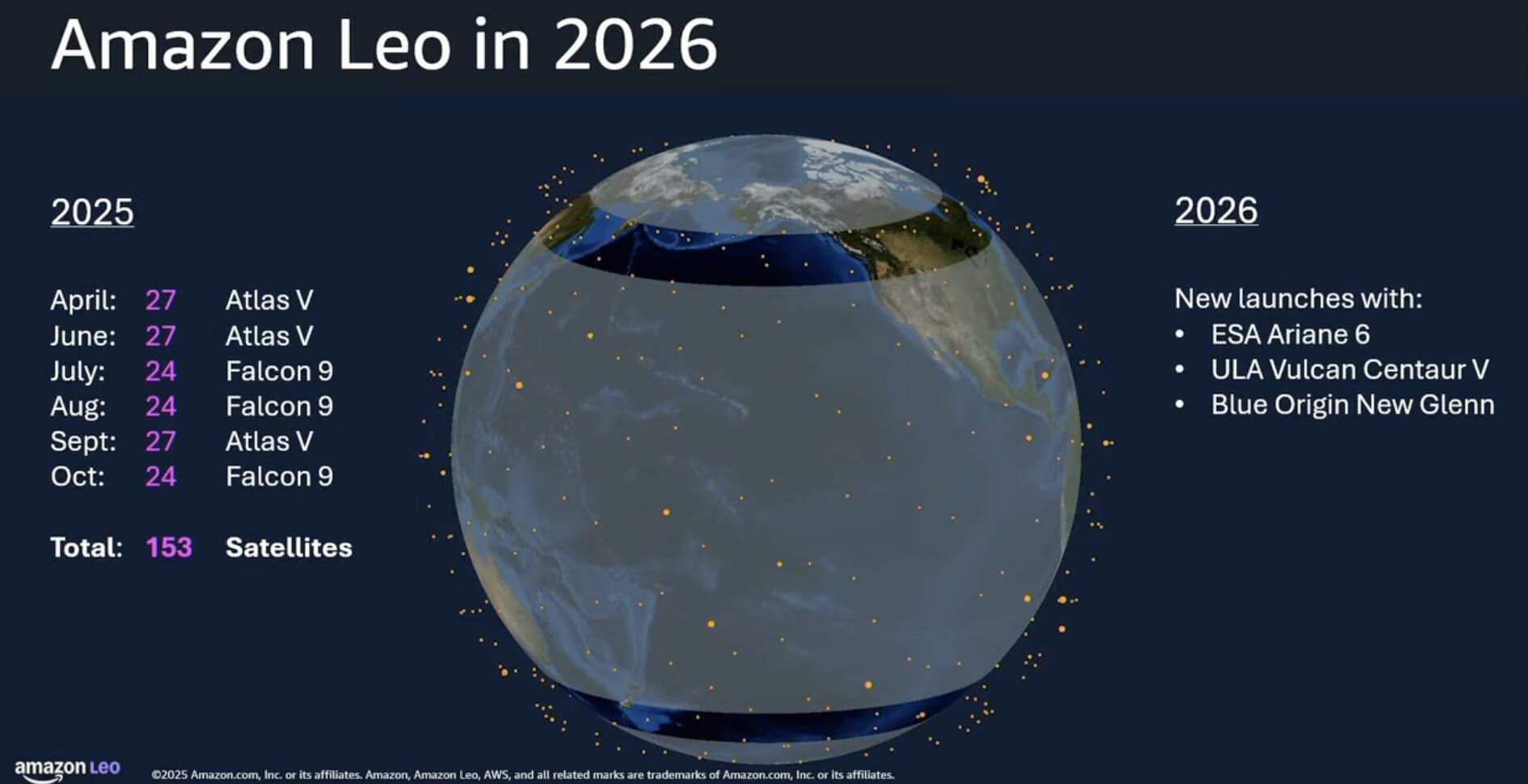
With the Dec. 16 ULA Atlas 5 launch, Amazon Leo now has 180 satellites in orbit. Credit: Amazon Leo
The Ariane 64 launch is expected in January. The 32 Amazon Leo satellites have arrived at Europe’s Guiana Space Center spaceport in French Guiana. The Ariane 62 has flown five times, including four missions in 2025. The Amazon Leo flight will be the vehicle’s first use of its more-powerful 64 configuration, with four strap-on boosters instead of two.
Launch provider Arianespace has 18 Amazon missions under contract. The company has planned eight Ariane 6 flights in 2026, including missions for Amazon and European government customers.
“In 2026, the [launch] cadence is going to increase,” said Nick Matthews, principal solutions architect at Amazon Leo. “We’re going to work on multiple missions and launches at the same time. We are working with vehicles that we paid for many, many years ago and that are just now coming on line. Our pace is going to increase and we’re all super-excited about that.”
In a presentation at the AWS re:Invent 2025 conference in Las Vegas, Matthews said New Glenn, Ariane 64 and Vulcan Centaur “are bigger, badder rockets and they launch more satellites at a time. We should have service in 2026.”
Amazon Leo is pitching its business model and its terminal product line as appealing to consumer, corporate and government customers — unlike Eutelsat OneWeb, which has been candid about being unable to compete with the volume and pricing of SpaceX’s Starlink terminals.
Credit: Amazon Leo
Amazon Leo will be drawing heavily on Amazon’s existing network developed from its retail business and experience with consumer product development.
“Our retail business — the ability to ship antennas around the world and to manufacture devices — we have experienced its that,” Matthews said. “And AWS and other parts of Amazon have built ASICs. Cloud services with Leo can run with AWS. Building strong APIs, all this Amazon has done before.”
Credit: Amazon Leo
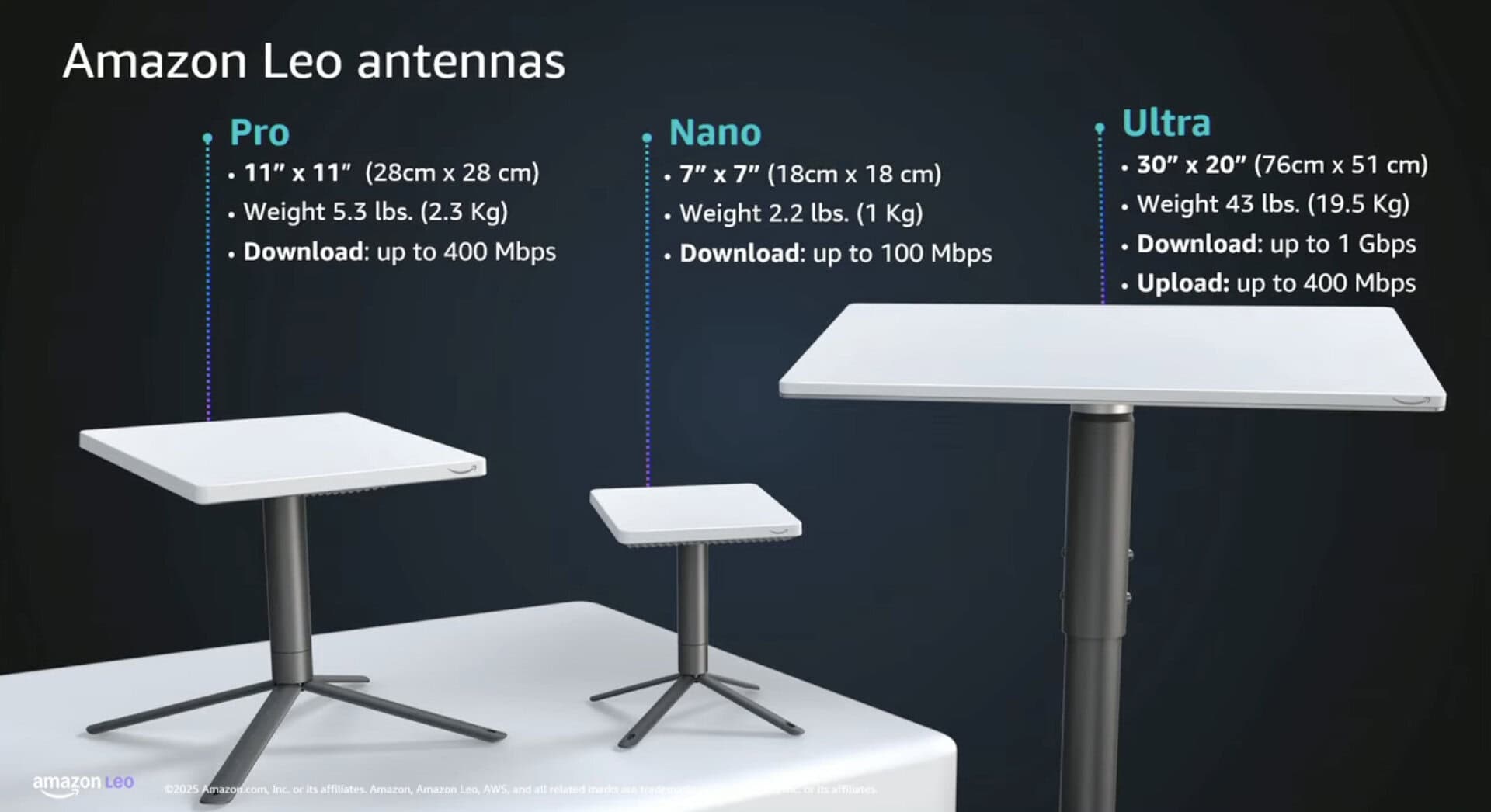
Amazon Leo is building three types of antennas — Nano for the mobile market, with terminals small enough to fit in a backpack; the Pro; and the 40-pound Ultra for corporate markets.
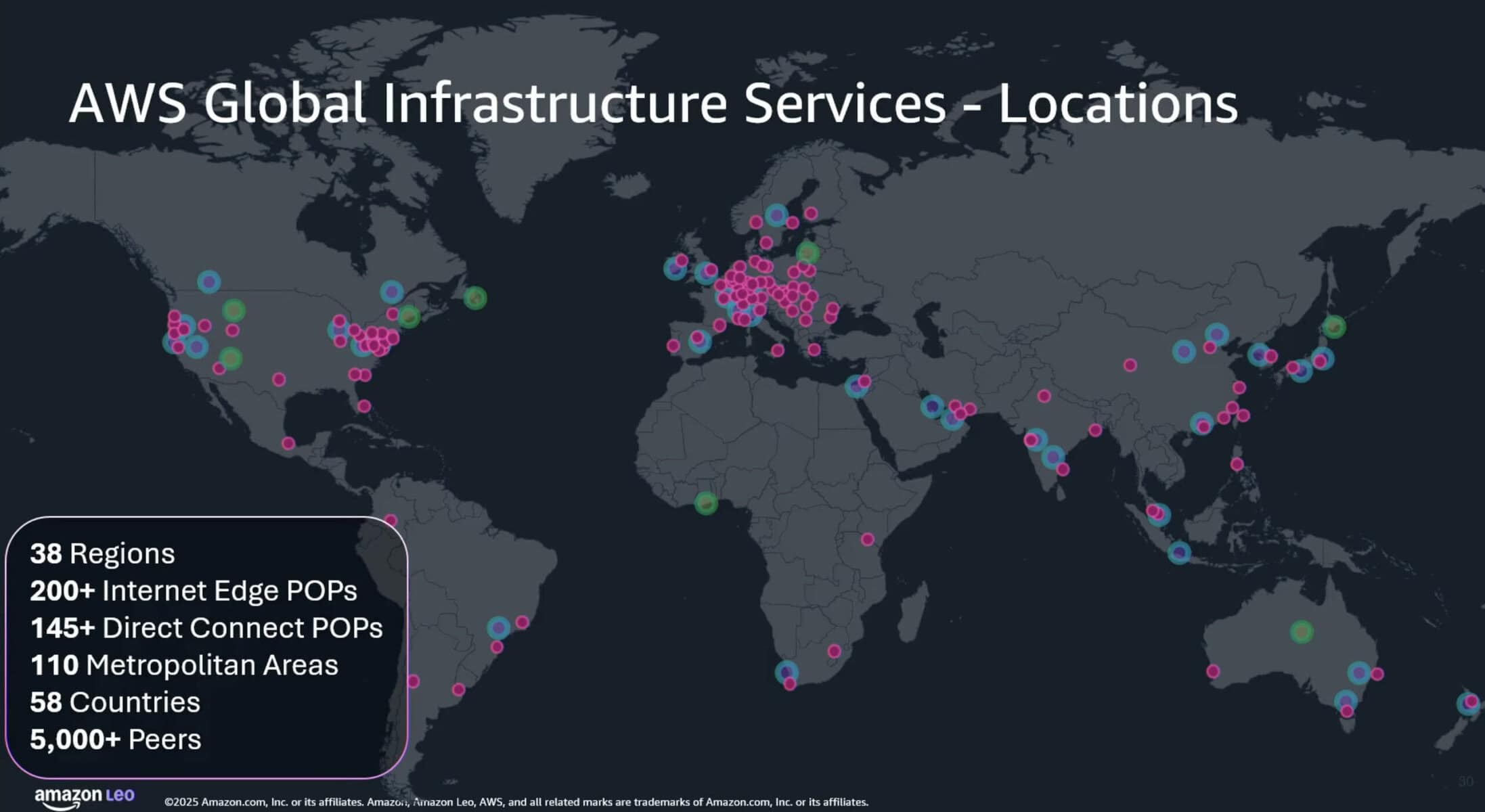
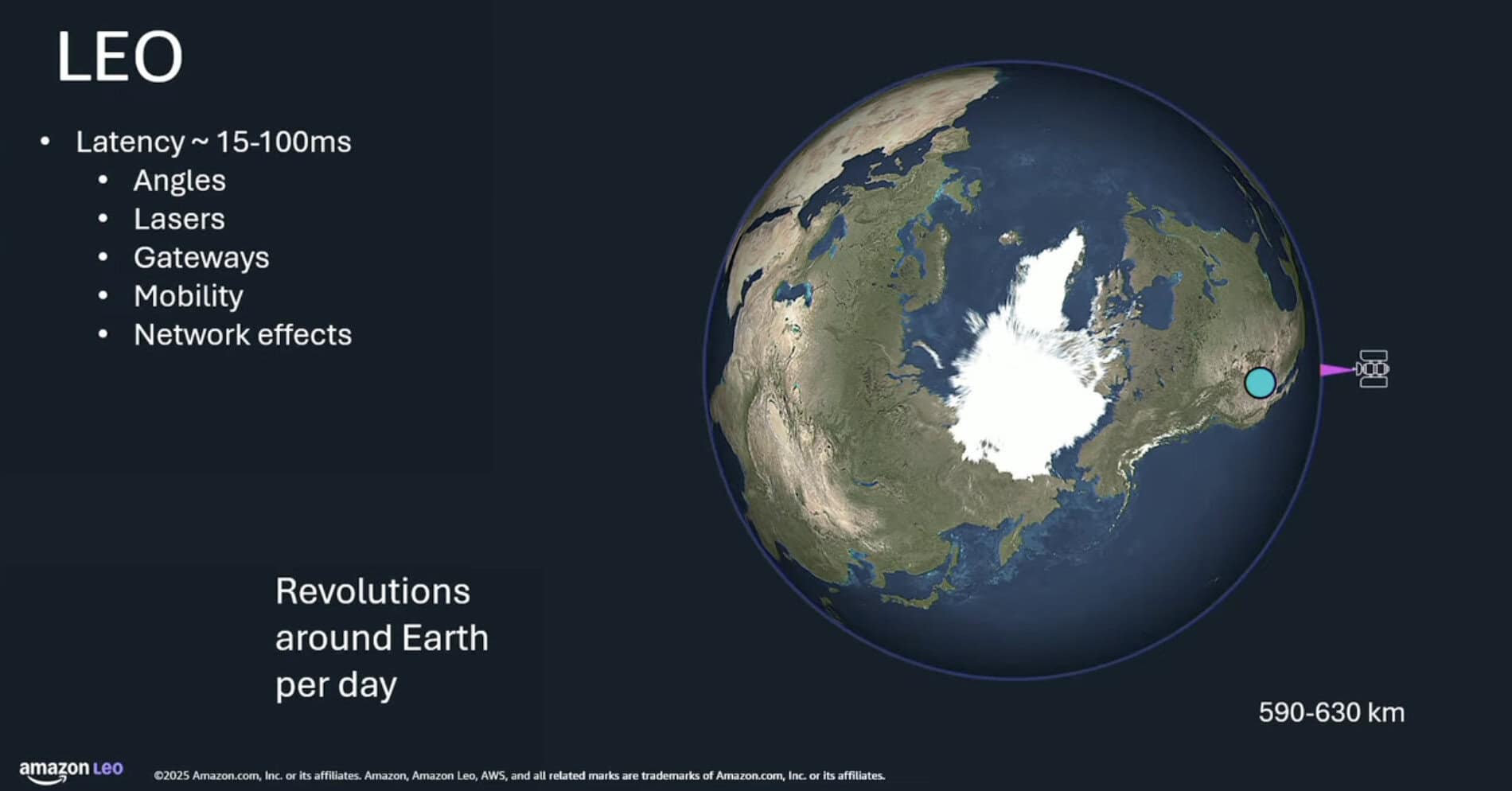
The network expects to have 300 gateway Earth stations, most of them located at or near AWS facilities. “The closer the gateway is to where you want to go, the less time you spend messing around in space. The gateway needs to be near the AWS network,” Matthews said.
Credit: Amazon LEO
With AWS, Amazon has access to more than 9 million kilometers of terrestrial and subsea fiber, a network that has grown 805 since the end of 2024. One feature Amazon Leo will offer customers is the option of never touching the public internet but remains on Amazon’s encrypted pathways, said Jonathan Phillibert, principal network development engineer at AWS Global.
“Amazon Leo were facing unique challenges and by working with AWS they were able to do some amazing things,” Phillibert said.
Credit: Amazon Leo
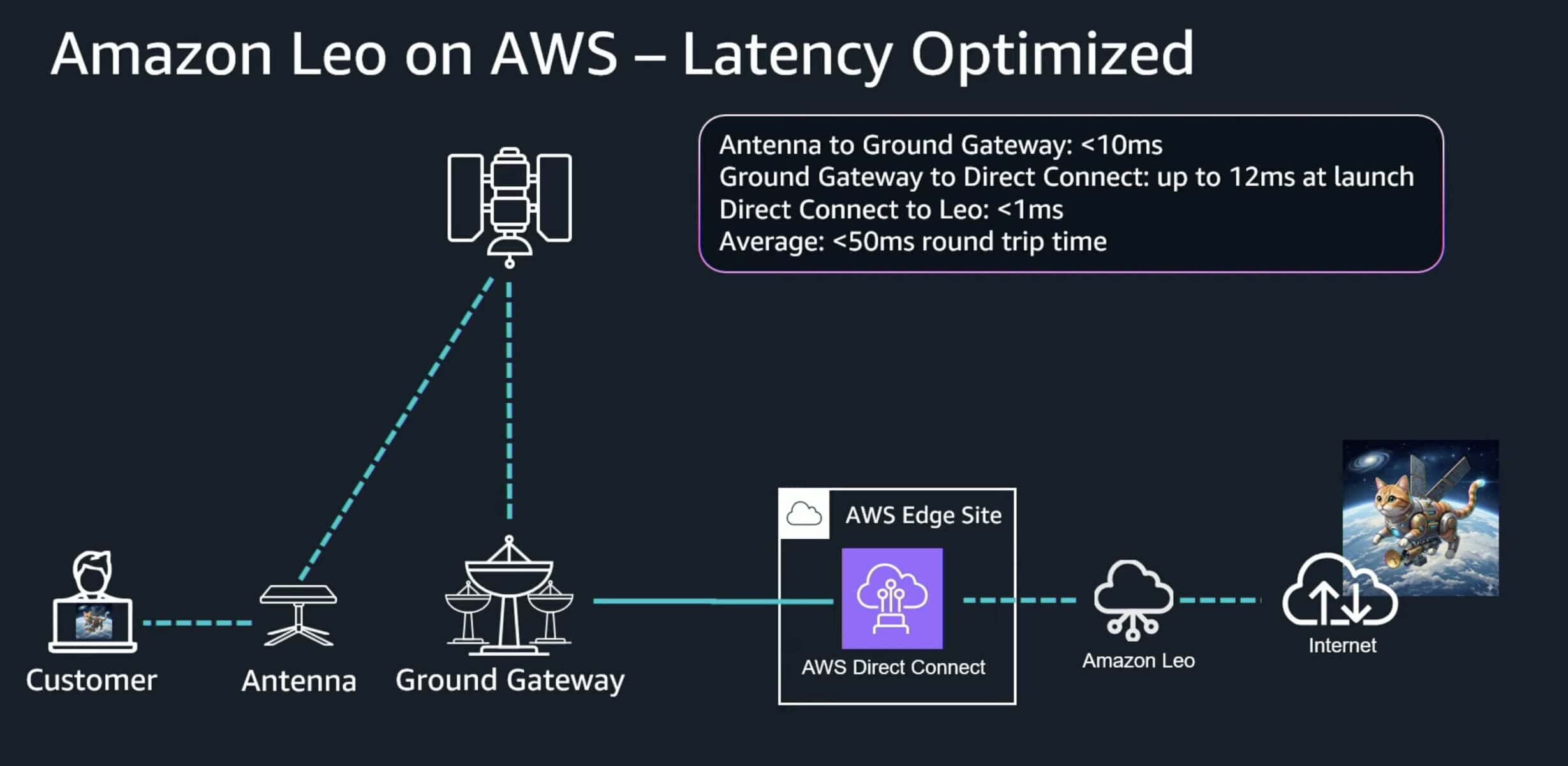
“AWS sites already exist in places where Amazon Leo wants to send traffic and it can benefit from a terrestrial network that already exists. It also just happens to be the cloud network with the highest throughput and lowest latency. It helps Leo provide service in more locations, faster.”
Phillibert said traffic from a ground terminal to a satellite and back to a gateway Earth station takes about 10 milliseconds. Gateway to an AWS link can add another 12 milliseconds, which “will come down as the additional ground gateways are deployed.”