
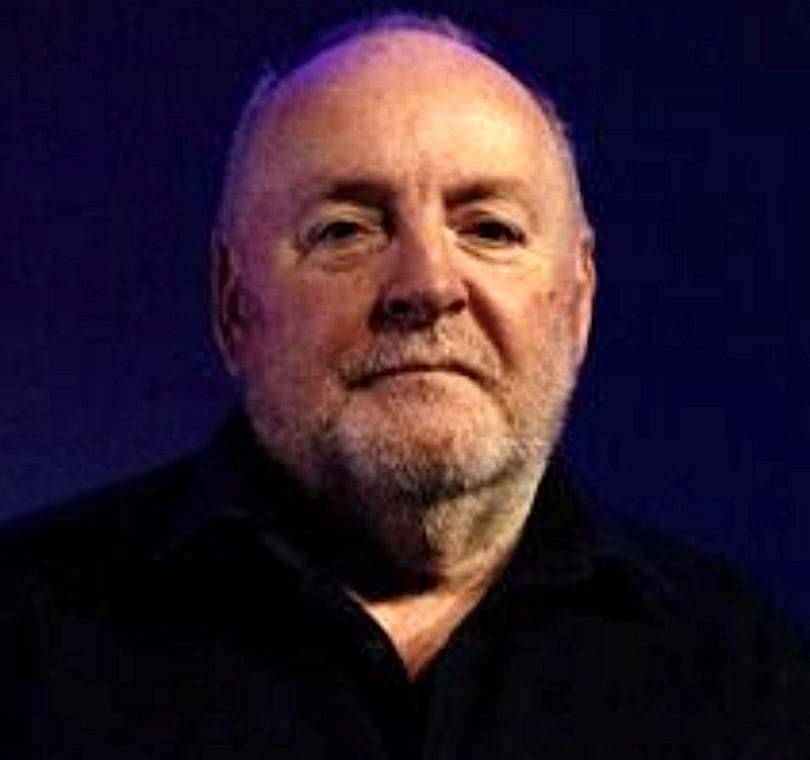
Philip Diamond. Credit: IAC
SYDNEY —Astronomers and mega-constellation operators SpaceX Starlink and Amazon Kuiper said they were satisfied that their joint efforts to reduce satellites’ interference with ground-based optical and radio astronomy observations, the Dark and Quiet Skies initiatives, were making progress.
They disagreed on whether international regulations were nonetheless needed to give the astronomers’ case the force of law.
During the first 50 minutes of a 55-minute panel discussion here Oct. 2 at the 76th International Astronautical Congress (IAC), the two sides discussed technical measures had been taken by SpaceX and Amazon, and even the observatories, to mitigate interference from thousands of low-orbit satellites zipping through astronomers’ fields of view.
It was only in the closing minutes that Philip Diamond, director-general of the Square Kilometer Array Observatory (SKAO) said that, despite all this, regulatory action was needed.
Diamond said SKAO has observer status at the UN Committee on the Peaceful Uses of Outer Space (COPUOS) and the International Telecommunication Union (ITU). COPUOS is where the action is for Dark and Quiet Skies work.
“On top of the technical activity. it’s essential, a place where the case can be made by the astronomers and the operators for the appropriate level of regulation,” Diamond said. “The pace of regulation is not what any of us would like, it’s glacial. It does not keep up with the technology and the changes in the LEO environment. Occasionally we see geopolitics intruding into the process.”
“But none of us must step back from this regulatory environment. We must all be pushing it. We all have pretty much the same goal in mind. We are working on the technical solutions but from the astronomers’ point of view, the rapid expansion of companies that are beginning to put systems up there makes it more challenging.
“We have good relations with Amazon Kuiper and SpaceX Starlink, but as more and more companies appear, we can’t keep up that connection with all of them. The regulatory approach is really what’s required for the long term.”
In an interview, Diamond expanded on his point.
Q: You covered SpaceX Starlink and Amazon Kuiper with praise in your remarks, but then said regulation is needed. Is this to assure that Starlink and Kuiper keep their commitments? Or is it to bring other operators up to the level of these two constellations in addressing the problem?
A: It’s more the latter. On an engineering level we have excellent relationships with the teams at Starlink and Amazon Kuiper. But there’s a big European initiative as well. And then there are at least two Chinese constellations.
China is a national member of the SKA Observatory, so we have connections in there. But there will be five or six constellations that could exist and it’s going to go on from there.
Q: Are the Chinese engaging you on this?
A: Yes. It helps that China is member nation of the SKAO. We have a connection there that other organizations may not. But the thing is, Regulation would maybe level the playing field.
Q: So those that are not engaging with you would have to?
A: Yes, exactly.
Q: That would require that the regulations get very specific instructions about what needs to be regulated.
A: That’s right, and that is why I have insisted that we have our membership within COPUOS and within the ITU. We are also one of the co-founders of the IAU Dark and Quiet Skies. It’s a multi-faceted approach that we have to make.
Q: It will be interesting to see if China’s affection for SKAO will extend to approving regulations on this.
A: That is a future challenge.

Anna Moore. Credit: IAC
Astronomer Anna Moore, director of the Institute for Space at Australian National University, agreed.
“Regulation is very important. But it takes a long time to get that. Sometimes solutions can happen before that’s in place. Our technology is incredibly dynamic and changing very quickly.”
David Goldlstein. Credit: YouTube video
Starlink’s David Goldstein and Josef S. Koller, head of space safety and sustainability at Amazon Kuiper, were on the panel but Goldstein attended remotely and had left before Diamond’s regulation remarks, leaving Koller to handle it alone.
“On reflectivity, we tried out different solutions,” Koller said. “There is no off-the-shelf solution available today. Satellites are very different, they have all kinds of hinges and nooks and crannies sticking out. The important part is the flat panels, in addition to the solar cells. We were able to develop a custom solution that lets us transmit through that dielectric mirror. We don’t lose any signal strength going through. On the visual light, we can actually reflect it away from the ground-based observatory.
“We have invested in modeling capabilities to see what we can change on the satellites, and also at ground-based observatories. We are starting to take our own measurements now of how reflective our satellites are. We can use that as an iterative process through modeling and upgrades to reduce the reflectivity of our satellites.
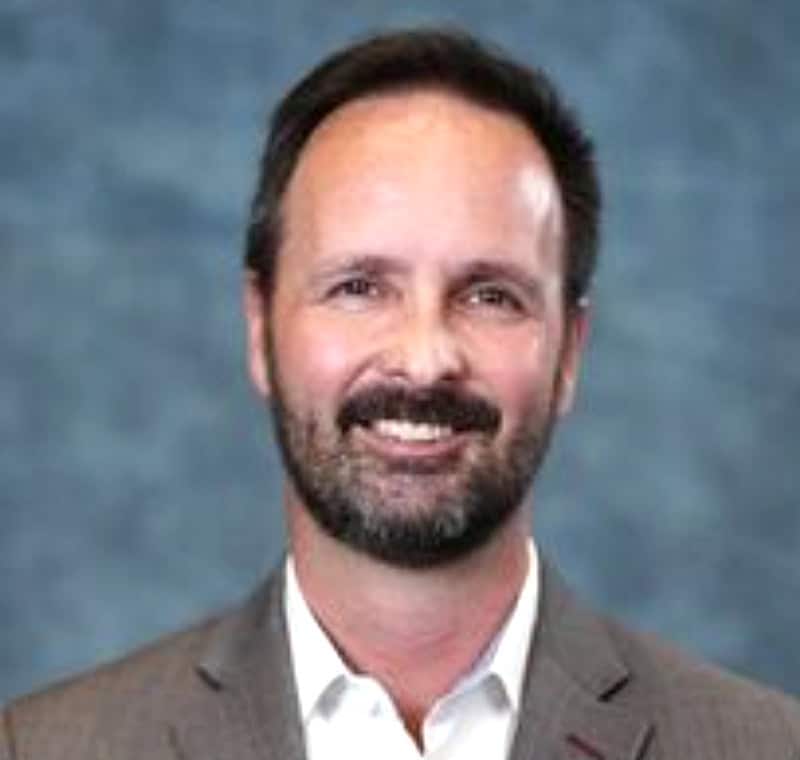
Josef S. Koller. Credit: IAC
“On the astronomy side, there are a number of tools and techniques, like image stacking or the use of AI, to remove the streaks; or putting in little mechanical shutters, because satellites actually fly very quickly through the field of view.
“There is an equal amount of interest on the astronomy side to develop tools and techniques.
“Dark and quiet skies is one of our four fundamental categories in how we think of sustainability. As part of that effort we have established collaborative relationships with a number of telescopes and observatories.
“We are active participants in the IAU [International Astronomical Union] Center for the Protection of Dark and Quiet Skies. It helps us better understand the needs of the astronomy community. We can take that into account as we are developing solutions to mitigate or reduce reflectivity and use beam steering.
“All these are technologies were developed without the need for very specific regulation. Let’s face it: We are space geeks as well, just like the astronomers and we are going to make that work too.
“The IAU Center is incredibly helpful in bringing astronomers and operational communities together. We are very interested in sharing our mitigation measures and equally interested in learning what mitigation measures the astronomy community is developing and how we can work together.
“I have a slightly different perspective on the need of regulation. There is a lot of interest in the operational community to support mitigation measures. That is already happening, without there being specific regulation in place. Regulation always takes a bit longer so if we focus on the collaborative aspects today, we can accomplish a lot.”
That is often the problem with international conferences. Kuiper and Starlink, two companies with exceptional resources, are there to represent LEO satellite operators when in fact they represent no one but themselves. No other constellation operator has the heft of Starlink or Kuiper, which can throw resources at the problem without breaking a sweat.
“At Starlink we have done work on targeted reentry just using drag, not using propulsion,” said Goldstein, SpaceX Principal Guidance Navigation and Control Engineer, “and also invested in reflection mitigation, keeping satellites as minimally impactful to optical astronomy as possible.”
“You want your satellites to track on the ground but also to not be seen by optical telescopes. So there is a balance there. We try to make our satellites more dark. In some cases you want to make your satellite more reflective in order to diffuse reflections that are swept away from ground observers.”
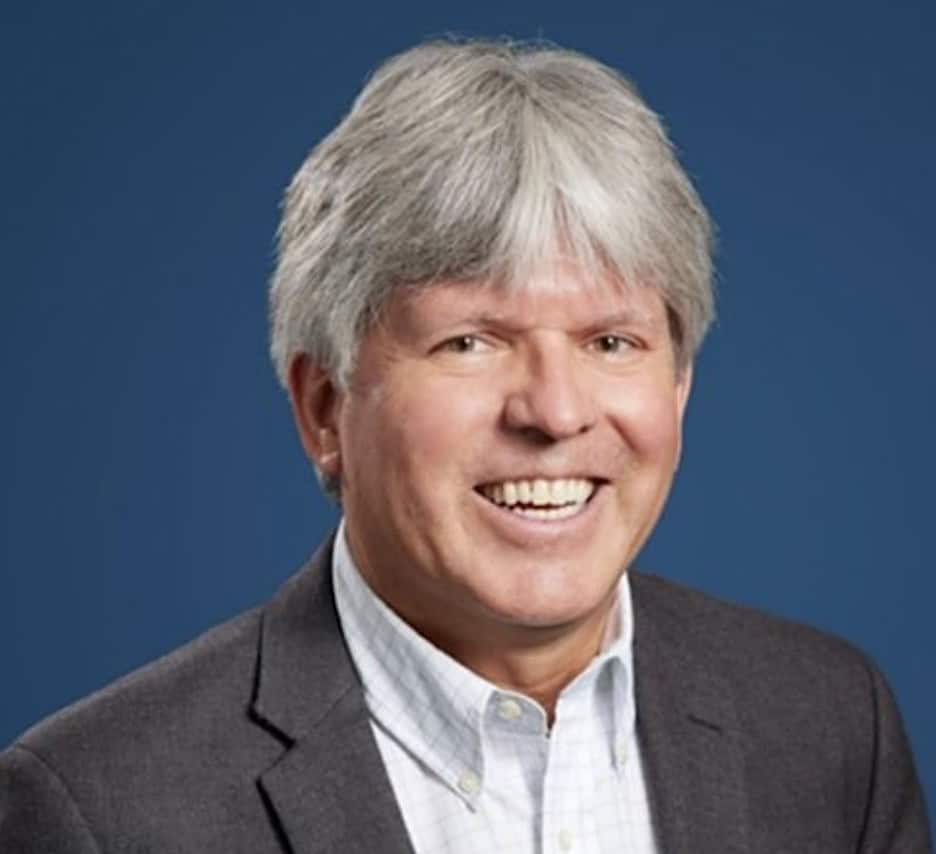
Mark A. Skinner. Credit: Aerospace Corp.
Mark Skinner, senior project lead for FAA Programs at The Aerospace Corp., said Aerospace Corp. is involved with the US National Science Foundation’s SwiftSat, whose goal is to enable satellites that could disturb optical or radio astronomy observations to determine the exact time of their overflights, their location in the sky at that time and how bright they will be as seen from the ground.
“This allows the observatory to potentially look somewhere else,” Skinner said. “It also allows the operator of the satellite potentially to change its attitude to minimize the cross sectional area and minimize the reflection, knowing that it’s a certain point of day, when the satellites start going into Earth’s shadow, that they disappear from sight.
“Having satellite coatings and other interesting technologies are also important. It’s not just one thing. It’s with a combination of efforts that we can reach goals that are mutually beneficial to the owner/operators and the astronomy community and native-eye astronomers, too.”
Skinner pointed to the UN COPUOS Friends of Dark and Quiet Skies initiative, which he said needs to include satellite manufacturers — not constellation owners build their own infrastructure.
“They have to understand what it is about their satellites that is actually bugging the astronomers.
“Is it just the diffuse reflections? Is it shiny little bits on there that cause little spikes? These are important things to understand. Where are the pain points?
Try different things, and then get best practice into the public domain so that others can understand what works, what doesn’t.”
Diamond pointed to an example of how interference is multiform and can surprise operators and astronomers alike.
Latest issue: Unexpected electromagnetic radiation UEMR
“UEMR, unexpected electromagnetic radiation, emerged in the last year or so,” Diamond said. “Low-frequency telescopes are detecting the on-board electronics from Starlink satellites. We didn’t expect to see it and SpaceX didn’t expect us to detect it. But it is a real issue of extremely bright radio sources — not from the downlink beams, just from the on-board electronics that control the systems and operate the solar panels.
“Luckily, SpaceX was very responsive. They are looking into this to see how it can be mitigated. But early collaboration and involvement, maybe in the design of the satellites, may have solved this particular problem before this generation of satellites was in orbit.
“Luckily a lot of these [LEO constellations] are designed to deorbit, with a new generation to be launched, so we have the opportunity to fix this particular problem.”