

Astroscale’s backlog is expected to drive a doubling of revenue in the fiscal year ending April 30, 2026. Credit: Astroscale
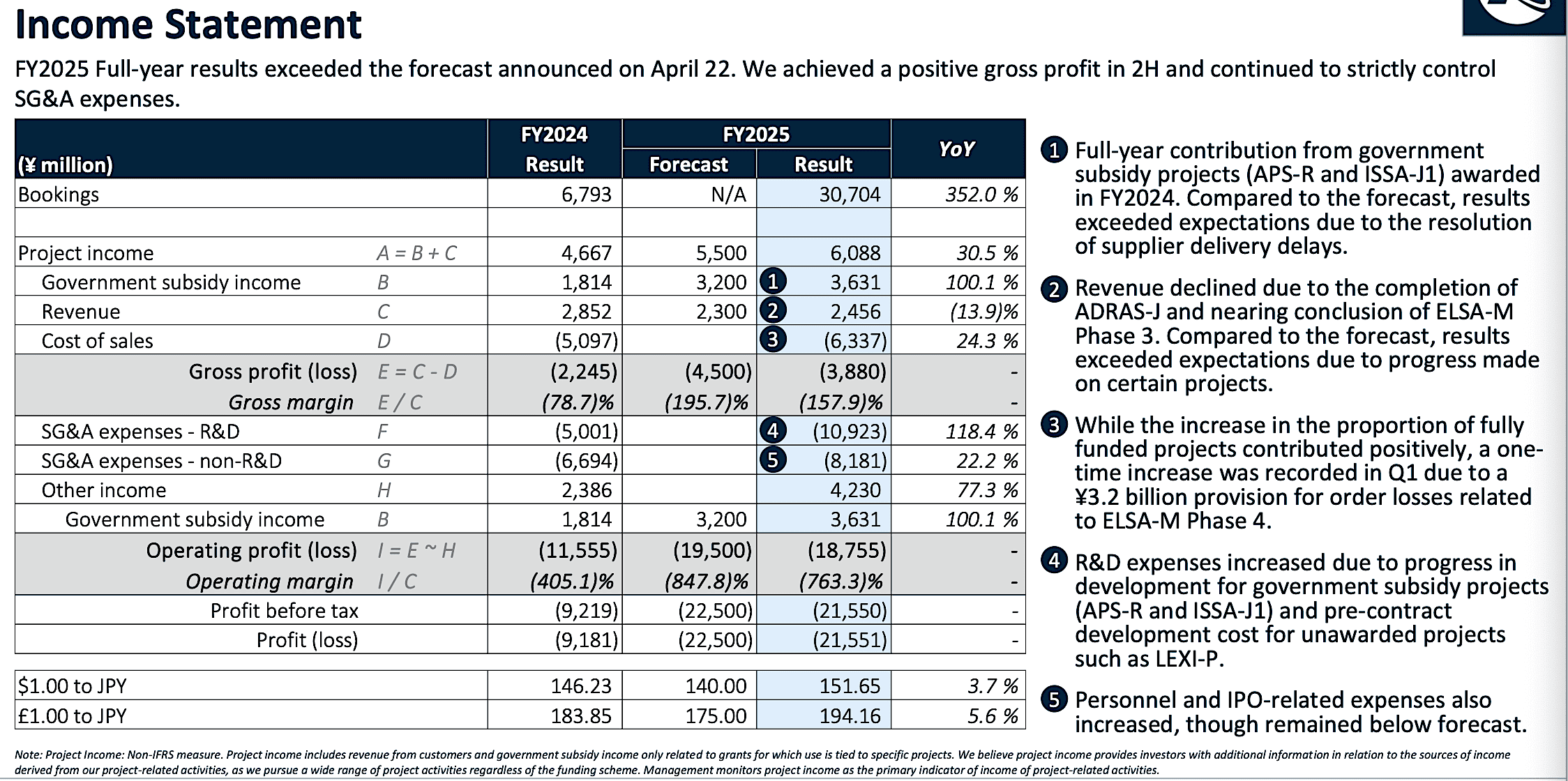
LA PLATA, Maryland — Satellite servicing, life-extension and debris-removal service provider Astroscale reported a 13.9% drop in revenue for the 12 months ending April 30 and a wider operating loss but posted positive gross profit in the second half of the year.
Tokyo-based Astroscale, with major operations in Britain and the United States in addition to Japan, forecasted a sharp turnaround in the current fiscal year based on an order backlog that stood at 30.7 billion yen ($215.6 million) at April 30 — up four-fold from the previous year.
Credit: Astroscale
Astroscale’s FY 25 revenue of 2.456 billion yen, or $173 million, was down in part because of delays in an order from an unnamed private-sector customer for the LEXI-P mission to extend the life of a satellite in geostationary orbit.
This contract, which Astroscale said is the subject of a non-binding term sheet valued at up to 16.9 billion yen, had been expected in early FY 25 but has slipped again, to FY 26. Astroscale said revenue from LEXI-P will not begin until FY 27
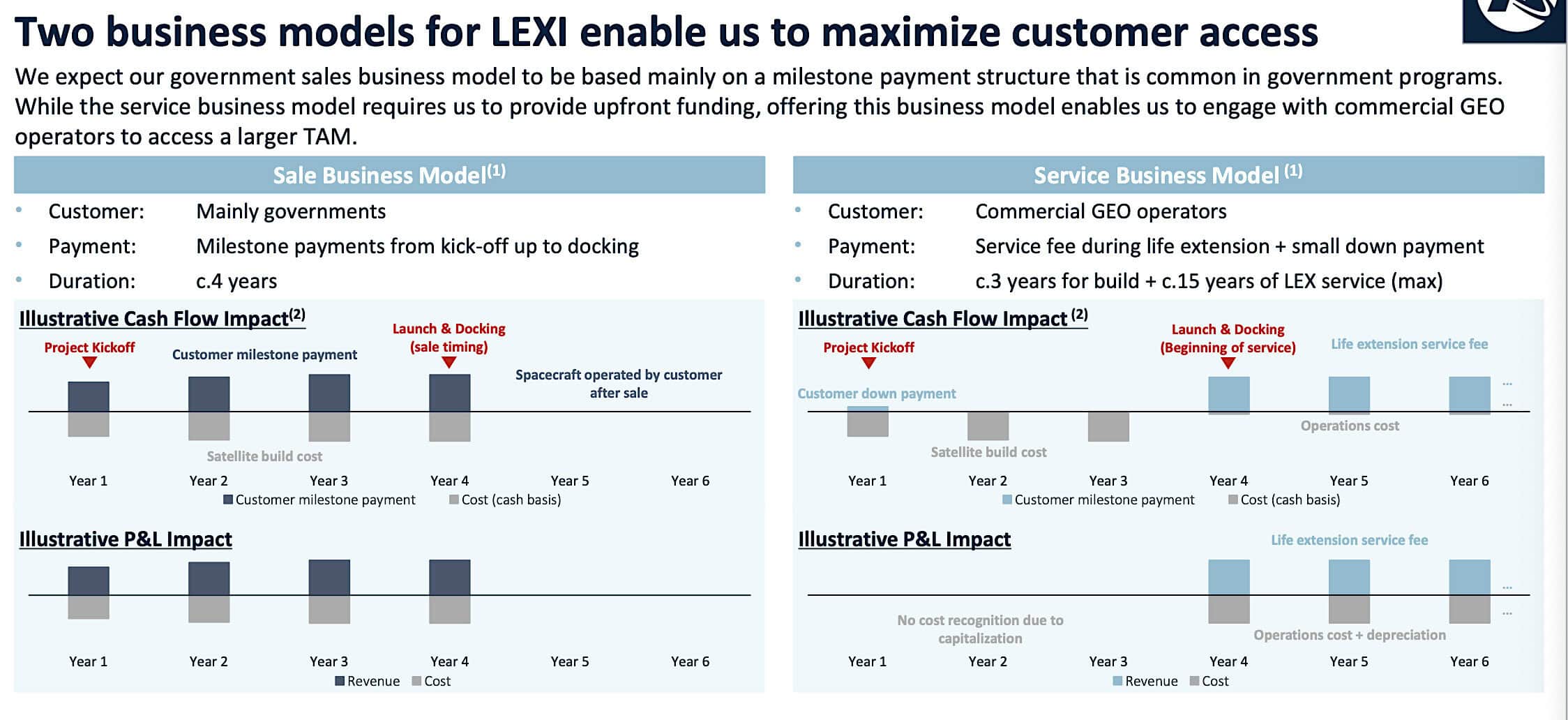
Astroscale’s LEX servicer is designed to deliver fuel to a geostationary satellite to provide up to 15 years’ life extension if it remains there permanently, or a shorter-duration life extension if the contract calls for that — in which case it detaches from the satellite to proceed to another customer.
Credit: Astroscale
In a question-answer session with investors published Aug 15, Astroscale said it had an additional likely customer for LEXI-P and that it was possible that both would sign contracts. The missions are being handled by Astroscale US. It remained unclear if both could use the same servicer or would be assigned different vehicles.
The US branch “has secured sufficient capacity, including through outsourcing,” in the event it will need to build two servicers, Astroscale said.
“While there is uncertainty in the timeline for securing contracts, the need for satellite life extension is clearly present, and the risk of losing both customers is considered low,” the company said. “Pre-contract development costs for LEXI-P incurred up to FY2025 have not been capitalized and were recorded as R&D expenses. Therefore, even in the event of a loss of project, significant impairment is not expected.”
Credit: Astroscale
Astroscale told investors that the company’s original focus, for satellite end-of-life deorbiting and the removal of debris from orbit, is taking longer than expected to develop. Satellite life-extension, however, is the focus of high customer interest.
The delay in LEXI-P triggered a series of cost-cutting measures “based on a global zero-based review“ that will keep sales, general and administrative costs in FY 26 below the previous year’s level.
The extent of the market for satellite life extension remains to be proved, especially as the number of commercial GEO-orbit satellites has declined, and those that are launched are fitted with electric propulsion, which may reduce the appeal of life extension.
Credit: Astroscale
Active debris removal in orbit is even less proved as a market, but taking low-orbit satellites out of orbit on retirement to comply with regulatory requirements looks to be a real opportunity. In September 2024 the US Federal Communications Commission (FCC) ordered that satellites must be removed from orbit within five years of retirement.
Astroscale has designed docking plates to make removal easier and has deployed them on Eutelsat OneWeb satellites, which unlike the SpaceX Starlink and Amazon Kuiper constellations orbit at too high an altitude, 1,200 kilometers, to count on orbital decay to do the deorbiting work within five years.
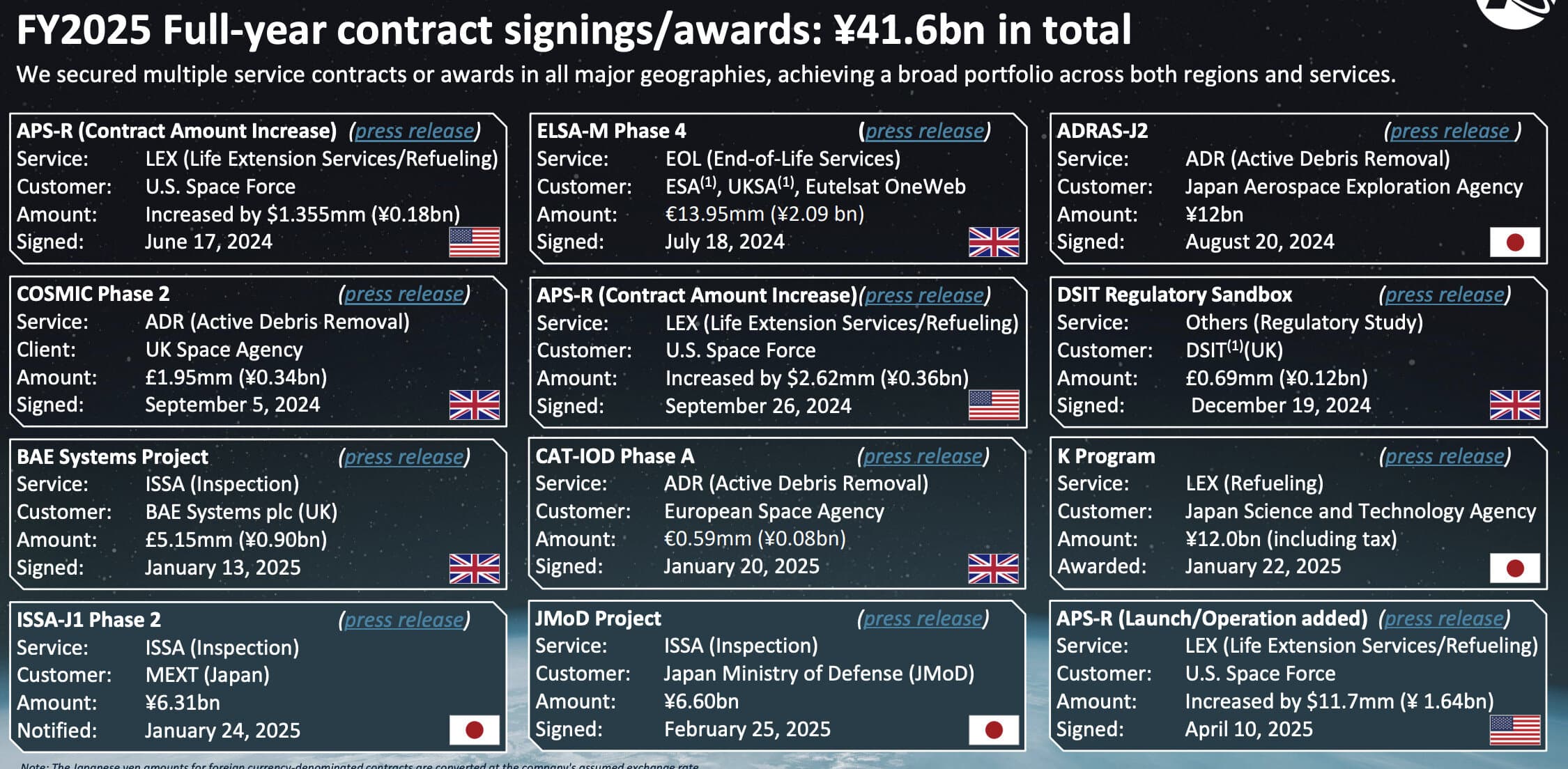
Astroscale said that as of July 31, there were 571 satellites in orbit equipped with docking plates compatible with its ELSA-M servicer. Xona Space Systems of the United States, which is planning a constellation of more than 200 low-orbit satellites for positioning, navigation and timing services, in July contracted with Astroscale to supply docking plates.
“Considering the typical lifespan of LEO satellites (5–7 years) and the failure rate that prevents autonomous deorbiting, demand for end-of-life services is expected to emerge around 2029,” Astroscale said. “To capture this demand, the Company is proactively promoting the sale of docking plates—interfaces required for EOL services—to be mounted on constellation satellites.”

Credit: Astroscale
Astroscale in May raised 10.6 billion yen in equity to shore up its cash position and pursue its investment in commercial and governmental missions. The transaction diluted existing shareholders by 13% But the company’s stock, traded on the Tokyo Stock Exchange, dropped less than 2%, which Astroscale management said is a sign of investor confidence in its business model.
The company said it now has enough cash to pursue its business plan through to free-cash-flow positive.