
Credit: Blue Origin
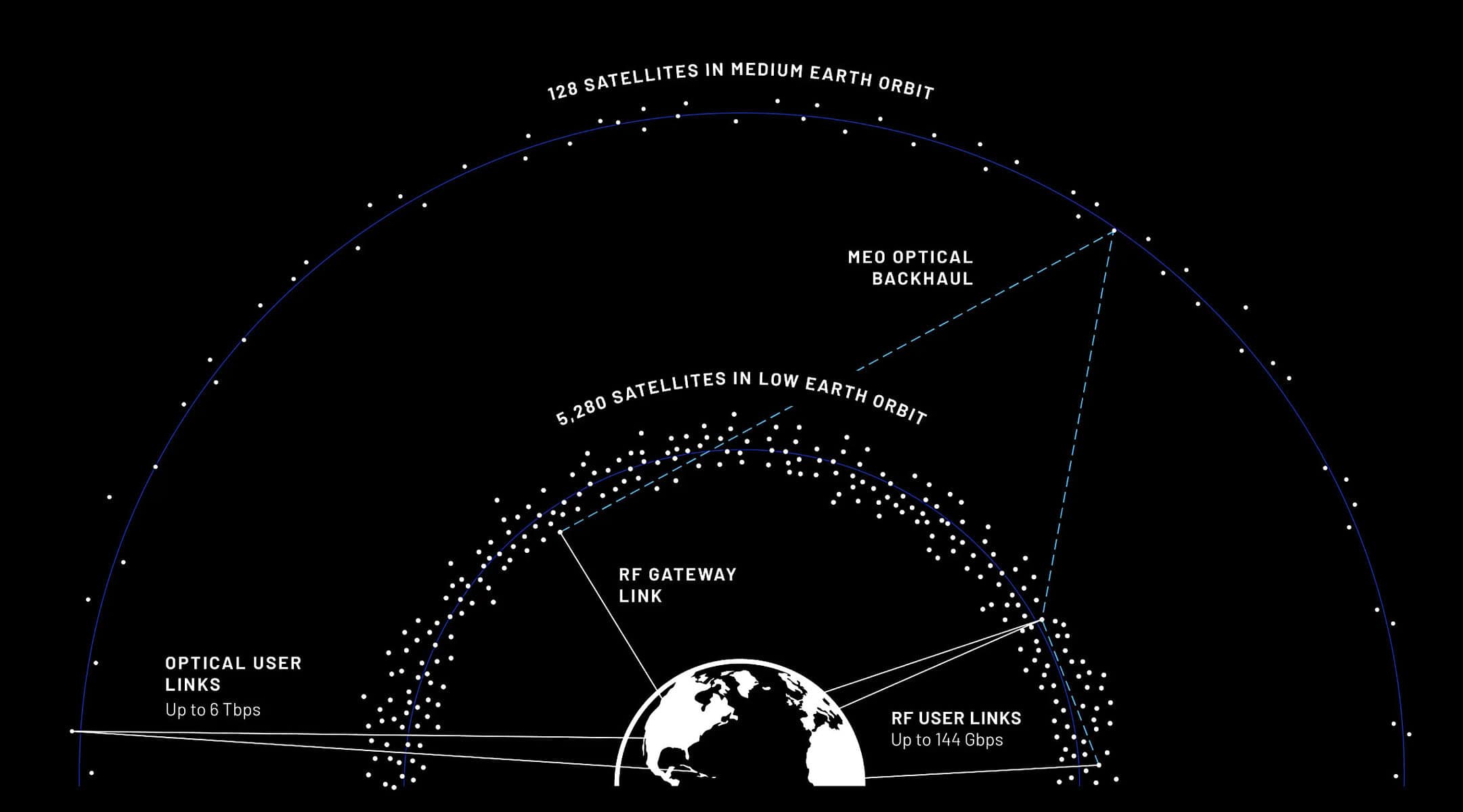
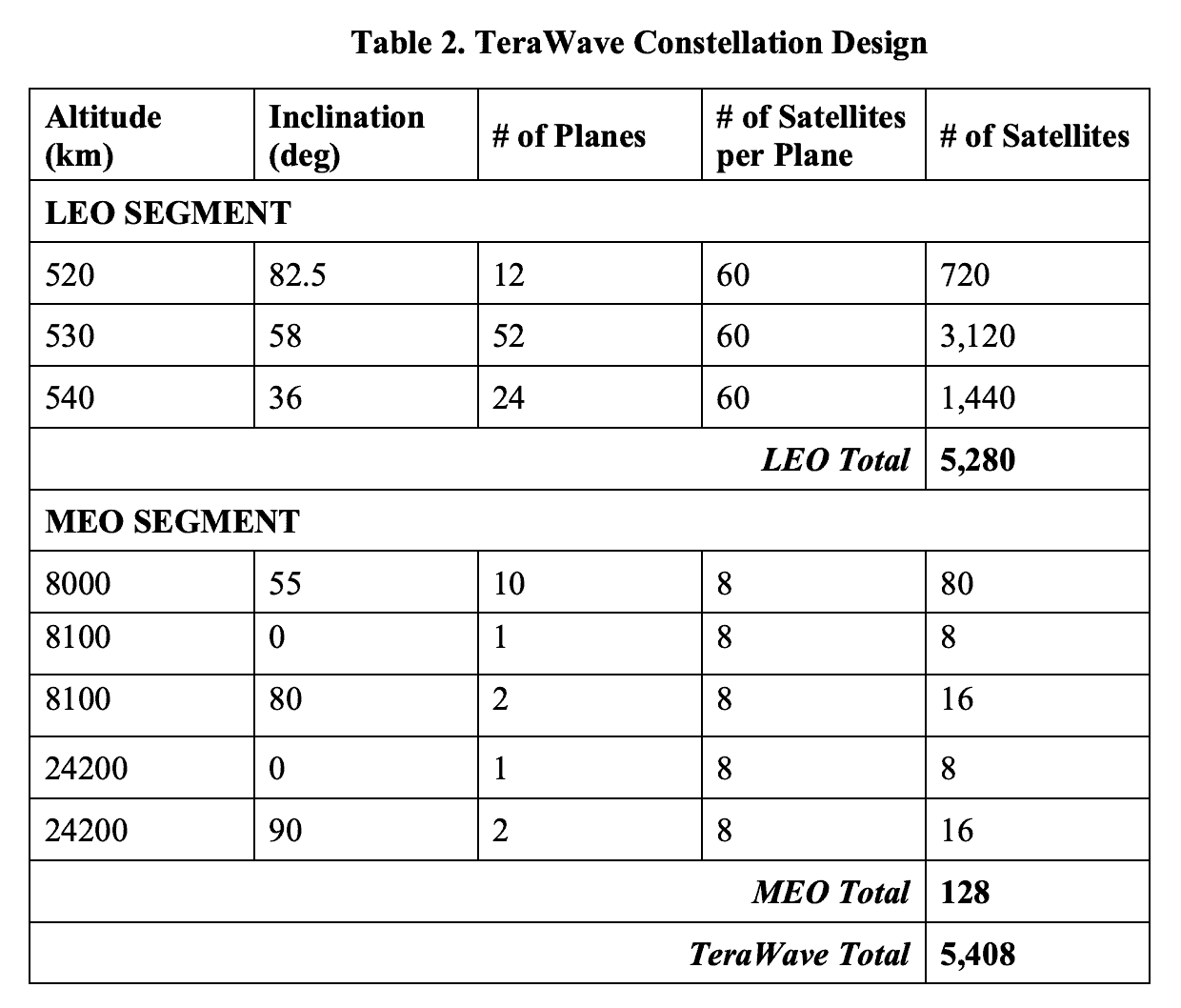
LA PLATA, Maryland — Rocket and space systems manufacturer Blue Origin plans a network of 5,280 LEO satellites and 128 satellites in medium-Earth orbit to provide symmetrical broadband globally to enterprise, data center and government customers, the company announced Jan. 21.
Credit: Blue Origin Jan. 21 FCC filing
The Jeff Bezos-owned company said it plans to begin deploying satellites in late 2027 but did not say whether the spacecraft would be a second product added to the Amazon facility now building Amazon Leo’s constellation or a stand-alone site dedicated to the LEO-MEO network, called TeraWave.
Credit: Blue Origin
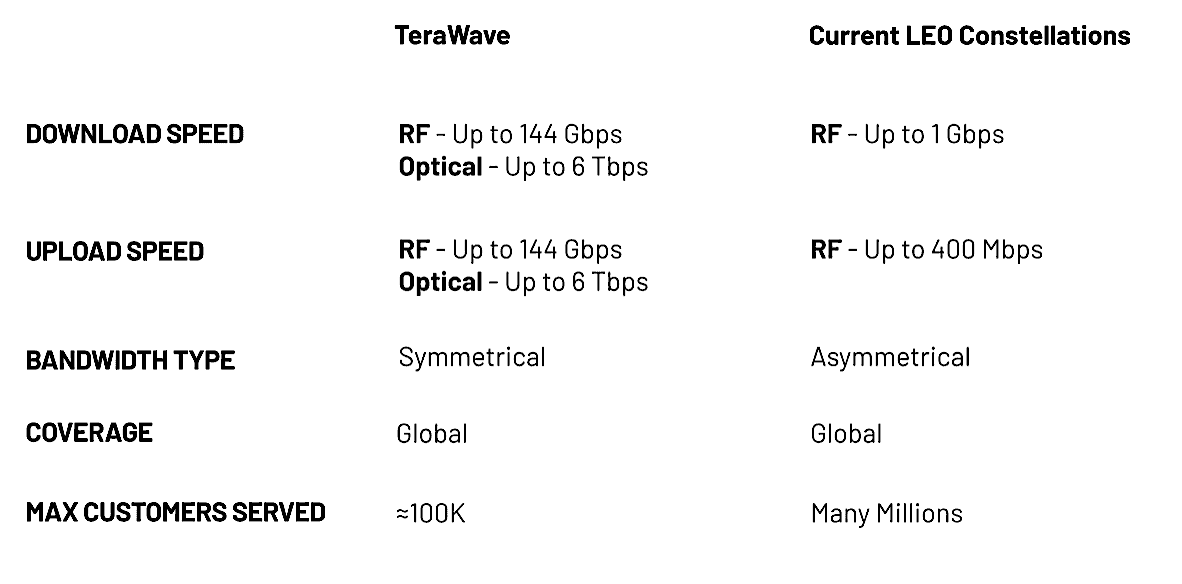
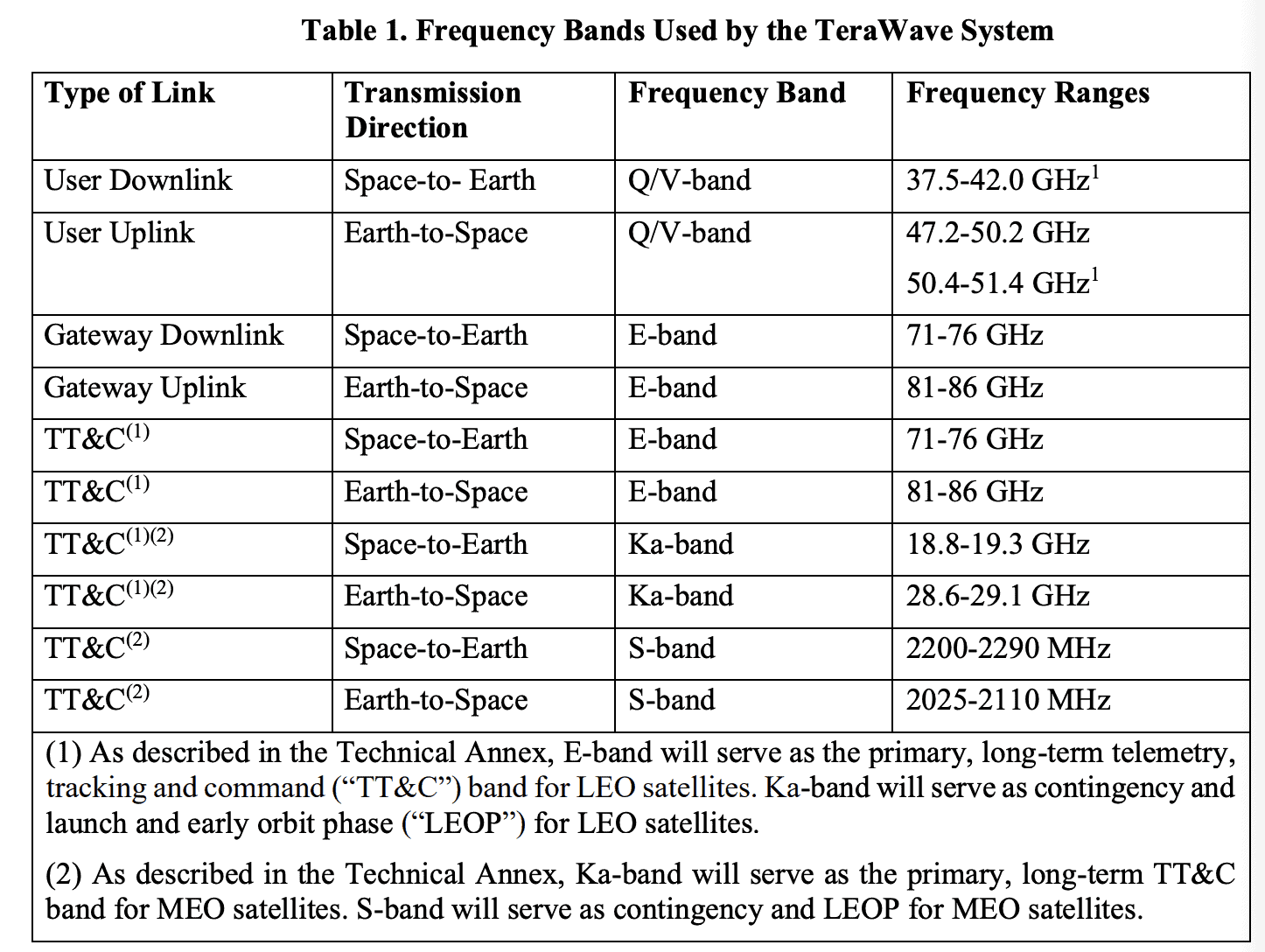
In a Jan. 21 announcement, Blue Origin said users could receive data at speeds of 144 Gbps using TeraWave’s LEO-orbit network using Q- and V-band links. Speeds increase to up to 6 Tbps when the MEO satellite’s optical satellite links are used.

Credit: Blue Origin Jan. 21, 2026, FCC filing.
System capacity would be about 100,000 customers, the company said.
Amazon LEO is under regulatory deadline to launch more than 1,600 satellites by July 30 or sharply reduce the size of its planned 3,200-satellite constellation. It has currently launched some 180 satellites, with multiple launches this year.
Given the current stresses on heavy-lift launch supply in the next two years, deploying TeraWave in any meaningful quantity before 2028 would appear challenging. Amazon Leo has witnessed this first-hand it waits for its selected launchers — the Ariane 64, the ULA Vulcan and Blue Origin’s own New Glenn — to ramp their launch cadence.
Amazon Leo is a broader-based network designed for consumers as wells as corporate and government applications. It promises downlink transmission of between 100 Mbps and 1 Gbps, depending on the customer terminal.