
Credit: U-Space
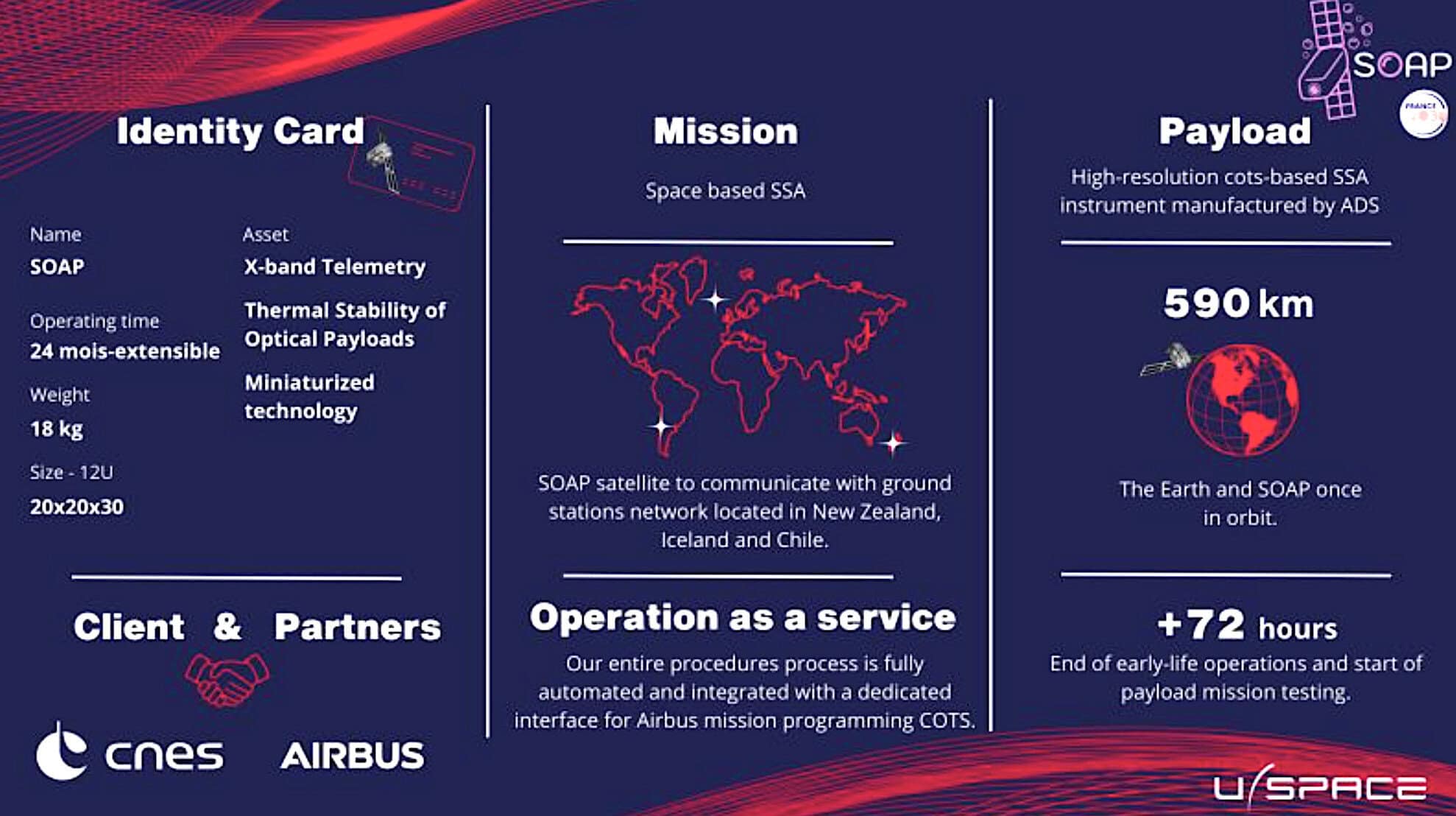
SYDNEY — Europe’s first space-based space surveillance satellite, launched in March aboard the SpaceX Transporter-13 ride-share mission, is working so well in low Earth orbit that the French government is considering development of a constellation of similar sensors.
The 12U, 18-kilogram SOAP satellite — Space Debris Observation and Protection — was built by prime contractor U-Space, a startup, using a camera provided by Airbus Defence and Space. It is designed to operate for at least two years, with a possible extension, in a 590-kilometer orbit.
“It is working perfectly and we have received, daily, a lot of data,” said Laurent Francillout, head of the space surveillance and control directorate at the French space agency, CNES.
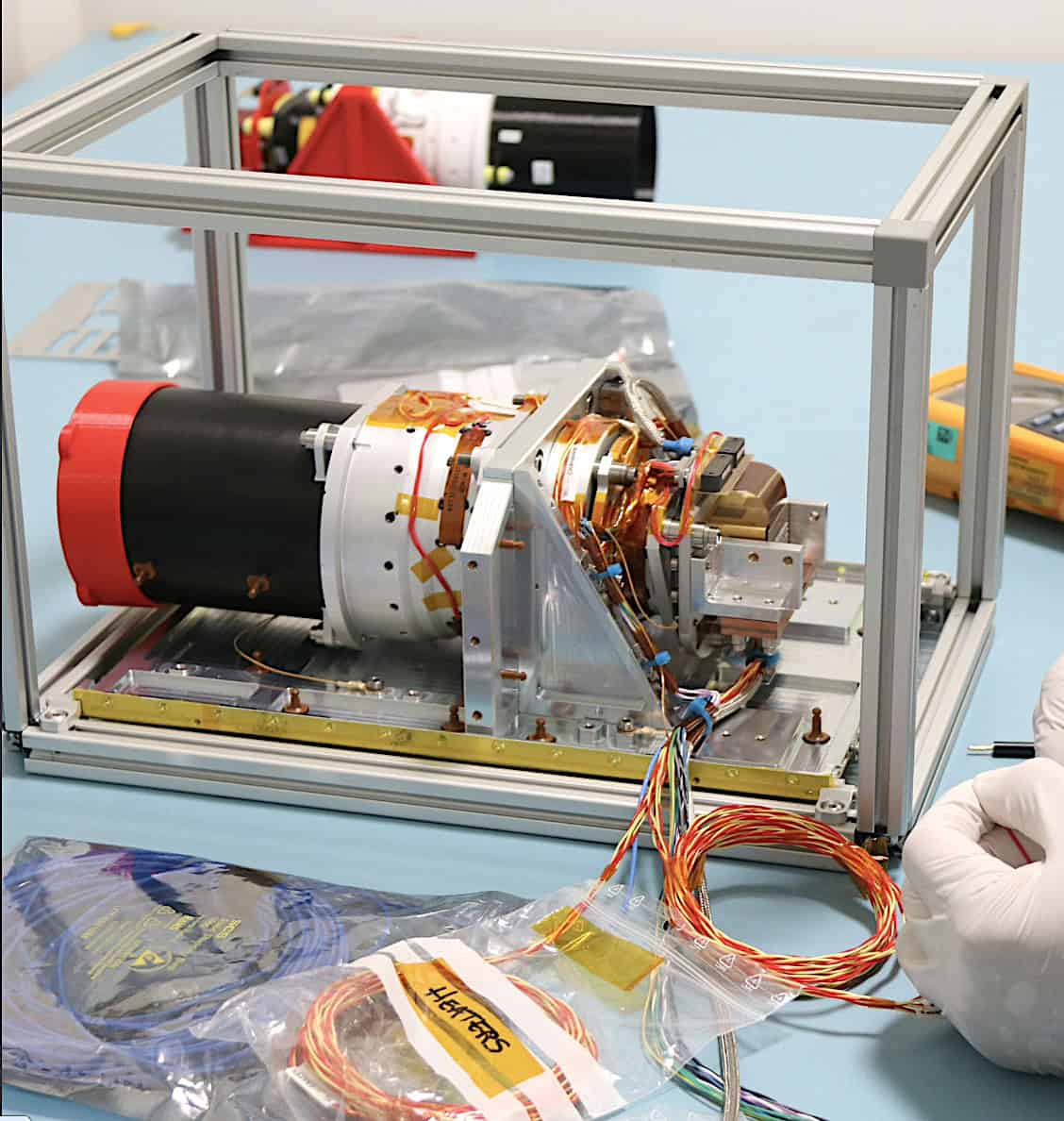
The SOAP mission camera. Credit: Airbus Defence and Space
“The first results are interesting and ArianeGroup and U-Space are considering a small constellation in low Earth orbit based on SOAP,” Francillout said here Sept. 30 at the 76th International Astronautical Congress (IAC). This is a great success.”
SOAP will survey space debris and other objects in low Earth orbit. It is one of five space situation awareness (SSA) missions selected in 2023 by the France 2030 bond fund, which has set aside 1.5 billion euros ($1.76 billion) to develop a broad range of space technologies.
France is one of the 15 national members of the European Union’s Space Surveillance and Tracking (EU-SST) program, which pools national assets to track space objects and provide collision avoidance, fragmentation analysis and re-entry analysis for the participating nations.
Credit: CNES
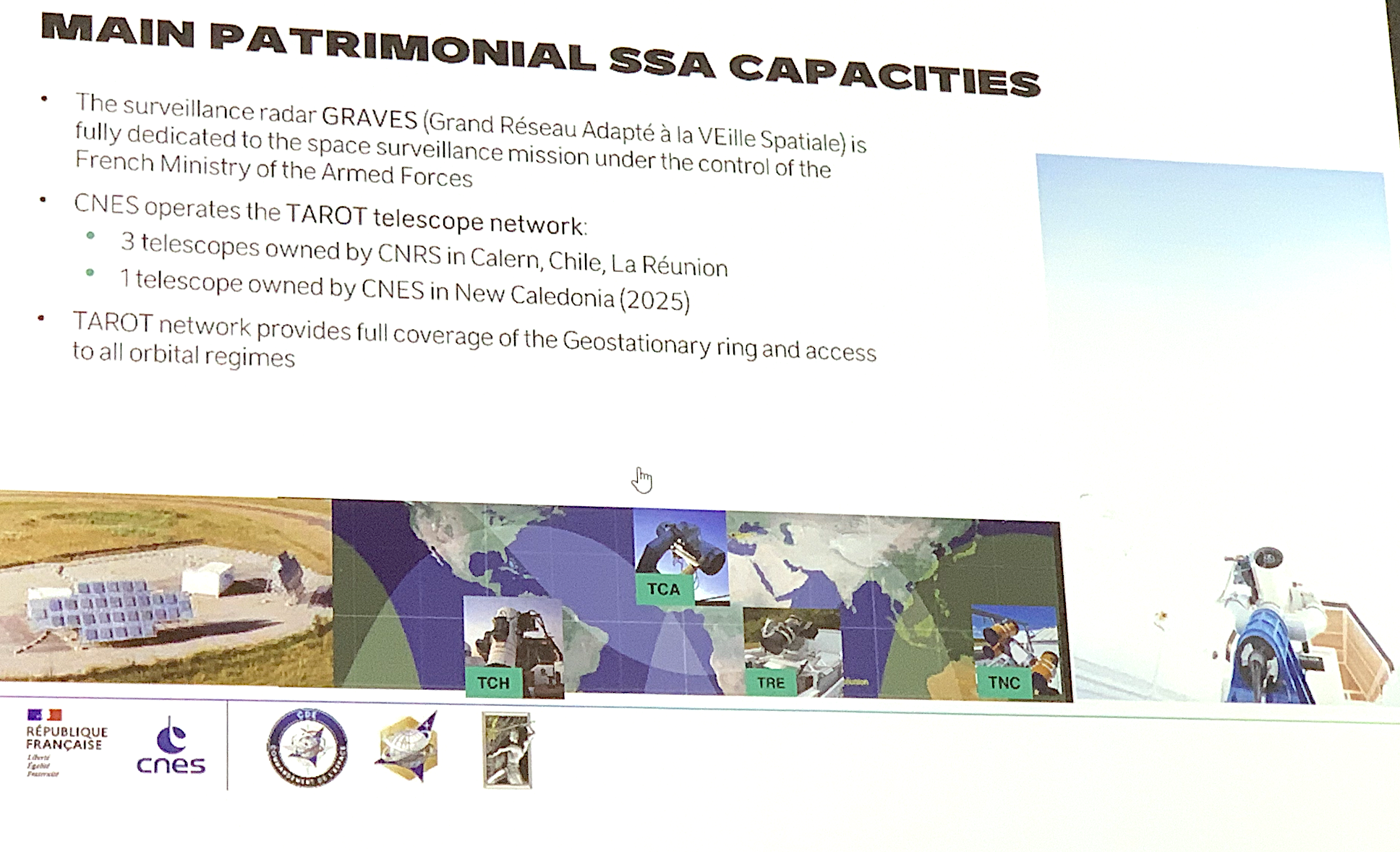
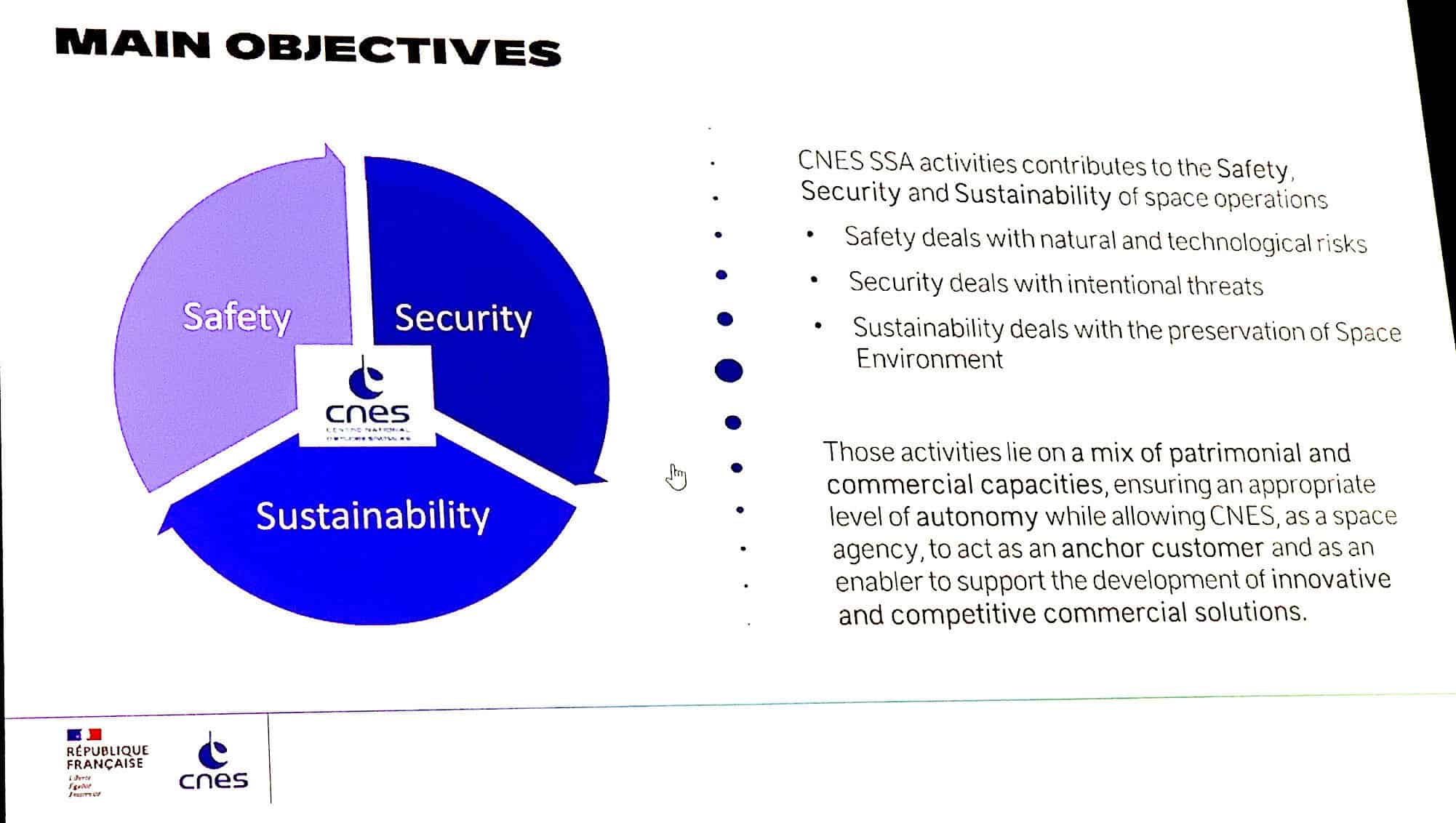
The French SSA effort is Europe’s most ambitious. The French military operates several ground-based space surveillance platforms, including the bi-static Graves radar. CNES has an SSA operational center, which is assembling a catalogue of space objects for the French Defense Ministry and other uses, and the agency provides a collision-avoidance service for EU SST.
CNES has built a fourth telescope in New Caledonia for geostationary-orbit surveillance. Francillout said the first images have been received but have not yet been published.
“It is a real milestone for us because now we have coverage of the entire GEO arc ring,” he said. “This telescope will also be able to perform LEO tracking providing sovereignty and confidentiality of what we look at.”
Credit: CNES
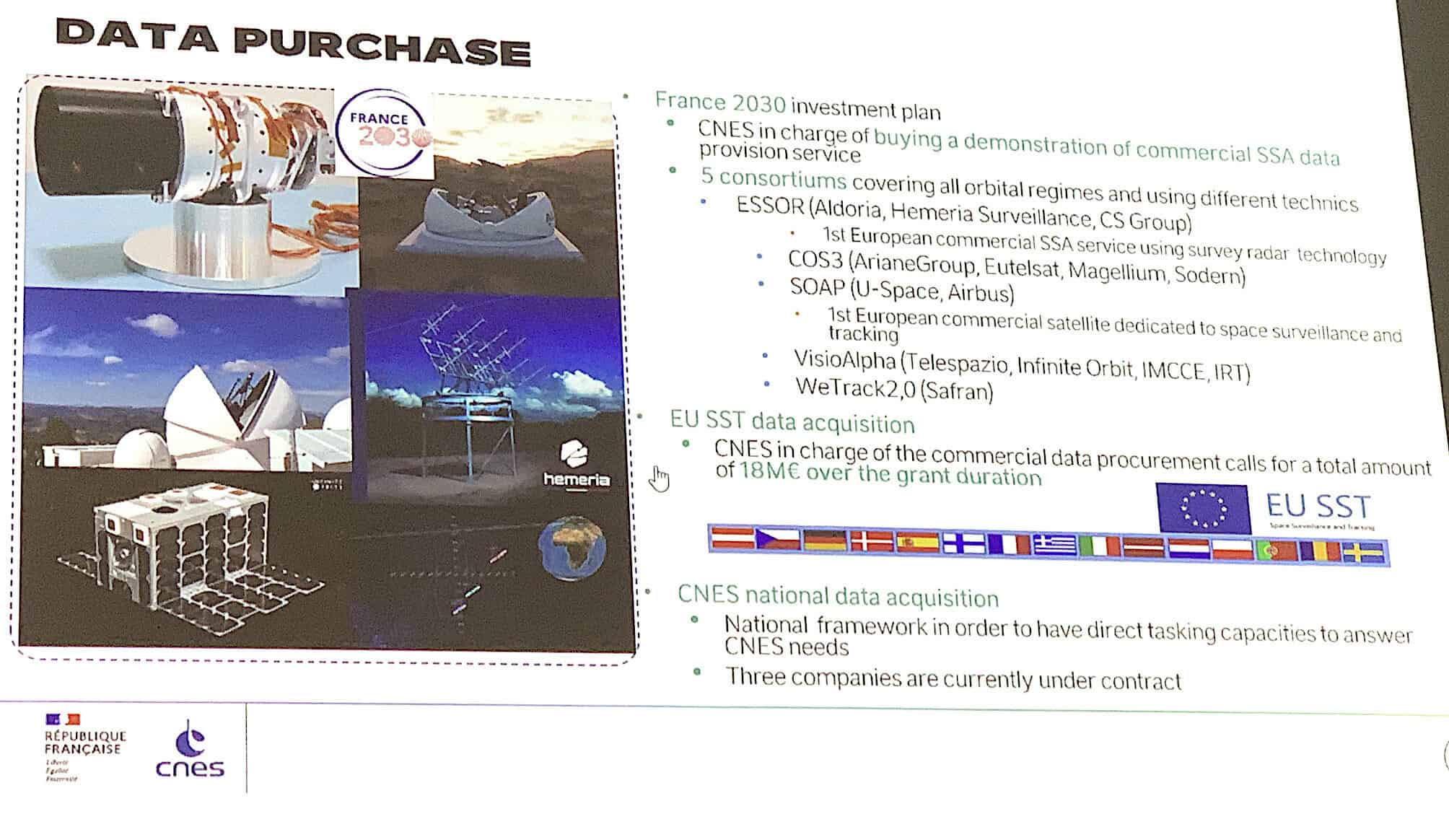
Numerous commercial commercial companies, including startups like Aldoria, U-Space and Infinite Orbits but also established providers including Airbus and Safran, are building SSA missions under France 2030. For all these projects, CNES purchases the data but does not directly finance the infrastructure.
These include a mission called Visio-Alpha to survey objects in geostationary orbit. The satellite is under construction by Telespazio France and startup satellite platform provider Infinite Orbits, whose Orbit Guard 3 will carry the Visio-Alpha sensors. Launch had been scheduled for 2027, but Francillout suggested it could be ready earlier.
Credit: CNES
Safran is providing its WeTrack network of ground-bases sensors, which is being expanded for space traffic monitoring. “We are able to follow the constellation to see what happens to it,” Francillout said.
A project called Cost Cube, using ArianeGroup’s ground-based network of optical and infrared sensors, apparently will no longer include an orbital component, but Ferancillout said ArianeGroup’s Helix SSA network will be expanded to 30 sites from the current 25 by the end of the year.