
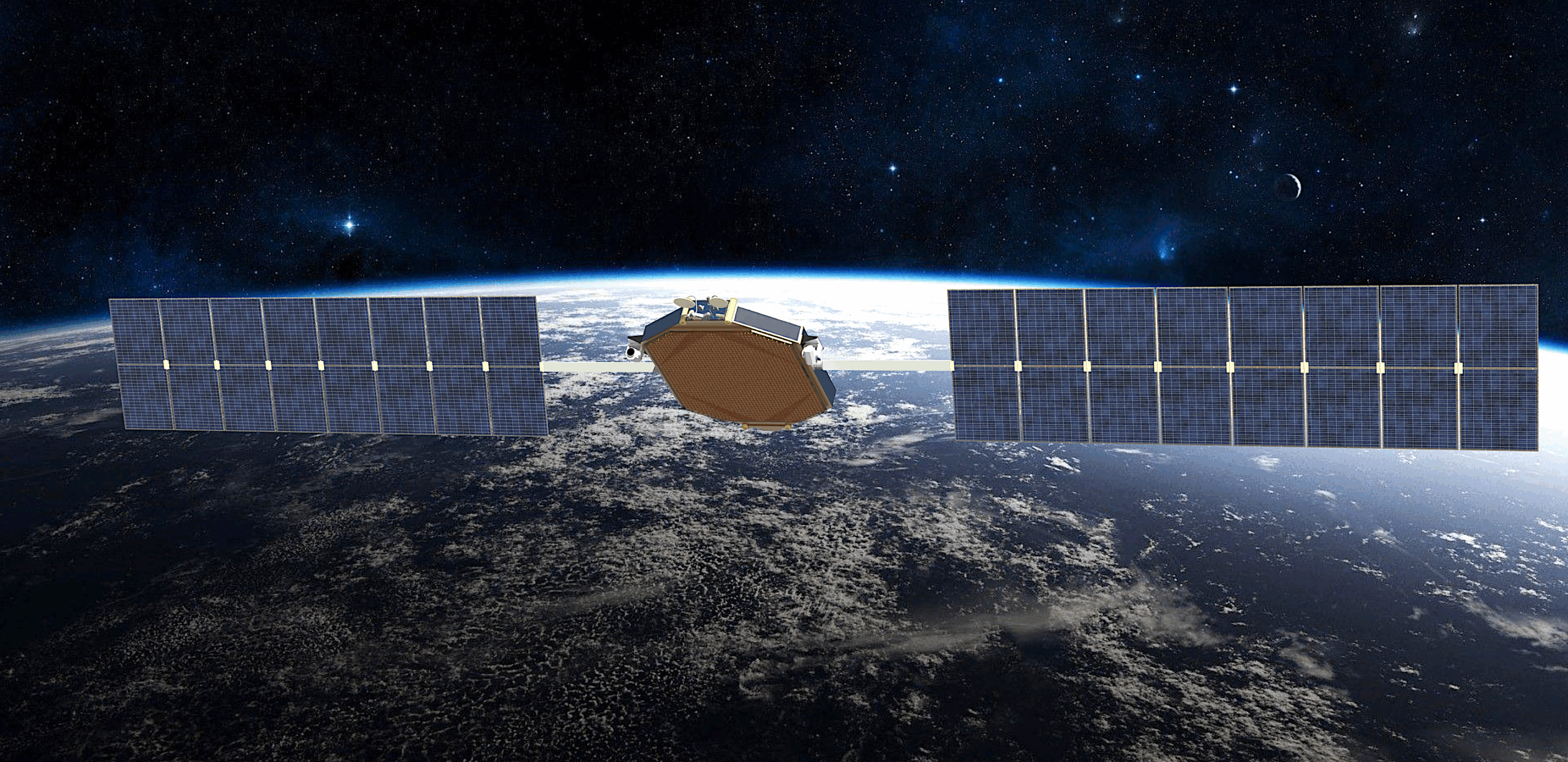
MDA Space’s Aurora D2D satellite platform. Credit: MDA
LA PLATA, Maryland— EchoStar Corp. gave initial hints of how it plans to develop its $5-billion network to provide global satellite direct-to-device (D2D) wideband connectivity but left unanswered questions about how it would finance it.
For a company already highly leveraged and managing multiple debt instruments to the limit of breaching their covenants, that left a big hole in its Aug. 1 investor call, which was largely devoted to the just-announced satellite plan.
“It is not lost on us that when we add another $5 billion, we somehow need to finance it and meet other obligations,” Akhavan said in one of several responses to basically the same question. “We have to have answers. I cannot give you answers today. We believe this is conducive to making those better as opposed to worse. Otherwise we wouldn’t be doing it.”
He said more details would be released at Novaspace‘s World Space Business Week conference, scheduled the week of Sept. 15 in Paris.
That’s not good enough in today’s market. EchoStar’s shares fell 17% in Aug. 1 trading on the Nasdaq exchange.
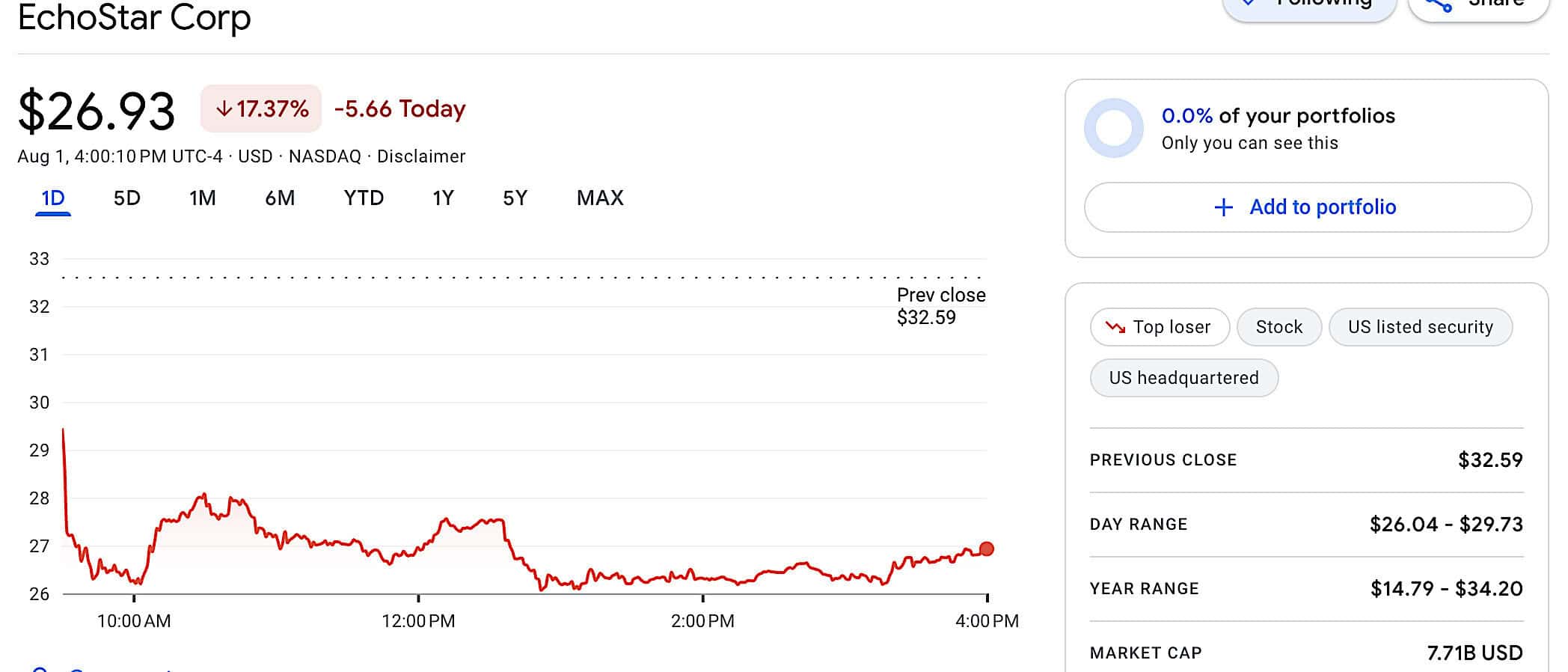
Credit: Google Finance
Takeaways from EchoStar’s Aug. 1 call on the D2D network
— EchoStar’s constellation starts with 100-plus satellites under a $1.3-billion contract with Canada’s MDA Corp., with first deliveries inn 2028 and operations starting in 2029.
It them moves to a second phase, which will add another $1.2 billion to the capex, to get to 200 satellites from MDA. Akhavan omitted this second phase in the investor call, declining to answer questions about capex phasing beyond gate initial $1.3 billion.
— The network is designed to offer NTN 5G compatible S-band/2-GHz service to unmodified smartphones and other devices. Akhavan firmly placed its capacity in the “wideband” category.
‘Netflix in the Grand Canyon’
“Our vision is to offer everything you have in your pocket today – text, voice, video, FaceTime — and if you are in the middle of the Grand Canyon or the Atlantic Ocean, and you want to watch Netflix, you can watch it. You cannot tell the difference between your phone cell site being 600 km above you, or two kilometers to your right,” Akhavan said.
— He told investors that EchoStar is the only company offering this kind of satellite D2D service, that the rest — Globalstar/Apple, SpaceX/T-Mobile, Lynk Global/SES — are all in the emergency messaging business.
“There is only one today and no one on the roadmap today you see that is going to do wideband,” Akhavan said. “We are the unique one. Nobody else is doing that. That’s my claim and you can quote me.”
What about AST SpaceMobile Inc? While the AST service starts by using terrestrial spectrum in partnership with MNOs, it has made moves to purchase L-band spectrum already licensed for satellite use.
MDA is building two constellations for Globalstar with Apple financing. The second, more recent network uses the same MDA Aurora D2D platform that EchoStar plans to use. Globalstar and Apple have not disclosed its capacity and use cases, but there can be little doubt but that it goes beyond the current first-generation system’s emergency messaging.
‘We have no time to wait to start development’
— Under pressure from the US Federal Communications Commission (FCC) to justify its multiple spectrum rights, with the threat that some of them might be revoked, EchoStar has paused development of its terrestrial 5G network as it waits to see what deal it needs to strike with the US regulator.
There’s no pause for the satellite D2D network, Akhavan said, because there’s no time to lose.
“In terrestrial I can slow down to get clarity and I don’t lose a lot of market opportunity,” Akhavan said. “I have national roaming, great coverage, the lowest churn, the highest ARPU. We are winning there and I don’t need to do anything until iI have certainty.
“In space I don’t have the luxury to wait. If I wait a few more months, my business model gets impacted negatively. Europe is in the process of asking us and everyone else how we are going to get into space. I need to get a definitive answer in Europe.
“I want to have this American leadership. I don’t want to lose it in Europe or in other places. If I wait to resolve this, that opportunity for the US and for us is lost. So we have decided to continue on the path we have been on with direct-to-satellite because we cannot wait.”
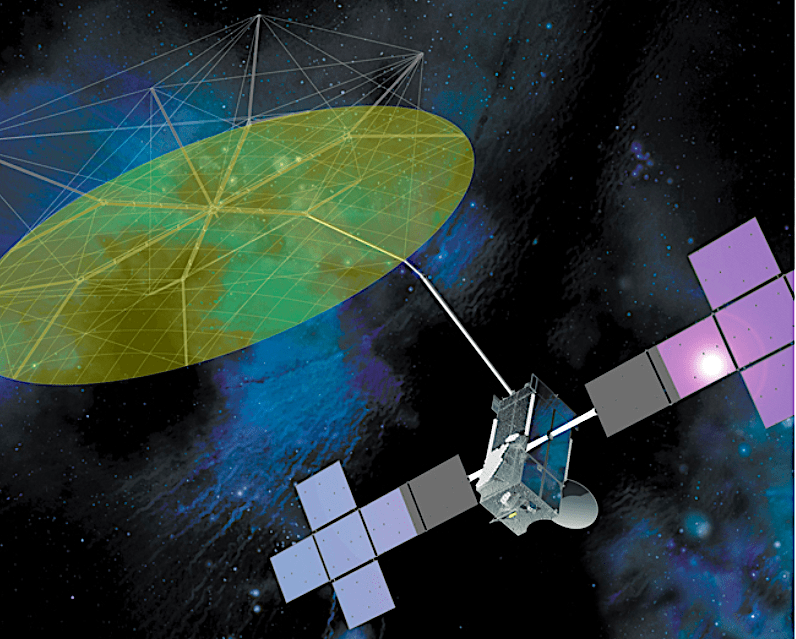
EchoStar 21, offering a D2D messaging services in Europe. Credit: EchoStar Mobile Ltd.
The European Commission, which issued EchoStar an S-band license in 2009, and a separate licenses to Viasat, plans to rebid the spectrum in 2027, when the licenses expire.
EchoStar already operates a large GEO-orbit satellite there offering messaging service to corporate and government organization through its EchoStar Mobile Ltd subsidiary, but there is no guarantee that EchoStar’s license will be renewed, especially as the European Union now views space capacity as an asset of strategic and sovereign priority.
— EchoStar will finance the constellation on its own but will adopt a wholesale business model and strike agreements with mobile network operators worldwide to ease regulatory entry — this has been an issue for Apple’s D2D messaging, which bypasses local operators — and offer MNOs a way to focus their investment on profitable geographies.
Akhavan said the first iteration of the constellation will cover 60 degrees N to 60 degress S latitude and provide fill-in coverage for MNOs in areas to remote to be economically viable. But not long after that, the EchoStar constellation will allow terrestrial 5G operators to forego building towers in less-remote, but still sparsely populate, areas to satisfy regulatory mandates because the satellite network will offer the same range of services.
“Very quickly we will get to where satellite capability will be far larger, to eliminate the cost burden on carriers in areas that are uneconomical, they are doing that just to have their service for people who travel rarely. Could eliminate hundreds of thousands, perhaps millions, of cell sites, air conditioning in the desert.
“The biggest beneficiaries will be the terrestrial carriers that won’t have to pay for the ground network in low-density areas. We absolutely will be complementary to every terrestrial operator,” he said.