
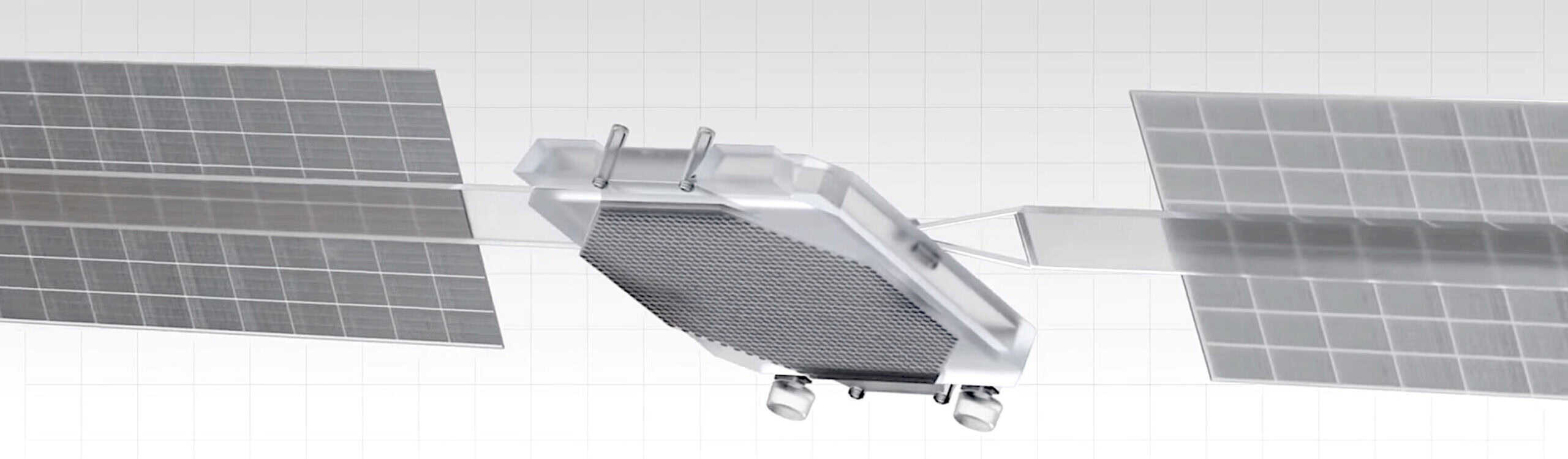
MDA Aurora D2D satellite deployed. Credit: MDA Space
LA PLATA, Maryland — EchoStar Corp. plans to spend around $5 billion on a global S-band direct-to-device constellation of low-orbiting satellites, with the first tranche of 200 to be built by MDA Space of Canada using MDA’s Aurora D2D platform, both companies announced Aug. 1.
MDA is building a similar, but for now less expansive, constellation for Globalstar, on behalf of Apple and Globalstar.
EchoStar’s decision to move forward on a constellation to use its global S-band/2-GHz spectrum rights comes after many months of hesitation and diversions as management focused on settling the company’s financial position.
It also comes as the U.S. Federal Communications Commission (FCC), urged on by SpaceX and others, is pressuring EchoStar to use its US-authorized spectrum or risk having it taken away.
In its Aug. 1 statement, EchoStar said it has invested more than $13 billion in S-band development, including the purchases of DBSD and TerresStar. The company said it would begin offering a commercial D2D text service in the United States in 2026 using 2-GHz spectrum from a geostationary-orbit satellite.
The company’s S-band/2-GHz rights in the United States through AWS-4, which authorizes satellite use. The company also has 30 MHz of spectrum in Europe, where it operates a large GEO-orbit satellite whose license from the 27-nation European Union expires in 2027; and rights in Canada, Mexico and Brazil.
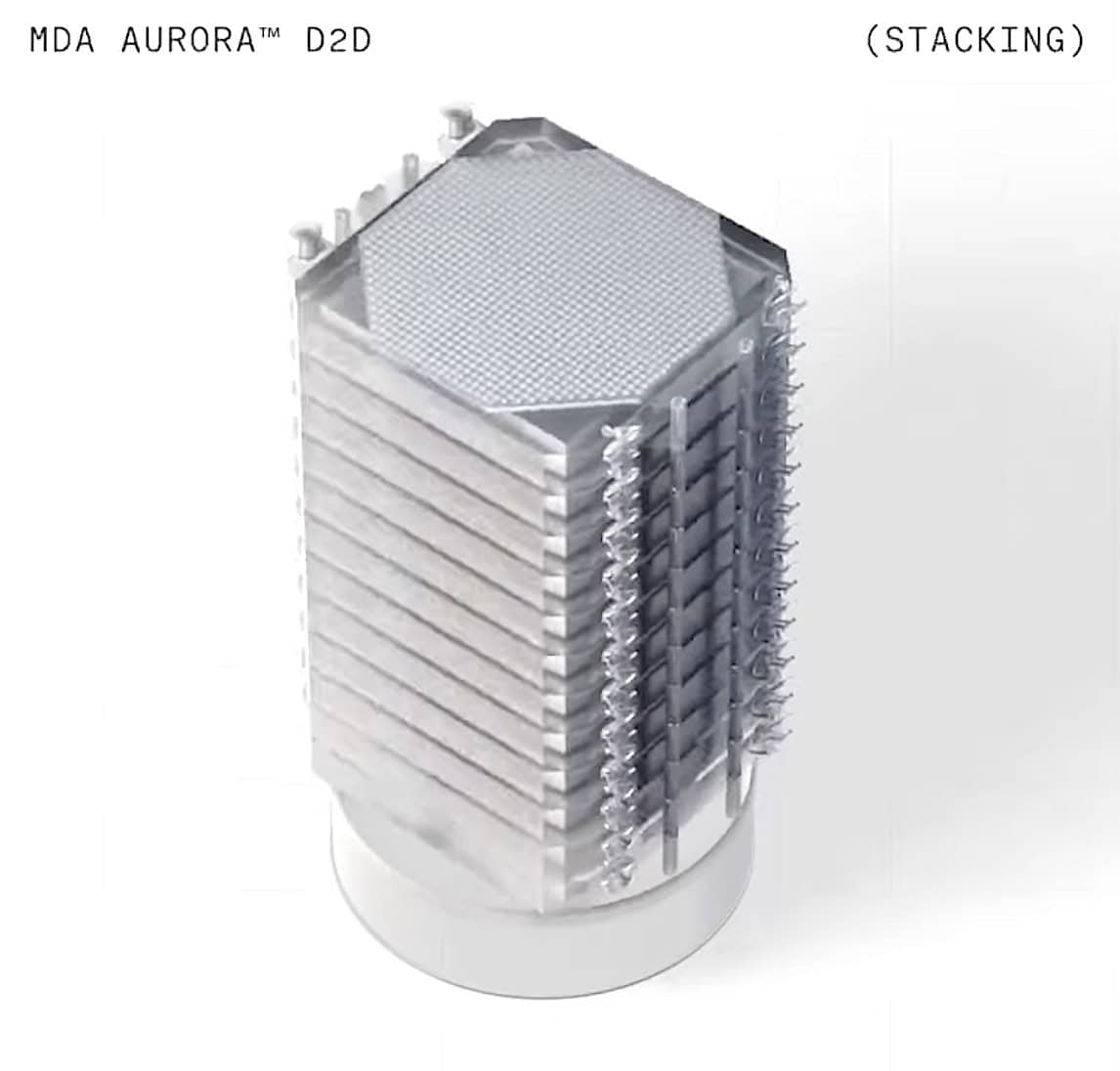
MDA Aurora D2D product, stacked for launch. Credit: MDA Space
EchoStar and MDA said their initial contract, for a first tranche of 100-plus satellites, is valued at $1.3 billion. Another $1.2 billion would be added to bring the constellation to 200 satellites.
EchoStar said the entire program is estimated to cost $5 billion, with the first satellites to be delivered in 2028 and commercial service starting in 2029. The company said the constellation ultimately could growth to thousands of satellites, depending on market demand.
MDA’s new Aurora satellite factory is designed to produce satellites in high volume, with modifications based on whether the use is for broadband, such as Telesat Canada’s Lightspeed; or D2D, including the Globalstar/Apple and now EchoStar constellations.
The EchoStar win would appear to be enough to prove out MDA’s statements to shareholders that despite the current dominance of SpaceX Starlink and the future Amazon Kuiper, Telesat Lightspeed another, the company has been receiving credible interest from well-financed backers that want their own constellations.