
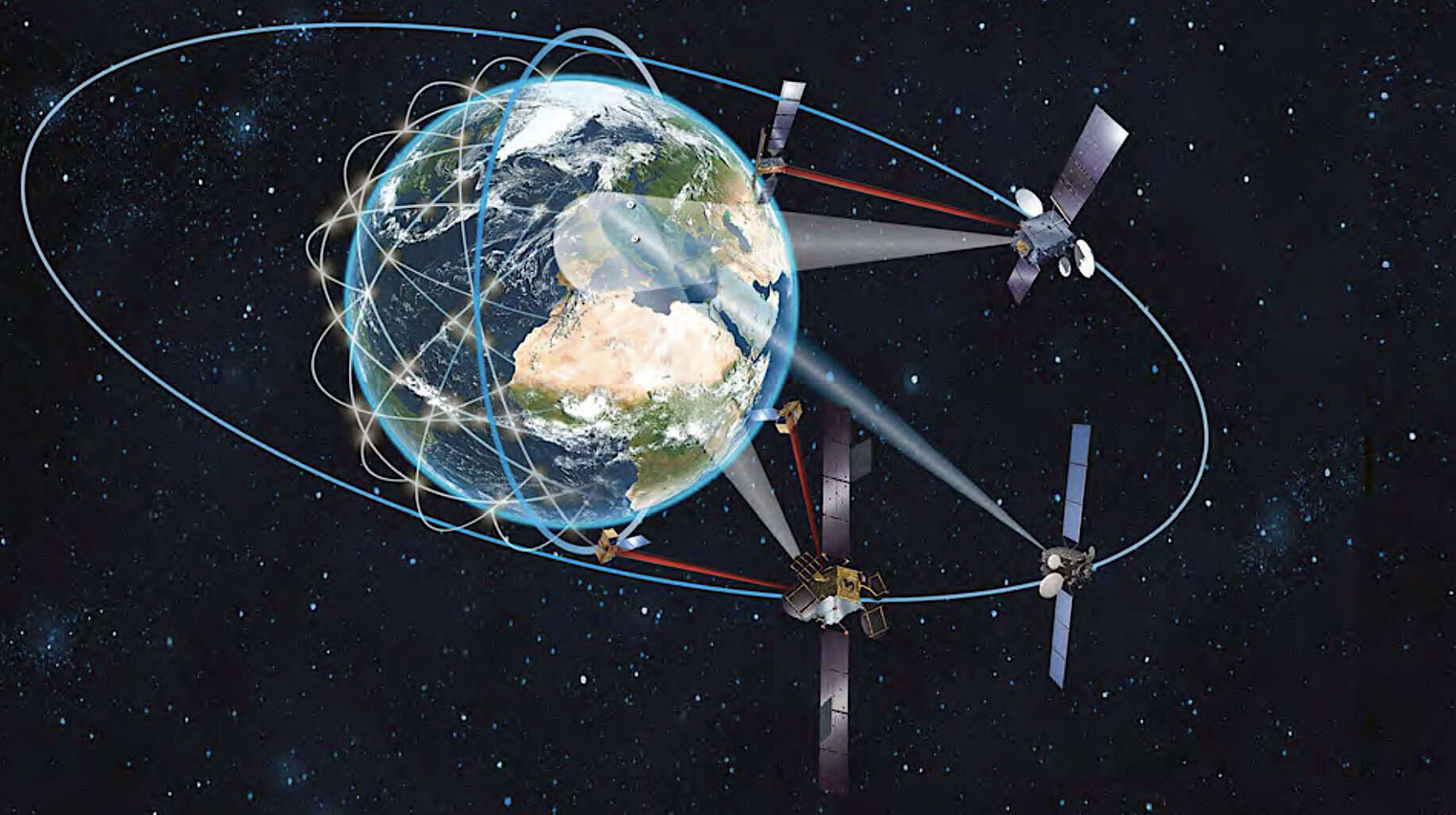
Credit: German Defense Ministry
LA PLATA, Maryland — Germany’s first Space Security Strategy stresses Germany’s continued commitment to NATO, to US-led multilateral military space coordination and to the European Union as anchors of Germany’s space effort.
The strategy document, presented to the Cabinet jointly by Defense Minister Boris Pistorius and Foreign Affairs Johan Wadephul on Nov. 19, would appear to ease concerns among Germany’s European partners that Berlin’s massive increase in military/security space spending would be mainly a German-only endeavor.
Boris Pistorius. Credit: German Defense Ministry
Pistorius’s announcement in September that Germany would spend 35 billion euros ($41 billion) on space security between 2026 and 2030 was unclear on whether the focus would be on developing Germany’s own space security architecture or would be a mix of German and European spending.
The 48-page strategy document does not directly address this point and provides little indication of how this budget will be allocated. But it is replete with references to Allied and European Union programs to which Germany is pledging support.
Despite provocative statements by the Trump administration on Europe and NATO, the German strategy maintains that Germany still believes in deepening cooperation with the US military. The document references multilateral efforts including Operation Olympic Defender and the Combined Space Operations (CSpO) effort, both coordinated by the US Space Force.
“A central pillar of this strategy is close cooperation with our NATO allies and European and international partners,” the document says. “The USA operates the world’s most extensive sensor network for surveilling space and provides our Space Situational Awareness Center with important data.”
First test of Germany’s new space posture to come at ESA ministerial conference Nov. 26-27
The first concrete indication of whether Germany is maintaining its role in European space security will come during the Nov. 26-27 European Space Agency (ESA) ministerial conference, a triennial event that sets the 23-nation agency’s budget for the coming three years.
ESA has been moving to attract not only civilian budgets, but also a slice of its governments’ military spending as it works to develop technologies to be used in future European Union programs. ESA has insisted it will not be operator of these systems. That will be left to the European Commission and the European Satellite Centre.
At the Nov. 26-27 conference, to be held in Bremen, Germany, ESA will be asking for funding for what it calls European Resilience from Space (ERS), a new program to start work on an intelligence, surveillance and reconnaissance constellation for the European Commission. The Commission’s budget leeway is limited until its next seven year budget, starting in 2028, is approved. Brussels wants to use ESA’s ministerial council to jump-start this program, which the Commission calls Earth Observation Governmental Service (EOGS).
The German strategy document expresses support for “initiatives for a potential Earth observation service at the European level, to be integrated into the national space security architecture as soon as possible in order to strengthen space security and establish a nationwide, resilient defense capability in the space dimension.”
It further says Germany will support “development and deployment of networked and integrated multi-orbit satellite constellations for space-based imaging and electronic reconnaissance, with prioritized implementation in cooperation with partners.”
That sounds like ERS/EOGS, but the budget commitment will provide a clearer answer.

Credit: German Defense Ministry
The second European security program counting on German support is the Commission’s Iris2 multi-orbit secure communications constellation in low- and medium-Earth orbit.
ESA is supporting Iris2 with a technology-development program that began in 2022. At the coming ministerial council, ESA hopes to secure another 600 million euros for Iris2.
No formal commitments have been made on who will build Iris2, but the nominal configuration is that Germany’s OHB SE will build the medium-Earth-orbit satellites’ buses, with payloads provided by Thales Alenia Space.
German government and industry have nonetheless been critical of Iris2’s structure, organized as a public-private partnership between the Commission and the SpaceRise consortium of satellite fleet operators SES, Eutelsat and Hispasat.
The strategy document lists as a priority the “development and deployment of networked and integrated multi-orbit satellite constellations for space-based communications and data backbone… taking into account national and European infrastructures (e.g. Iris2).”
“To this end, we will establish a networked, multi-orbital architecture based on a large number of satellites at different altitudes, increasing the overall system’s resilience,” the document says.
France financed about 50% of ESA’s Iris2 commitment in 2022. French budget pressures make it questionable whether Paris can maintain that role this year — one reason why attention has focused on Germany.
Without a substantial Iris2 technology-development program at ESA, SES in particular could decide to quit Iris2. The company has told investors that the Iris2 network must meet the cost, performance and schedule requirements initially promised, or it will leave the program. The company has said its estimated spending on Iris2 will be 1.8 billion euros.
The strategy document: “Germany remains committed to the European IRIS² satellite communications constellation and complements it with national capabilities. The use of IRIS² by German security authorities could make a significant contribution to strengthening national security and safeguarding our digital sovereignty. This should be flexibly expandable through standardization approaches (Protocol Stack for Space).”
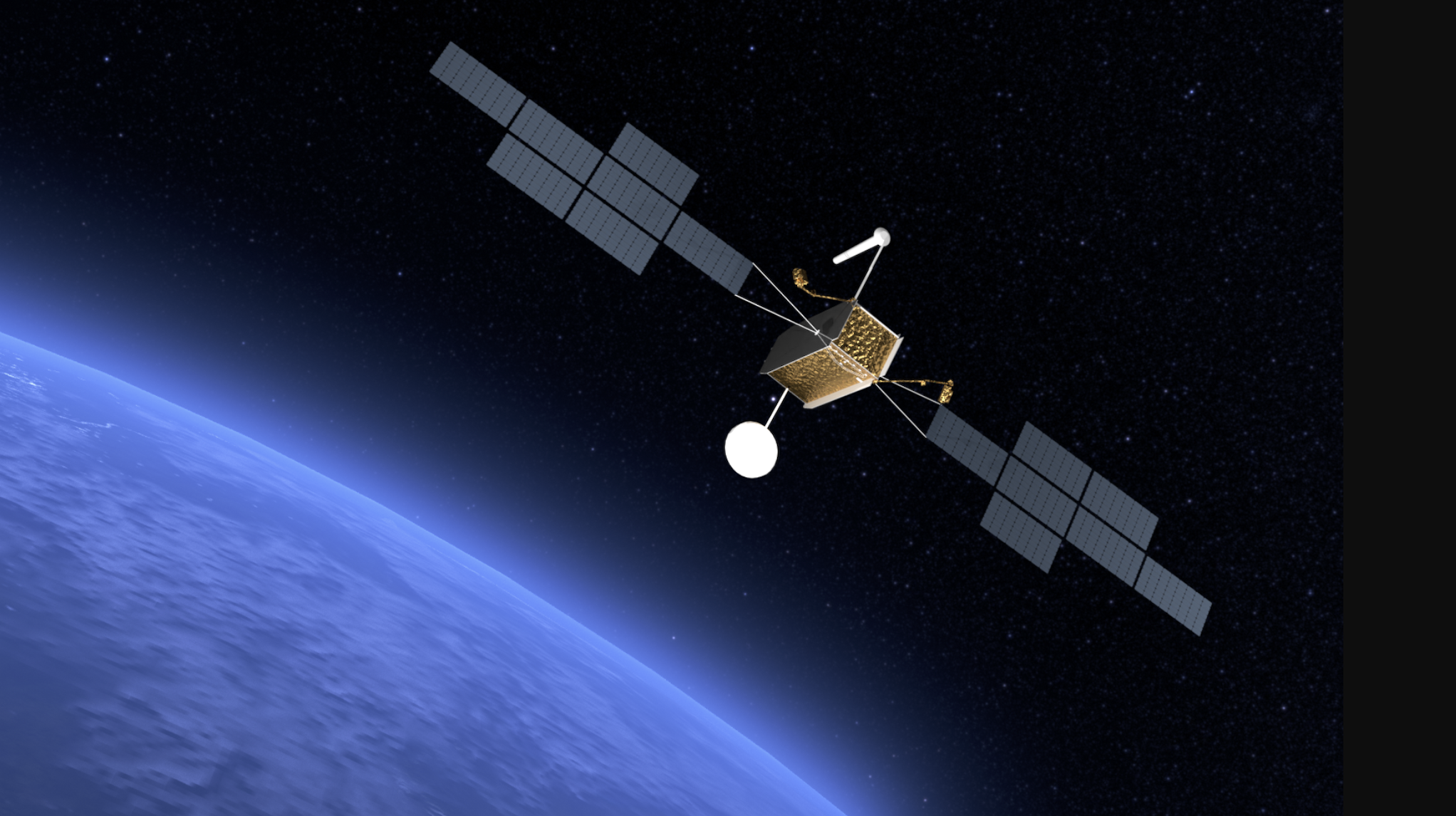
The German military has ordered two SatComtBw3 GEO-orbit telecommunications satellites from Airbus in a contract valued at 2.1 billion euros. Credit: Airbus Defence and Space
And again: “Communication satellites such as the [German] COMSATBw series and Heinrich Hertz [a dual-use technology demonstration satellite in geostationary orbit], as well as satellite constellations such as the planned IRIS² and the European Union GovSatCom provide robust and secure communication channels that are crucial for exchanging information between various civilian users, military units, and command structures.”