
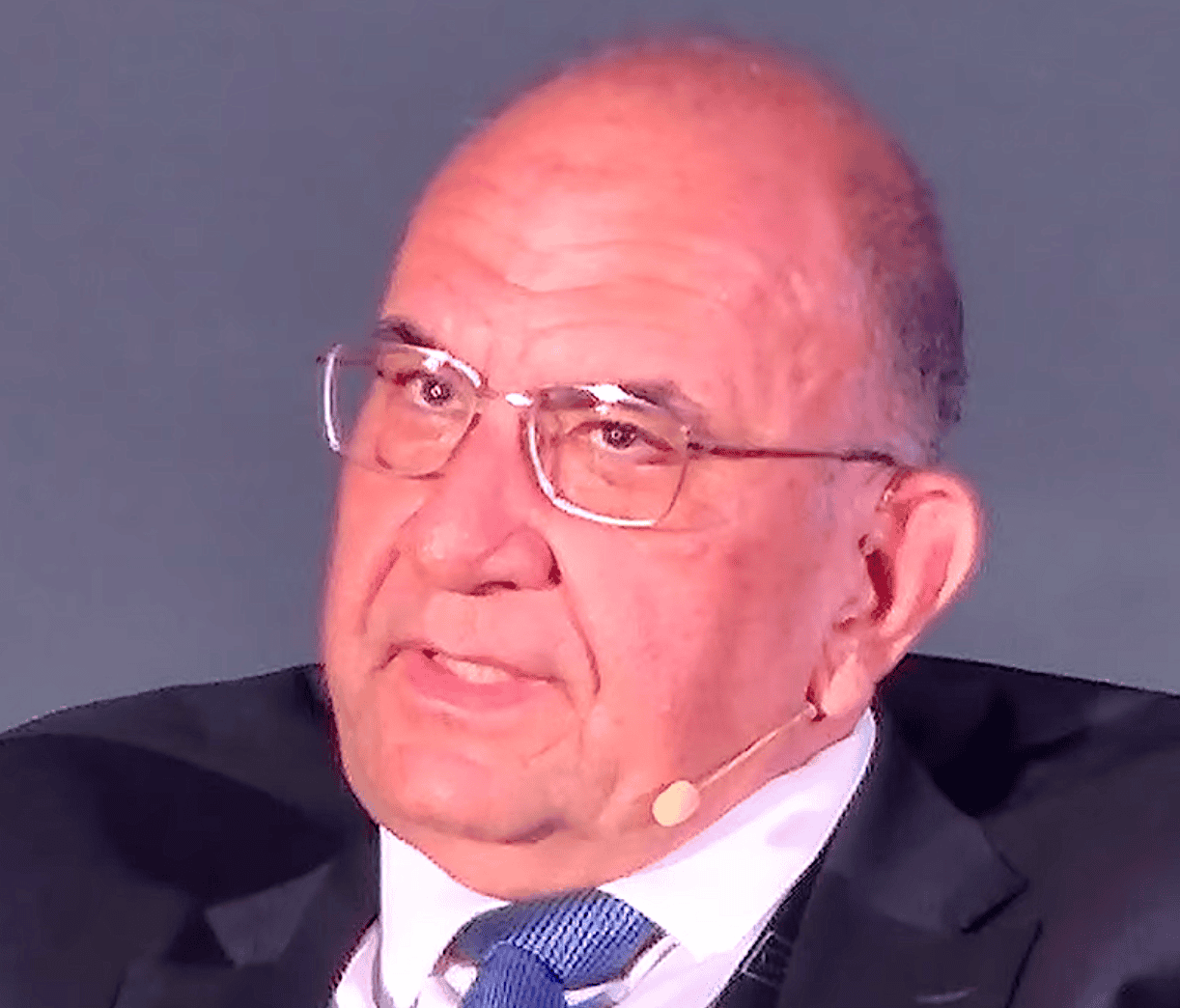
Christodoulos Protopapas. Credit: EU Space Days video
LA PLATA, Maryland — Greece’s HellasSat telecom satellite fleet operator, once considered a clear target for consolidation and ultimately purchased by Arabsat for $280 million, now finds itself in the thick of Europe’s sovereignty-focused space picture.
HellasSat, which has exclusive use of Greece’s satellite spectrum from the 39 degrees east slot, is providing HellaSat-2 and -3 capacity for the EU’s GovSatCom program alongside government satellites from France, Italy, Luxembourg and Spain. GovSatCom service began in January.
In addition, HellaSat’s next satellite, HellasSat-5, will carry a novel optical communications payload from prime contractor Thales Alenia Space, called SOLiS, that was funded by the France 2030 investment fund. Safran of France is providing an optical ground service.
An optical ground station in Cyprus will communicate with a station at the Côte d’Azur Observatory in southern France. The HellasSat 5 optical link is designed to send data at a rate of 1 Tbps and is designed to be interoperable with optical payloads in low Earth orbit developed for the European Space Agency’s HydRON program.
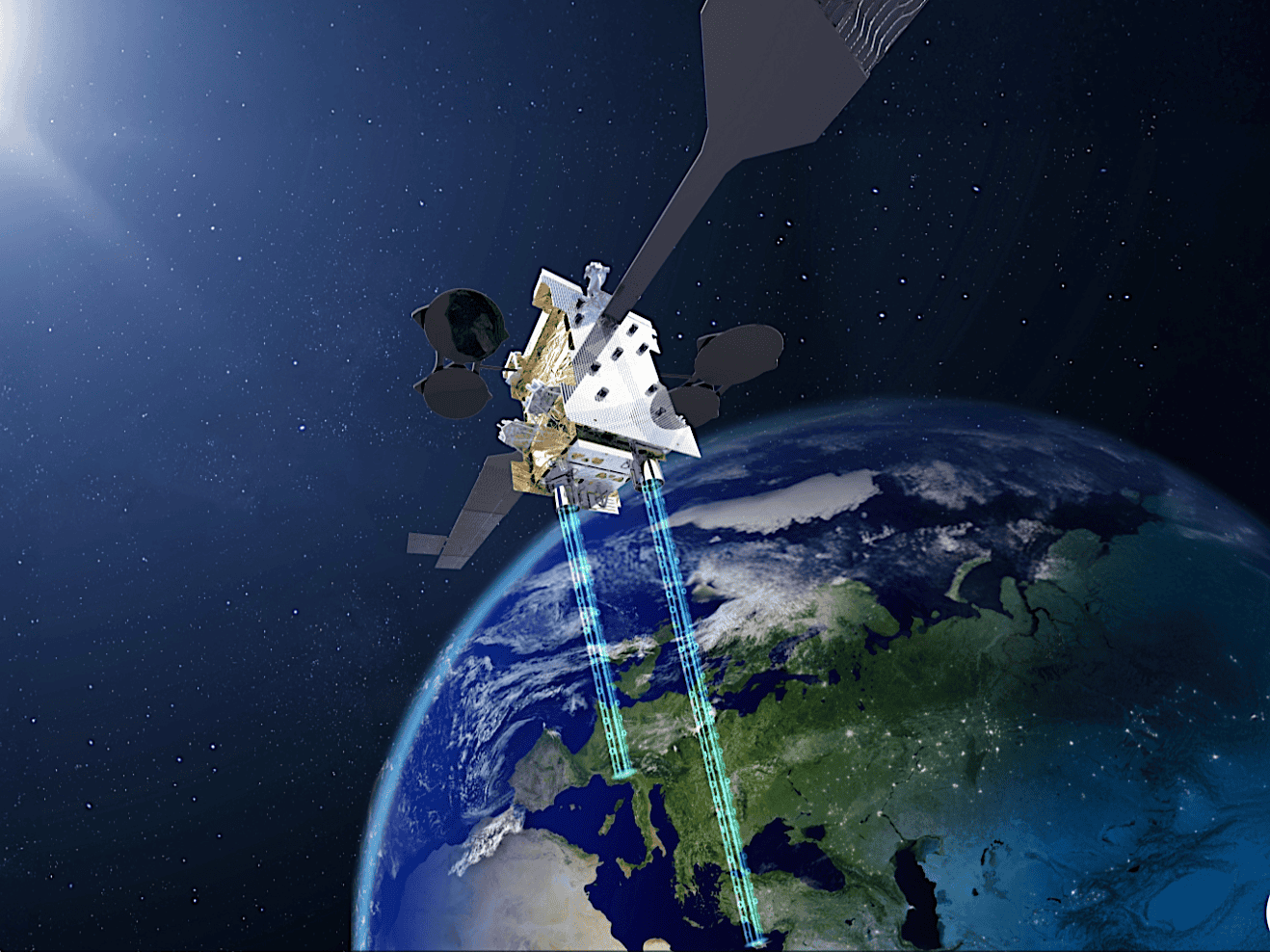
Hellas Sat 5, scheduled for launch in 2027. Credit: Thales Alenia Space
Marilena Ampelikioti, a consultant at the Greek Ministry of Digital Governance, said the Greek government has relied on HellasSat capacity since 2001. In 2017, the government formalized the relationship with national legislation.
Addressing the EU Space Days conference, held May 26-27 in Nicosia as part of the Cyprus EU presidency, Ampelikioti said Digital Governance Ministry is among the agencies that have access to government-purchased HellasSat capacity.

Credit: European Commission
In addition to being a GovSatCom satellite provider, Greece is host to one of two GovSatCom hubs, located on a secure military base that also has a NATO facility. Ampelikioti said the site will also be used for Europe’s future Iris2 multi-orbit secure connectivity constellation.
GovSatCom is an Iris2 precursor but likely will continue as backup for at least several years. Ampelikioti said other EU governments “have already requested [HellasSat] capacity under the GovSatCom pooling-and-sharing format. “We have successfully delivered their requests.”


Credit: EU Space Days video
She said there are still software bugs in the GovSatCom operation that need to be worked out during the current initialization phase. Part of the issue is that member states, when they name their national Competent GovSatCom Authority (CGA) must assure that the personnel has been trained in the use of the GovSatCom platform. GMV of Spain is under contract to the EU Commission to manage the GovSatCom Hub and is offering training sessions to national CGAs.
HellasSat was created by both the Greek and Cypriot governments, with Greece given management authority. The company’s maintains ground stations in both nations.
HellaSat CEO: We are profitable, with no debt
HellasSat Chief Executive Christodoulos Protopapas said the company several years ago realized that its historic business model of selling capacity for satellite broadcasting was eroding quickly. It diversified into the operation of data centers in Greece and Cyprus, connected with satellite gateways, and in Cyprus began operations of a digital terrestrial television service.
“We have only 58 employees and we are resistant to turbulence,” Protopapas told the conference. “Knowing that Starlink was coming, we diversified into ground services, solutions for defense projects. With this diversification HellasSat continues to be profitable, with zero debt. Our shareholders from 2001 have not injected capital. We use our operating cash flow.”
Starlink arrived in Greece and Cyprus in 2023 and since then both have become among Starlink’s top European markets.
Protopapas acknowledged the advantages of a multi-orbit network such as Iris2, which will have a LEO and a MEO-orbit constellation, but said geostationary satellite, especially those with flexible payloads, “will play a role in this new environment.”
Iris2 is behind schedule and may not be in full service before 2031, leaving another five years of interim service using the current GEO satellites such as HellasSat’s.
“This is intermediate until Iris2,” Protopapas said. “We welcome the development of Iris2, but there is room for geostationary satellites. With an intelligent payload in GEO you can offer complementary comms to LEO.”