

Roland Lescure. Credit: European Stability Mechanism
LA PLATA, Maryland — The French government on Dec. 12 outlined the reasoning behind its investment in satellite fleet operator Eutelsat’s OneWeb LEO broadband constellation but left open the question it must be asking itself: What happens if Eutelsat needs more?
Paris-based Eutelsat is reporting increased use of its 640-satellite OneWeb constellation and expects to complete the network of 44 gateway Earth stations by the end of 2026.
But the 1.5-billion-euro capital raise, now completed, looks to be short of what’s needed for Eutelsat to finance the refresh of its current OneWeb system with 340 additional satellites, and then immediately to begin paying its share of the European Commission’s IRIS2 constellation.
Eutelsat has estimated the total of these two capex programs at 4.2 billion euros ($4.9 billion).
French President Emmanuel in June had said he would attempt to secure investment in Eutelsat by other governments, inside and outside Europe. But aside from a UK government investment to maintain its current equity stake, none has stepped up.
The French Defense Ministry in June signed a 10-year, 1-billion-euro contract with Eutelsat to have access to OneWeb capacity and, importantly, to effect modifications to the constellation to make it more adaptable to military use — one of the principal markets for IRIS2.
The modifications include building payloads to be hosted on the 440 OneWeb Gen 1 extension satellites to be built by Airbus Defence and Space.
The French government is now Eutelsat’s biggest shareholder, with a 29.65% stake.
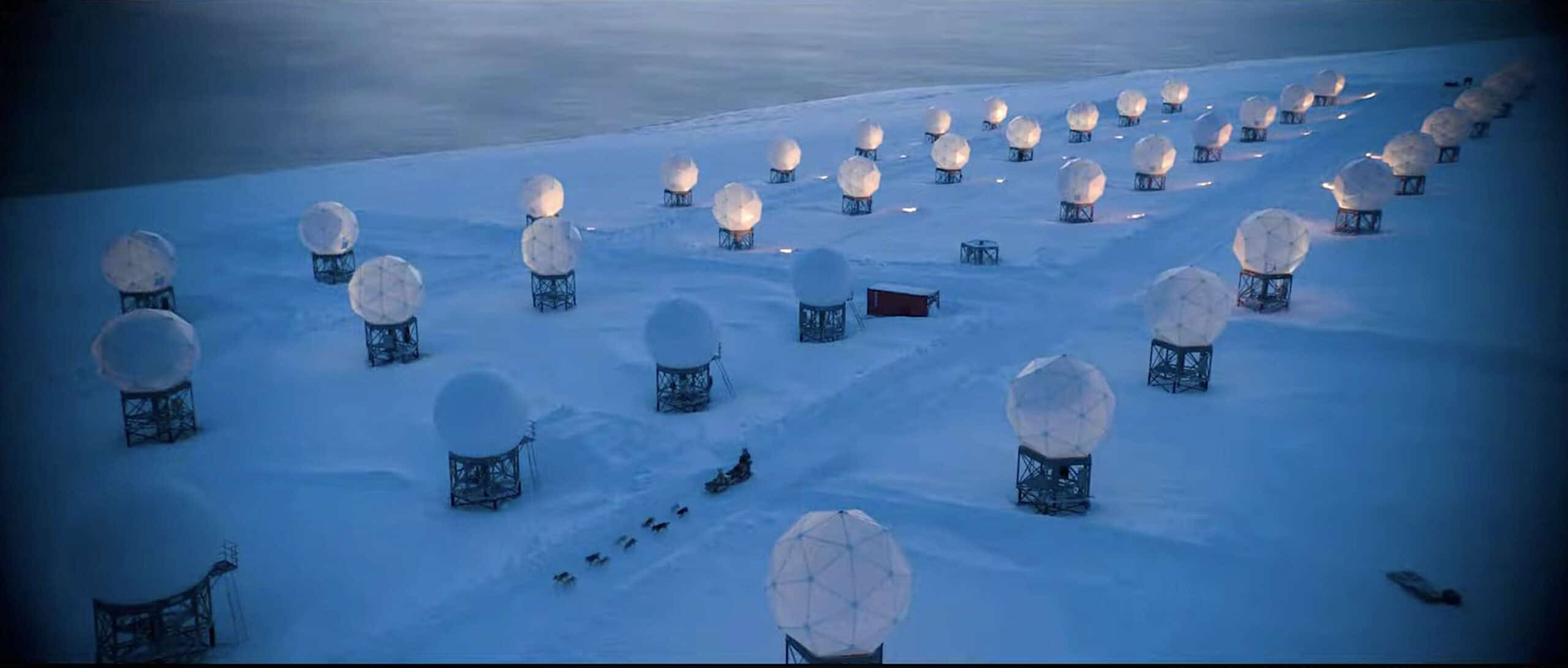
OneWeb gateway Earth stations in Svalbard.
Credit: Eutelsat OneWeb
Here is how the French Ministry of Economy, Finances and Industrial Sovereignty explained the investment in a Dec. 12 statement.
“The state has decided to support Eutelsat’s strategy by participating in these capital raises in the amount of 749.3 million euros — half of the total operation.
“This operation… will assure the development of Eutelsat in the area of LEO constellations, a strategic segment for tomorrow’s telecommunications that is witnessing strong growth.
“This operation constitutes a decisive step in Eutelsat’s strategic and financial roadmap. It reinforces the group’s financial flexibility by accelerating its de-leveraging while guaranteeing sufficient resources for its development plan, notably for investments in its LEO constellation and the future sovereign European constellation, IRIS2.
“It is a decisive operation in the consolidation of a first-rank European actor in the satellite communications market, reinforcing the technological and strategic sovereignty of Europe in this area. Eutelsat is distinguished by its unique position as the only operator combing a fleet in GEO orbit and a constellation in LEO, providing a technological and strategic advantage without equal.”
It’s not clear what advantage Eutelsat’s GEO fleet provides beyond financial. While in decline, it is still responsible for half of Eutelsat’s revenue. Within two years, Telesat Canada will be able to boast of the same GEO-LEO advantage, but at this point Telesat appears ready to let its GEO fleet wind down without being replaced.
French Economy Minister Roland Lescure added:
“In becoming Eutelsat’s largest shareholder, we reaffirm our determination to consolidate a strategic actor at the heart of the critical infrastructures of tomorrow necessary fore our sovereignty.
“France and Europe now have the means to compete in the battle of the constellations in low Earth orbit, a key telecommunications sector, in backing Eutelsat’s strategy of playing a key role ij the deployment of Iris2, Europe’s future sovereign constellation. It’s the choice of a Europe that is building its technological and strategic destiny.”