
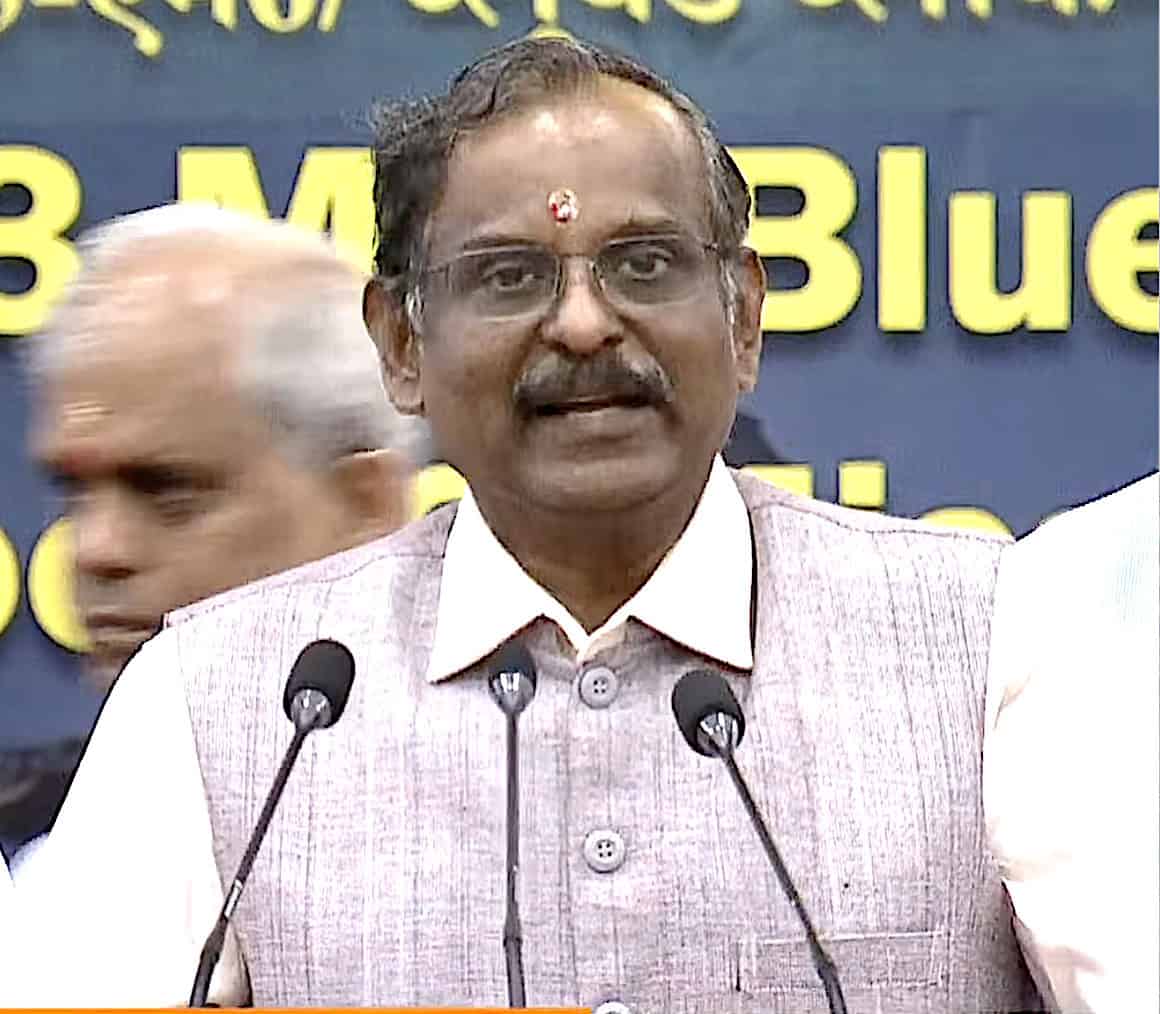
ISRO Chairman V. Narayanan. Credit: ISRO video
LA PLATA, Maryland — The successful Dec. 24 launch of AST SpaceMobile’s BlueBird 6 satellite aboard India’s LVM3 heavy-lift rocket set leu milestones both for direct-to-device operator AST and for the Indian launch program.
BlueBird 6 is the first of the Block 2 Bluebirds, which offer 10 times the throughput of the previous five Gen 1 satellites and are triple the size of the earlier satellites.
BlueBird 6 weighed about 6,100 kilograms at launch and carries a phased array antenna that, when deployed, is 223 square meters, far and away the largest antenna ever deployed in low Earth orbit.
“We are now in control of BlueBird 6 from our D.C. command center and with nominal telemetry,” AST SpaceMobile Chief Executive Abel Avellan said in a posting on X after the launch.
The next big milestone will be the deployment of the antenna. The five previous BlueBirds have performed this maneuver, but at three times the size, BlueBird 6’s unfurling will be closely watched.
Credit: AST SpaceMobile November 10, 2025, investor presentation
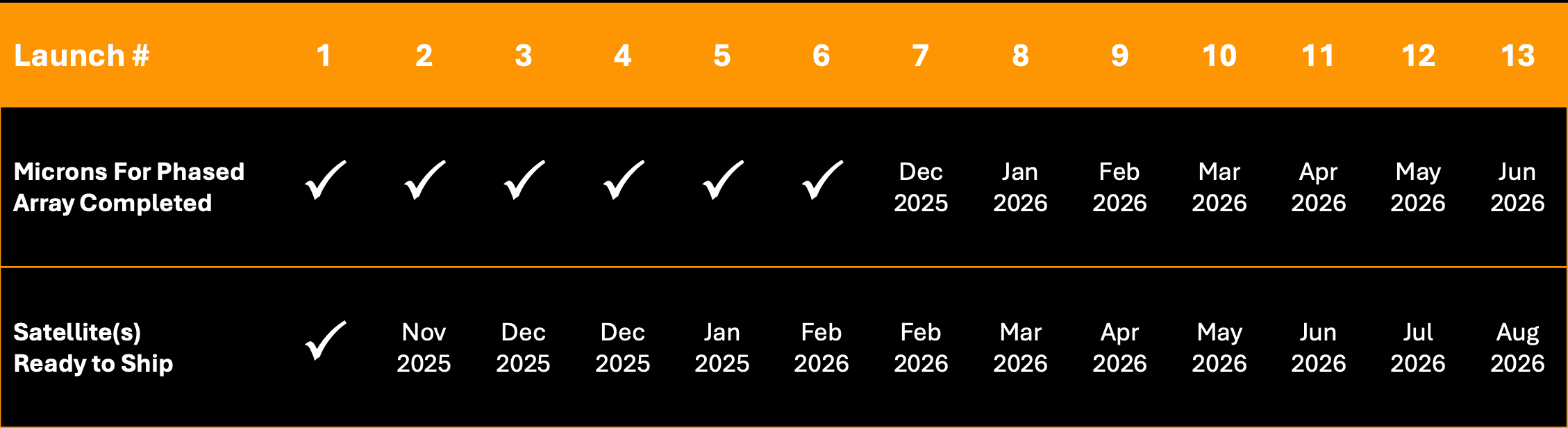
AST SpaceMobile has told investors to expect to expect four more launches by March, the first on a SpaceX Falcon 9 rocket, and that the company will have 45-60 BlueBird satellites in orbit by the end of 2026.
The Dec. 24 launch, from the Satish Dhawan Space Centre on India’s southeast coast, was the ninth consecutive success for the LVM3 rocket, the heaviest-ever spacecraft launched from India and the first commercial launch dedicated to a U.S. customer.
LVM3 has launched fully commercial missions twice before, in October 2022 and March 2023, each carrying 36 Eutelsat OneWeb broadband satellites into a 600-kilometer orbit, from where the satellites used their own propulsion to climb to OneWeb’s 1,200-km operating orbit. Total payload mass for each of these missions was about 5,800 kilograms, according to the Indian Space Research Organization (ISRO).
ISRO Chairman V. Narayanan, who is also secretary of India’s Department of Space, said the BlueBird 6 launch demonstrated the LVM3 rocket’s increasing cadence and its accuracy.
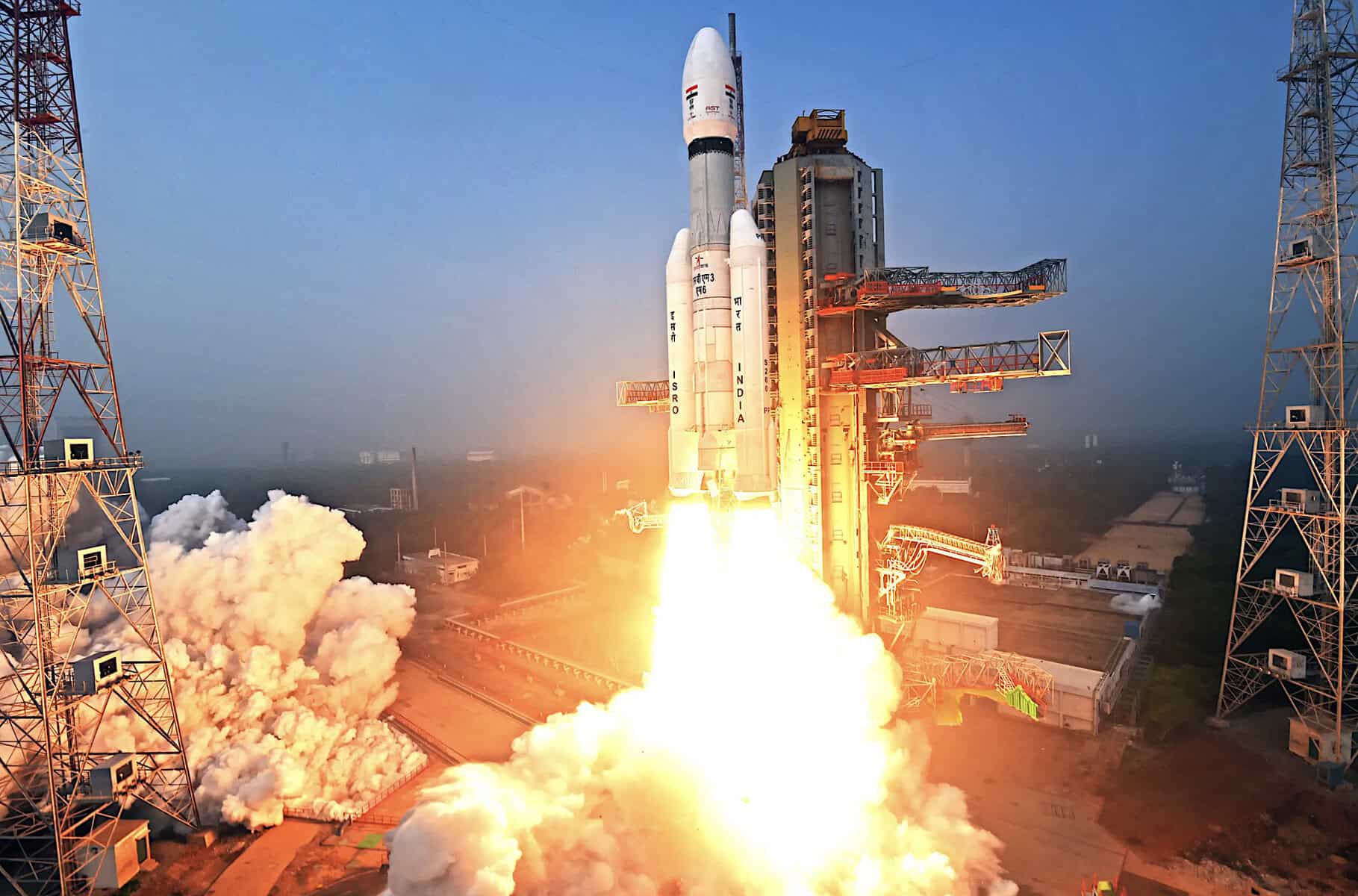
The Dec 24 launch was the i9th overall for the LVM3 rocket, its heaviest payload and occurred 52 days after the previous flight. Credit: ISRO
“We had launch launch on 2 December, so this is the first time we have had successive launches within 52 days,” Narayanan said. “The target orbit was 520 kilometers circular and we got to within 1.5 kilometers, at 518.5 kilometers, “one of the best performances of any launch vehicle in the global arena.”
M. Mohan, director ISRO’s Liquid Propulsion Systems Center, LPSC, and acting chairman of New Space India Ltd., a commercial company responsible for marketing India’s rockets, said BlueBird 6 arrived in India on October 16 and was obliged to weight until the LVM3 rocket completed its launch of India’s GSat-7R multi-band communications satellite, developed for the Indian Navy. The launch, to geostationary transfer orbit, was completed on Nov. 2.
“We started planning for the first week of December but it had to be postponed due to various reasons,” Mohan said.
Narayanan said India has launched 434 satellites for 34 nations. Notable among these missions was the February 2017 launch of the lighter PSLV rocket carrying 104 satellites, 101 of them non-Indian and many from the United States, into low Earth orbit.
“The reward for hard work is more work,” Narayanan said, noting a busy year for Indian launches including the TDS-01 technology demonstration satellite, whose payloads include India’s first indigenous stationary plasma electric thruster, intended to replace chemical propulsion on future ISRO satellites; and a demonstration of atomic clocks for future Indian positioning, navigation and timing satellites.