

Adi Adiwoso, chief executive, PSN. Space Intel Report photo
JAKARTA — Indonesia’s Pasifik Satellit Nusantara (PSN) satellite fleet operator, up to now focused on providing broadband satellite links to Indonesia’s underserved areas, has launches six equatorial-orbit IoT/D2D satellites as part of a planned sovereign Indonesian constellation, PSN Chief Executive Adi Rahman Adiwoso said.
He said the first six satellites were launched some two years ago aboard a Rocket Lab Electron rocket from New Zealand in a mission whose customer was not identified, at PSN’s request.
Adiwoso was apparently referring to a November 5, 2024, Electron launch. Rocket Lab had described that launch as a single satellite for a commercial customer that had contracted the flight just 10 weeks before liftoff.
The constellation is designed ultimately to include “at least 100-120” satellites to provide coverage between 15 degrees north and 15 degrees south latitude and to cement Indonesia’s drive to become autonomous in narrowband and broadband satellite communications.
“This allows us to have sovereignty in IoT, D2D and GEO” satellite connectivity, he said.
PSN entering geospatial imagery market: Common theme across GEO, LEO IoT/D2D and EO: sovereignty
In remarks May 12 during the Apsat 2026 conference here, Adiwoso said the company is also entering the Earth observation market, a decision also made by other Asian telecommunication satellite operators including Sky Perfect JSat, Thaicom and Measat.
“We have decided to enter EO [Earth observation],” Adiwoso said. “We have finished our engineering model and our preliminary design review and hope to launch the first one, with a 1-meter resolution, in the fourth quarter of 2027.
“We have used others but we have found out that you do have to have your own sovereign system,” Adiwoso said. “It’s very simple: The United States of America has now not allowed any pictures of the Middle East to be sold to third parties, meaning Chinese EO is now selling pictures of the Middle East.
“A foreign system can decide, for any reason, to black you out, creating massive havoc. The global systems [of geospatial imaging and telecommunications satellites] have raised the consciousness of people to look at sovereign systems. This is on everybody’s mind. Even the Kingdom of Oman bought a satellite fore a sovereign system.”
Oman has purchased a geostationary-orbit telecommunications satellite from US-based small-GEO manufacturer Astranis. Oman has described the transition as giving Oman full decision-making authority over its use.
Some providers of high-resolution commercial satellite imagery have restricted access to the Middle East since the start of the Iran war. Planet Labs in particular has done this, but recently clarified that its regular customers can continue to received the imagery.
The restriction, Planet said, applies only to a limited set of transactions that could result in the publication of the imagery: http://bit.ly/4xkNijm
For the IoT/D2D constellation, Adiwoso said that PSN was working with a partner to deploy the remaining satellites by late 2027 or 2028.

“It’s a daring move for us, but we have no choice,” he said. “We already have six satellites up there, and they are working pretty well. In another year we will start mass production. The [planned] ground terminal is the size of an Apple Tag.
“We have spent a lot of time and money. It is a purely equatorial system, not billions of dollars. It is something we can afford. The IoT will be on VHF and UHF and the D2D will be at the low end of the frequency.”
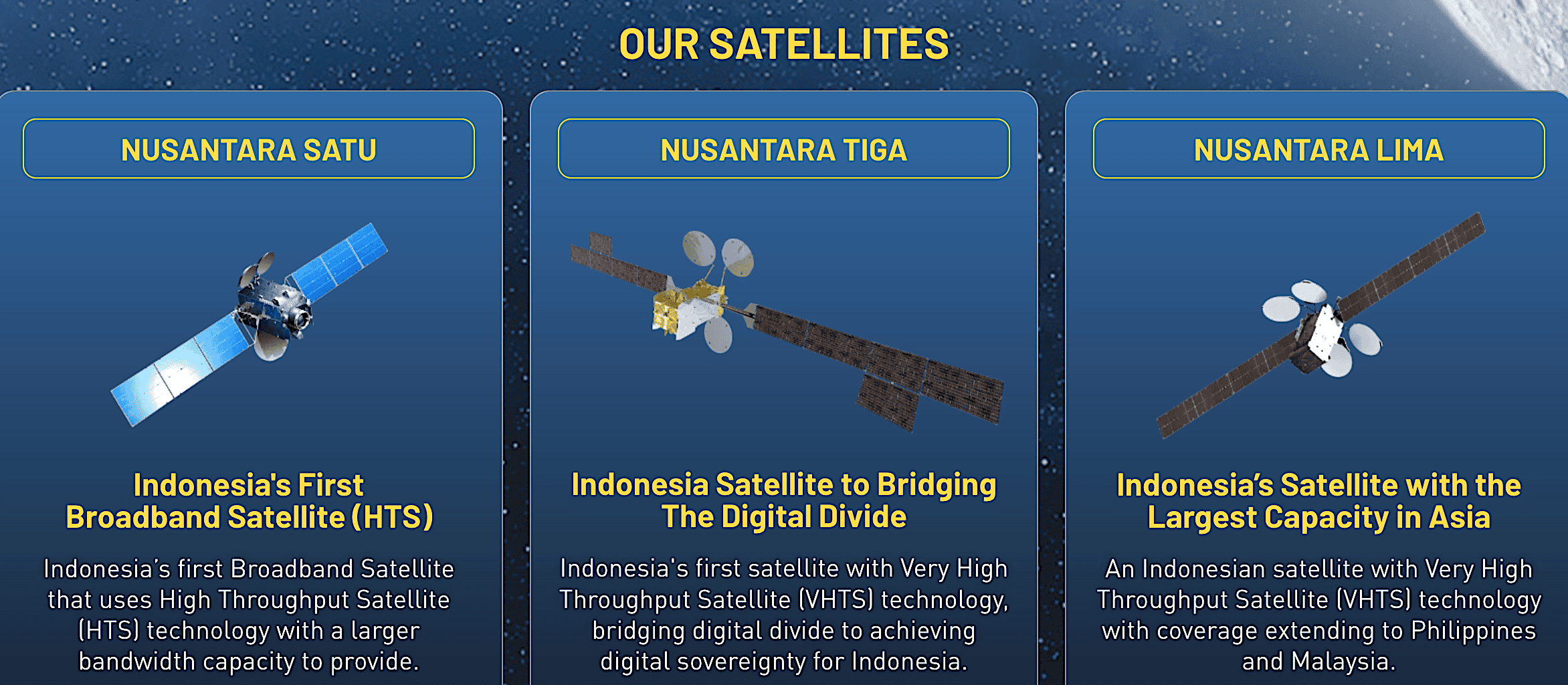
Credit: PSN
PSN’s current core business is providing broadband satellite capacity in Indonesia and Malaysia, with an extension into the Philippines. Adiwoso said total capacity at the company’s disposal was 355 Gbps. PSN built its own user ground stations, which he said include a 60-cm antenna and a total weight of 8 kg.
The newest satellite, Nusantara Lima, was built by Boeing Satellite Systems and launched in September 2025, arriving at its 113 degrees east orbital slot in April. The company announced the start of commercial operations starting on May 13.
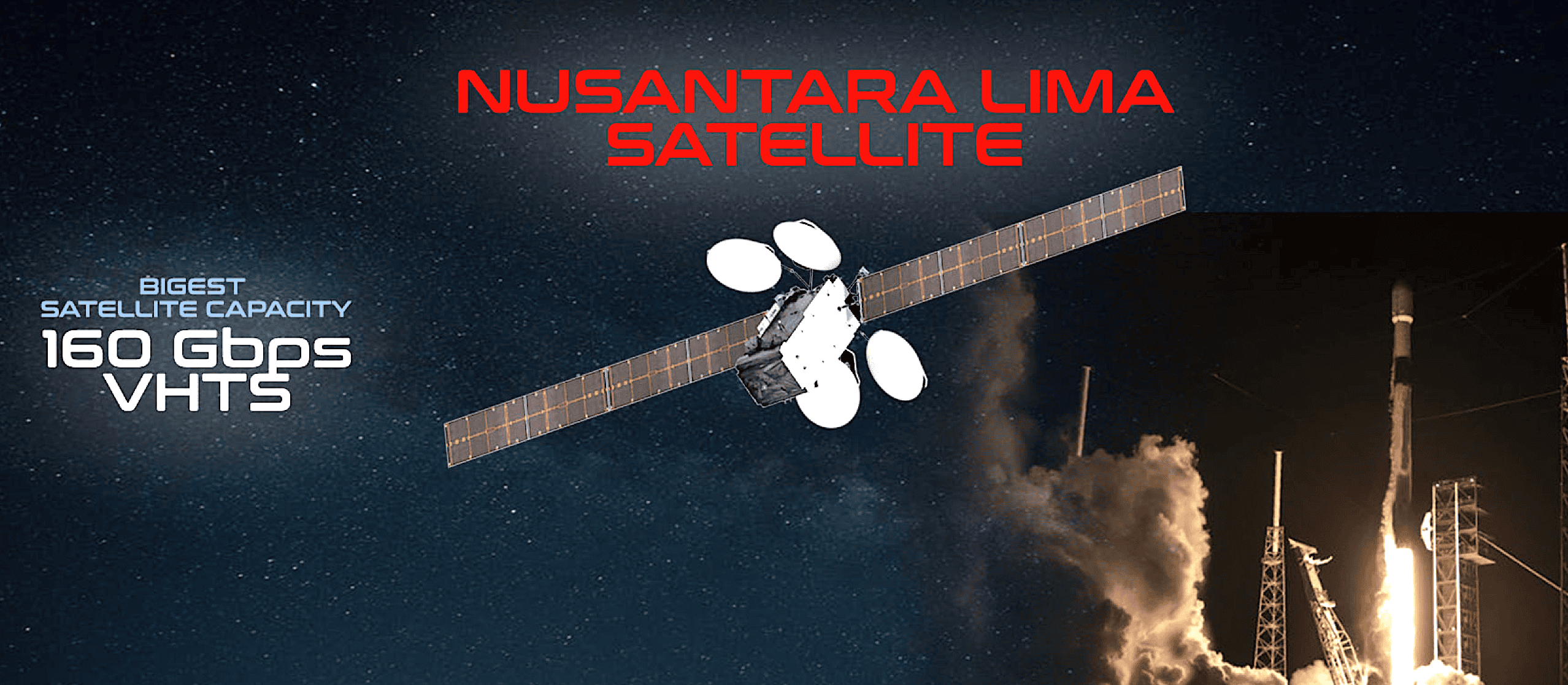
Pasifik Satelit Nusantara (PSN) began commercial operations of the Boeing-built Nusantara Lima satellite on May 13. :PSN Chief Executive Adi Rahman Adiwoso has set a challenge to his company and to Starlink and Amazon Leo: Who can provide capacity to Indonesia at $3 per Mbps per month? Credit: PSN
The satellite was initially built for Global IP, a startup operator in Africa, before the contract was cancelled as it was nearing completion following a dispute on financing and the extent of Chinese ownership between Boeing and Global IP.
PSN challenge to Starlink, Amazon Leo and itself: deliver service profitably at $3/Mbps/month
PSN undoubtedly got a rock-bottom price. Whether the price was low enough for the company to offer capacity at $3 per Mbps per month remains to be seen, but Adiwoso said he is challenging Starlink and Amazon Leo to meet that price, if they can.
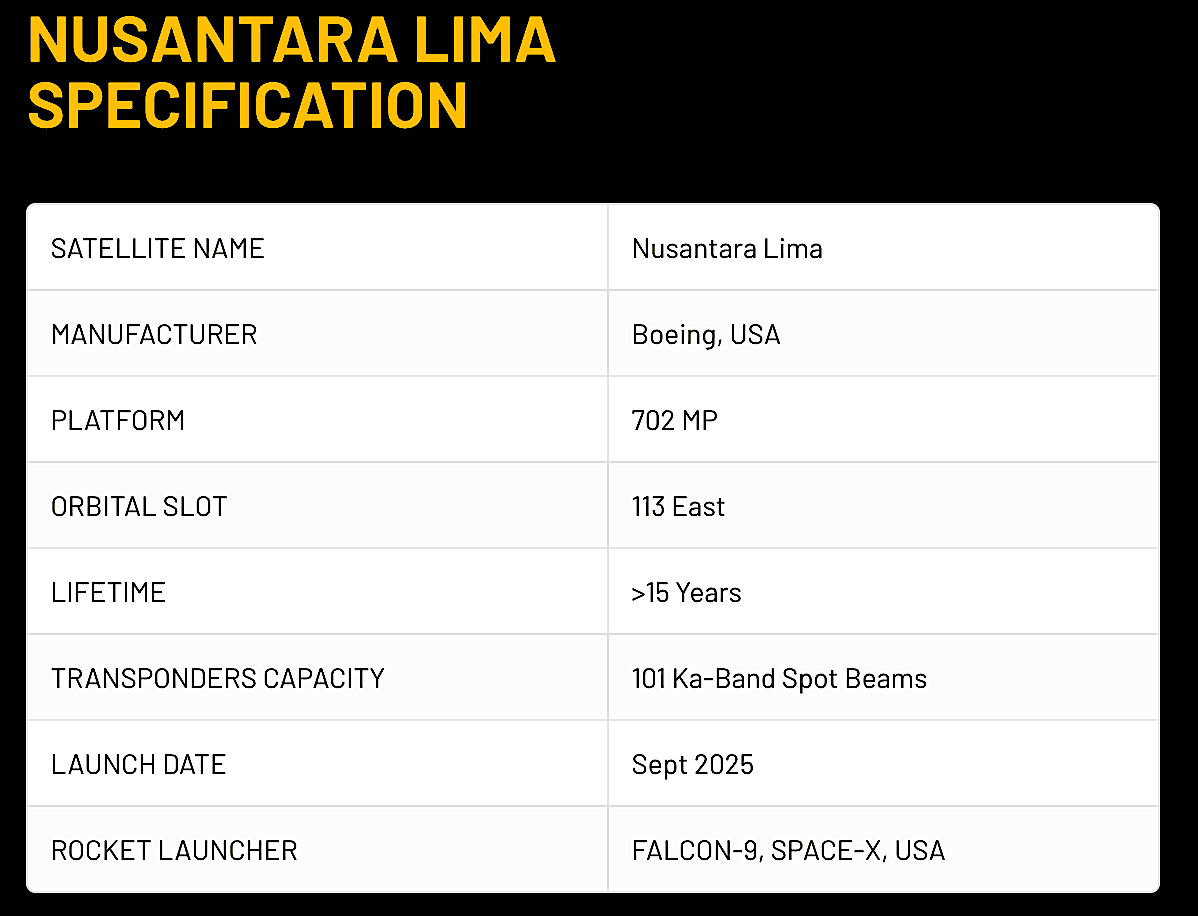
Credit: PSN
“If anybody can provide $3 per Mbps per month I am interested in talking to you,” Adiwoso said.
The company said the satellite is “a vital component in realizing national space sovereignty. [It] will play a strategic and crucial role in improvising services in the sectors of education, health, government services, digital economy, defense and security, and other areas… particularly those in Frontier, Outermost and Disadvantages areas.”
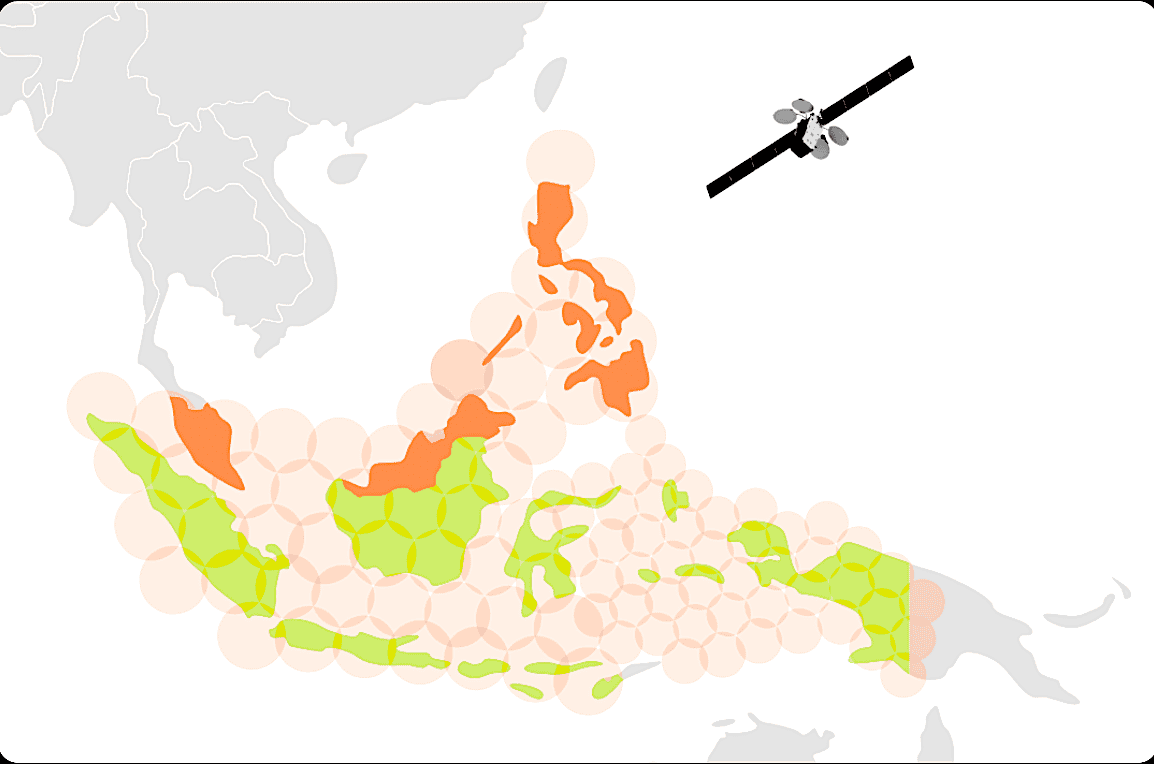
The bulk of Nusantara Lima’s capacity is intended for Indonesia, but the PSN is also providing service to the Philippines and Malaysia. Credit: PSN
Indonesian Minister of Communication Meutya Hafid said 80% of Indonesians are now connected to the internet. “This means the government still has homework to do regarding the remaining 20%. Our hope is for 280 million Indonesian citizens to be connected.”