
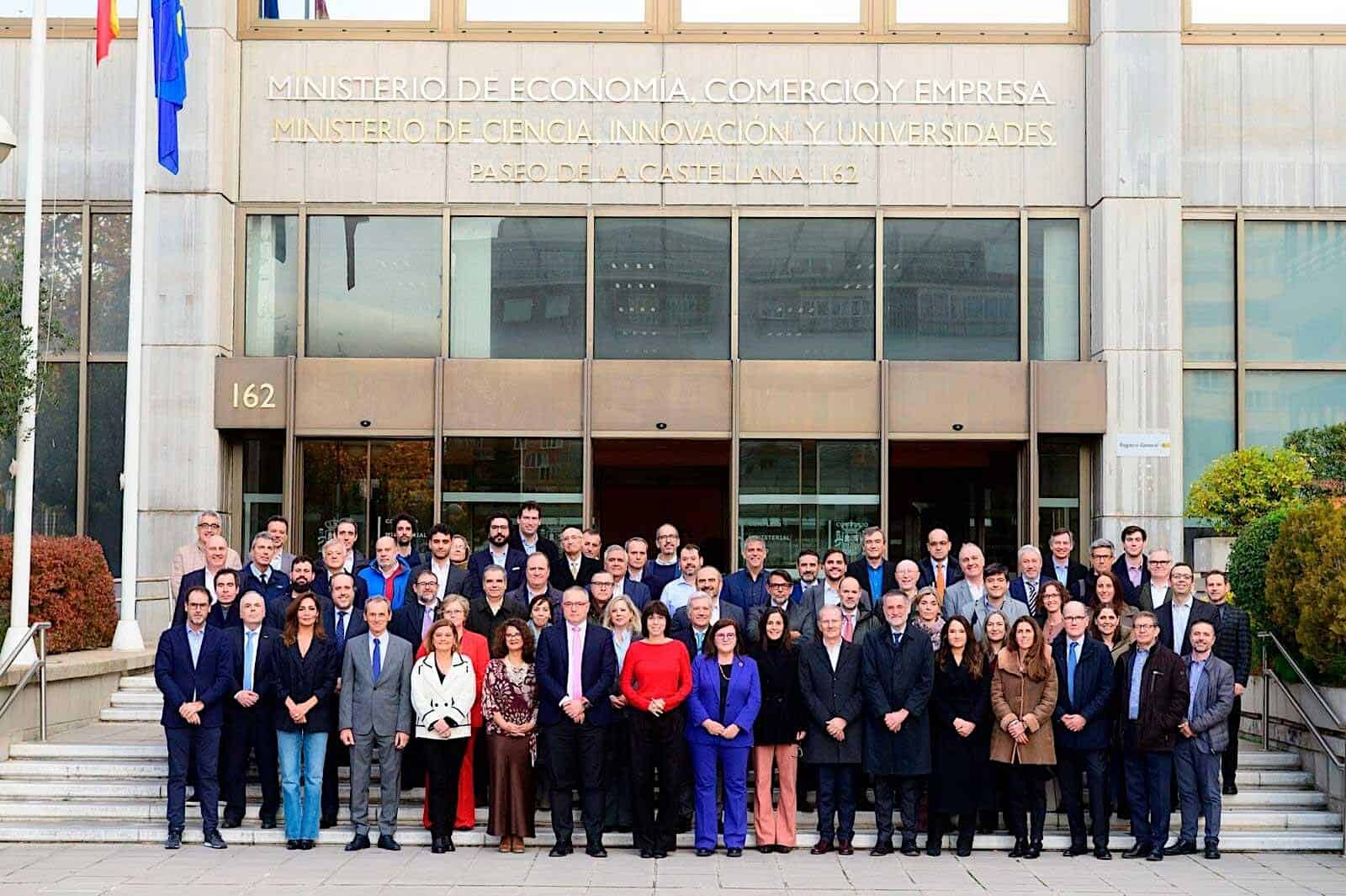
Spain’s contribution to the European Space Agency made at ESA’s Nov. 26-27 ministerial council doubled from the previous ministerial in 2022, to 1.85 billion euros, vaulting Spain into fourth place among ESA contributing nations with an 8.44% share of the subscription total from the ministerial. It was the most dramatic movement in a ministerial that also saw sizable increases from Germany, Poland and Canada, among others. The above photo shows Spanish Minister Diana Morant, front row center in red shirt, surrounded by Spanish government and industry space officials. Credit: Spanish Ministry of Science, Innovation and Universities.
BREMEN, Germany — Spain had promised it would make a splash at the European Space Agency (ESA) CM25 ministerial conference and it did not disappoint.
In a year that saw subscriptions from ESA’s contributing governments increase by 30%, to 22.3 billion euros — a 17% inflation-adjusted increase — Spain doubled its contribution, to 1.85 billion euros from 920 million at the previous ministerial conference in 2022.
Spain now moves into 4th place among ESA member nations, ahead of UK, Belgium
Spain now accounts for 8.44% of ESA’s planned spending over the next three years and is in fourth place, ahead of the United Kingdom (7.88%) and Belgium (5.04%). Spain ranked sixth in ESA contributions up to now, behind both these nations.
The UK’s positioning in ESA fell from 11.19% in 2022 to 7.88%. This is partly explained by the fact that Britain is not a large contributor to ESA’s Ariane 6 heavy-lift and Vega medium-lift launcher programs or to ESA programs associated with the European Union, of which Britain is no longer a member.
Spanish Science, Innovation and Industries Minister Diana Morant, who led Spain’s delegation to the CM25 conference, focused her remarks on security and autonomy in explaining Spain’s decision to raise its ESA profile.
This may be surprising given that Spain is the only NATO member state to have refused to commit to increasing its military budget to 5% of GDP by 2035.
The Spanish government said raising its military budget to 2% of GDP, from 1.28% in 2024, would be enough.

Diana Morant, Spanish minister for science and innovation. Credit: Spanish EU presidency
“There is a general consensus on the exceptional circumstances in which we find ourselves,” Morant told the conference Nov. 26. “Space is now a critical infrastructure that supports technological progress and security.
“Given the global geopolitical situation influencing our decisions, we have to take those external conditions into account as well as the new challenges that we face in the space sector.
“Alliance is the way forward. Spain will continue to work with ESA to develop its own industry and its own international space initiatives. [ESA] should be the architect of the European space infrastructure, with industry policy that takes into account all of the stakeholders, particularly SMEs [small- and midsize companies], startups and medium sized businesses.
“ESA will be the main tool that allows Europe to guarantee strategic autonomy with its new launchers and with infrastructure that will offer improved, resilient services for Earth observation, PNT and secure communications.”
Spain to ESA ministerial: Our contributions are directly related to benefits to Spanish industry
Behind Morant’s remarks is a clear statement that ESA geographic-return principle, which guarantees that national contributions to the agency will return to the member states in strict proportion to the contributions, remains as relevant as ever.
The French government has been vocal in calling for a restructuring of geographic return, if not its outright abolition.
French Research Minister Philippe Baptiste, addressing the conference just minutes before Morant, said Europe “has to reform. It has to give up its pipe dreams, starting with geographic return.” France remains alone in its position among ESA governments and its weight in ESA is not increasing.
While still ESA’s second-largest contributor after Germany, France for the next three years will account for 16.58% of ESA’s budget, down from 18.94% for the past three years.
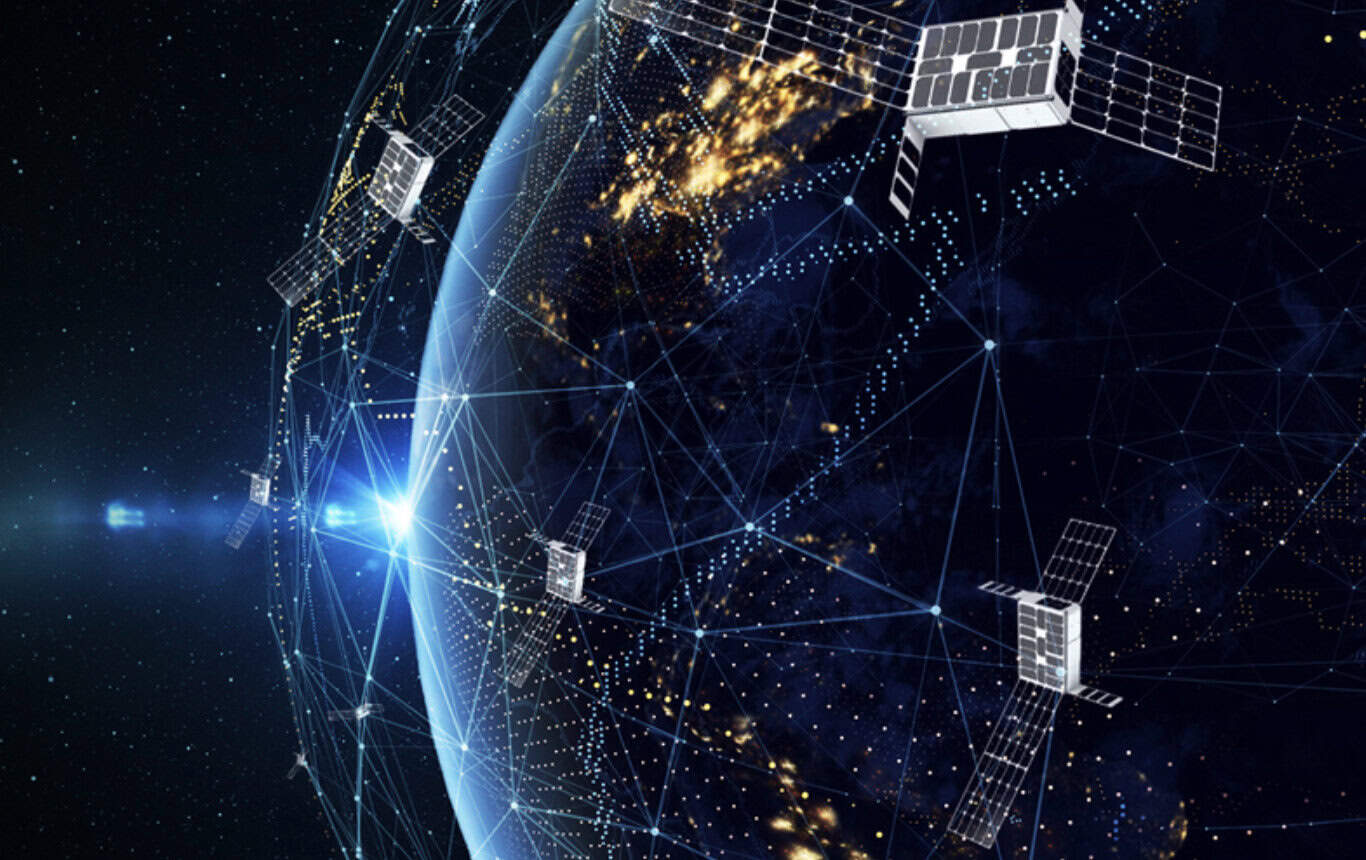
The Atlantic Constellation. Credit Open Cosmos
Like Italy, Portugal, Greece and other ESA members, Spain has hired ESA to manage space programs funded by the European Resilience and Recovery Fund. In Spain’s case, its the Spanish half of the Atlantic constellation of multi-sensor Earth observation satellites.
This had the effect, at CM25, of adding 325.01 million euros to the European Resilience from Space Earth observation budget, making Spain the single largest contributor to that program.
Spain is also the fourth-largest contributor to ESA’s Program Related to EU Secure Connectivity, behind France, Germany and Italy. Spain’s Hispasat satellite fleet operator is part of the SpaceRise consortium that is designing the Iris2 multi-orbit secure connectivity constellation, with special responsibility for Iris2’s low-LEO segment, where technology demonstration will occur.
Spain is a regular contributor to the Ariane 6 and Vega-C launcher programs, and invested the full 169 million euros in startup PLD Space’s Miura 5 rocket as part of ESA’s European Launcher Challenge.
“This commitment will allow us to soon reach a new milestone, which is to place Spain among the 10 countries with their own capacity for access to space,” Morant said at a Dec. 5 post-CM25 event at her ministry. “The Miura 5 launcher, which is being developed by PLD Space, can be incorporated into the future generation of European launchers.”
Credit: ESA
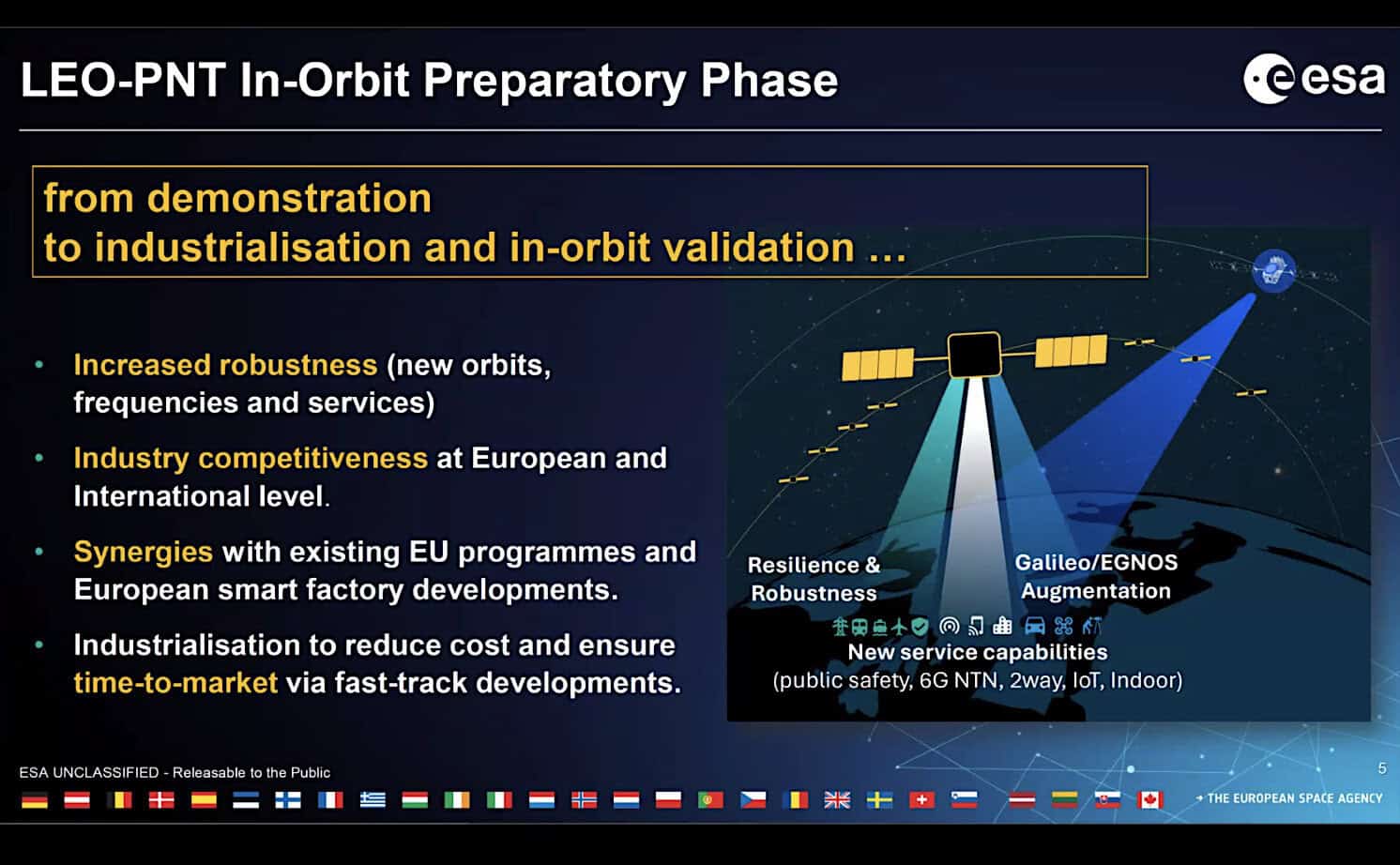
In a demonstration of Spain’s willingness to vie for leadership in ESA, the Spanish government committed to funding 138.01 million euros in the LEO-PNT program, which is fielding a small constellation of technology demonstration satellites to develop alternative positioning, navigation and timing signals to the L-band used by Europe’s Galileo and the US GPS.
Spain is second only to Germany in LEO PNT and head of Italy and France.