
Credit: Planet June 4, 2026, investor presentation
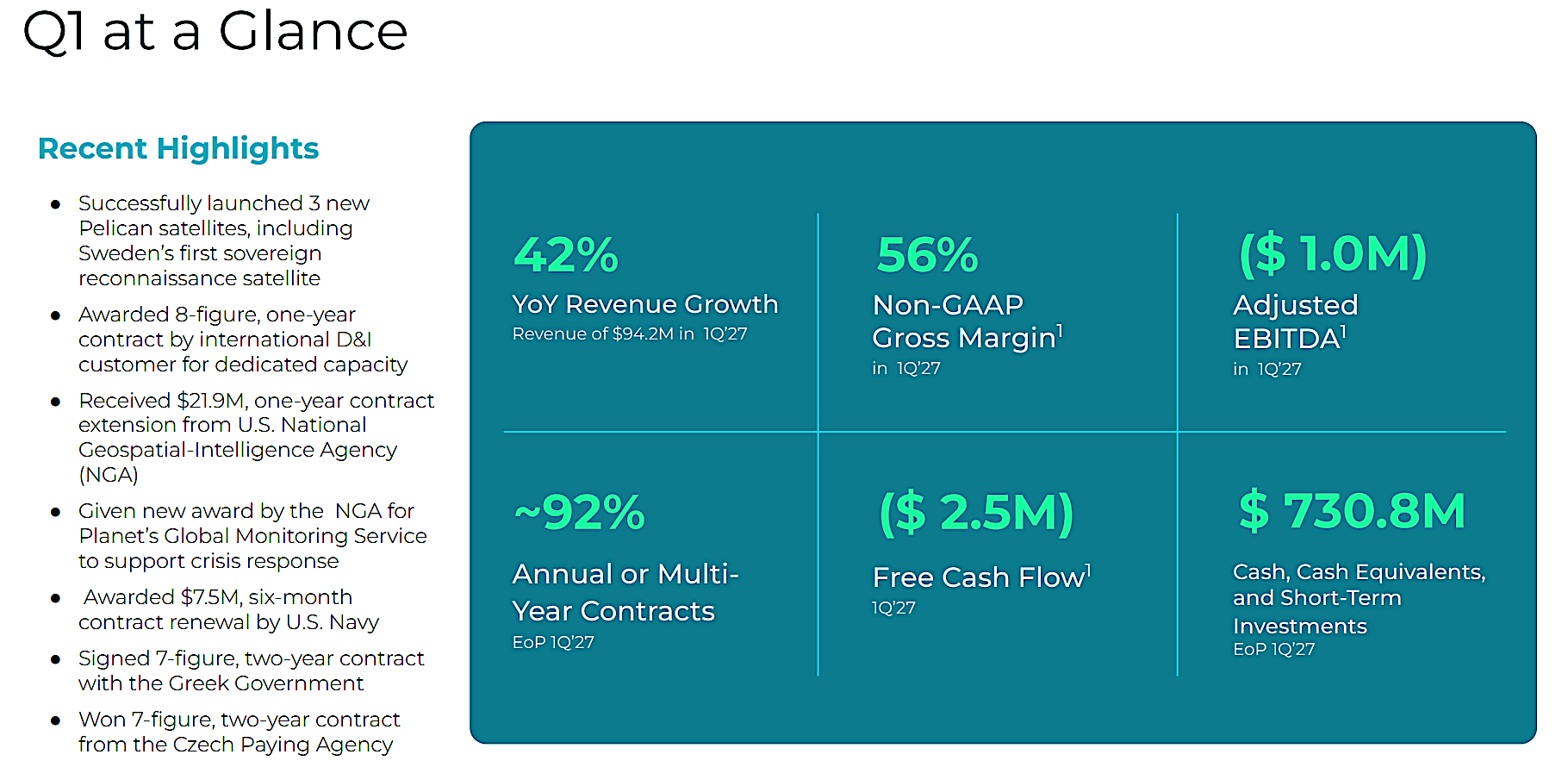
LA PLATA, Maryland— Planet Labs PBC reported record revenue for the three months ending Jan. 31, including a 20% increase in commercial revenue, to $17 million, which the company said results from a “reset” of its approach that is now bearing fruit.
Planet reported a negative $1million in adjusted EBITDA for the quarter but said it is maintaining course for positive EBITDA for the fiscal year ending Jan. 31.
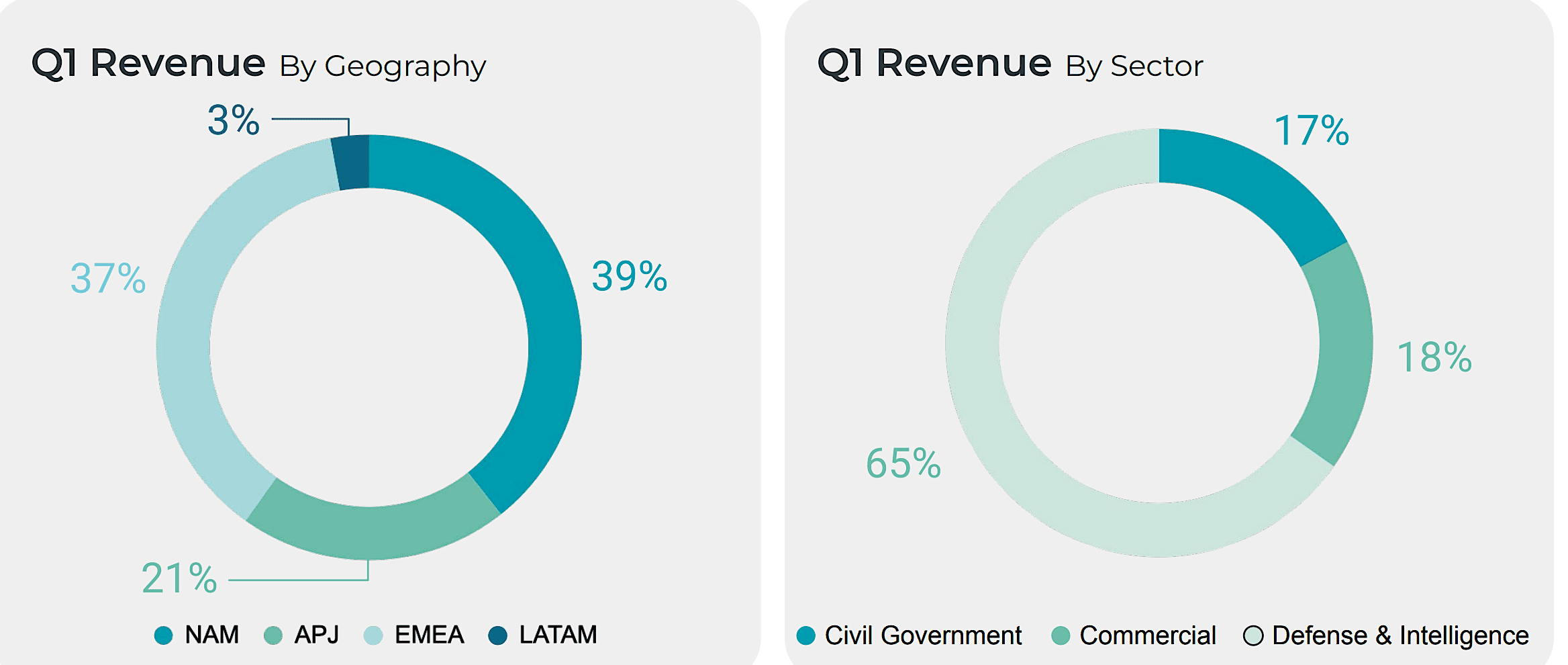
Defense and Intelligence (D&I) remains the prime mover of Planet’s results, and increased 65%, to $94.2 million, during the quarter. Civil government business was flat at $16 million.
Credit: Planet June 4, 2026, investor presentation
Planet reported several 7-figure deals with the Greek, Czech and Scottish governments during the quarter and booked an 8-figure, one-year contract with an unnamed government D&I customer that will get immediate access to dedicated Planet satellite capacity.
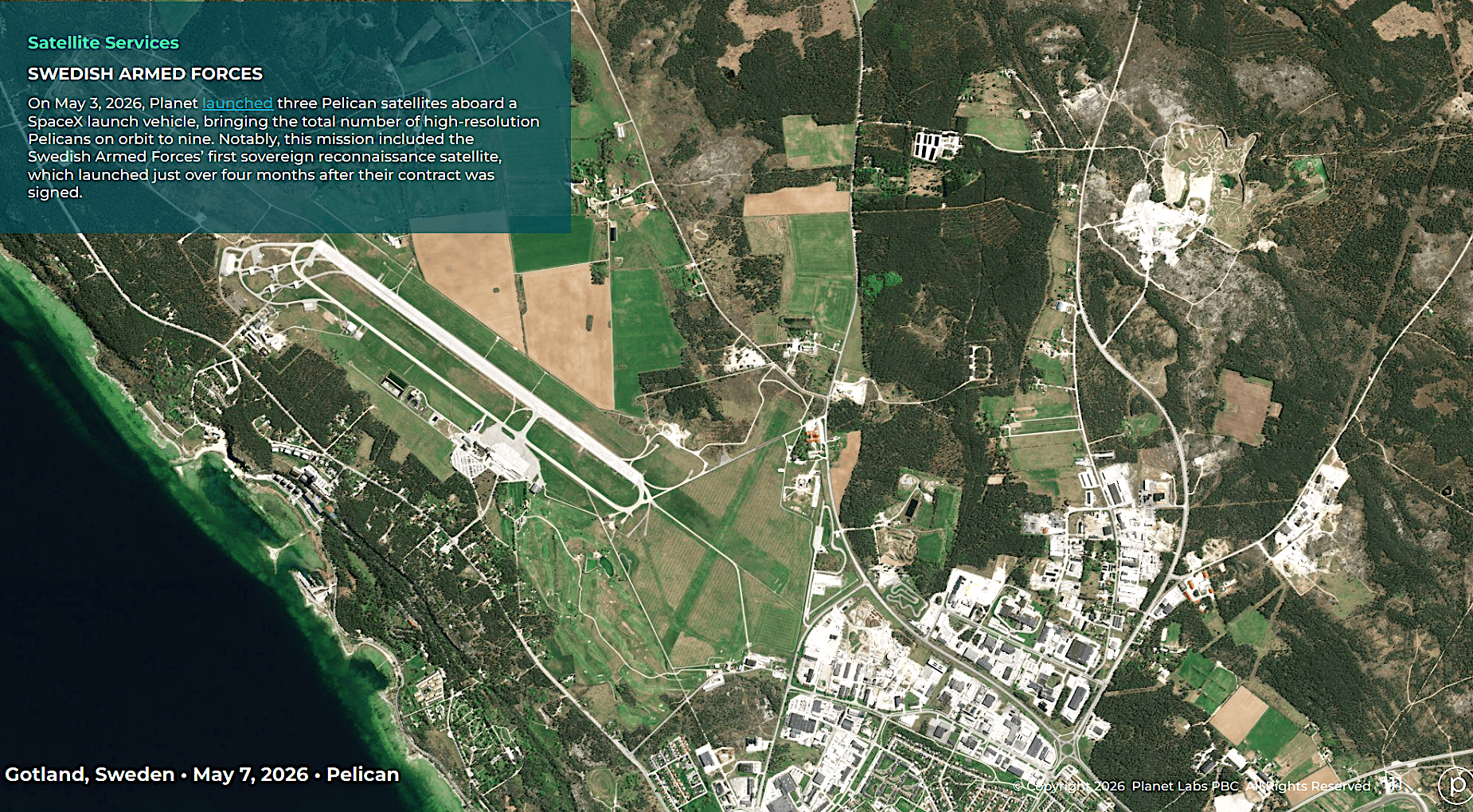
The company also launched the first of several Pelican-model 50-cm-resolution satellites for the Swedish Armed Forces, on May 3, just four months after signing a multi-satellite contract that Planet valued at some $100 million.
Credit: Planet June 4, 2026, investor presentation
The Swedish military signed a similar contract, but at lower value, with radar satellite builder Iceye of Finland. The total radar and optical constellation is expected to total 10 satellites.
In a June 4 investor call, Planet Chief Executive Will Marshall said that whatever the attributes of Planet’s competitors, none can offer the combination of quick launch and immediate access to Planet’s large constellation, on which government customers can train before their own satellites are in orbit.
The performance of the Commercial sector was notable, given the predominance of D&I as a customer for most commercial satellite imaging companies. Marshall said the Q1 results are “very sustainable. We turned around our agricultural model with partners like John Deere, and as they do well, we do well. We did a reset in that area but now we’re growing it.”
Credit: Planet June 4, 2026, investor presentation
Chief Financial Officer Ashley Johnson said Planet’s D&I business is opening new commercial applications.

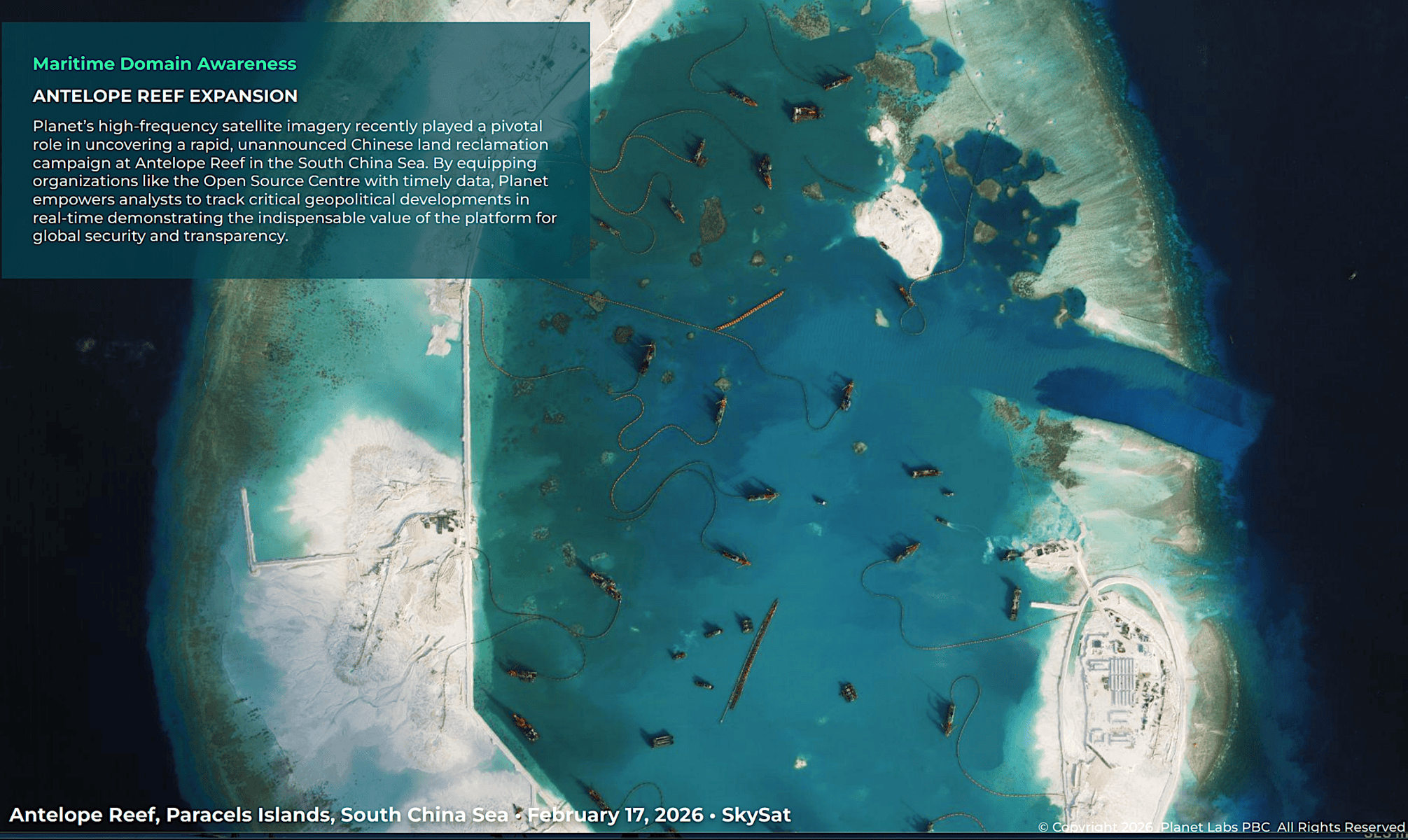
“We are in the early days of AI applications and seeing how D&I solutions we have explored are unlocking opportunities in the commercial sector,” Johnson said. “When you see what GMS [Global Monitoring Service] and MDA [maritime domain awareness] can do, it unlocks market impact assessments and economic change” detection.” Both these services were born of D&I demand.
Marshall said Europe remains “probably our strongest area” as European governments increase their defense and security spending. “All of this is geopolitical-trend driven,” he said.
“People want sovereign space capabilities. Europe is perhaps the most stressed with threats on its borders. We have 100s of employees in Europe and a mission control center in Berlin, and we’re opening a manufacturing plant in Berlin to approximately double our capacity.”

Credit: Planet June 4, 2026, investor presentation
Looking at the same demand indicators in Europe and elsewhere, Iceye has begun investing R&D into widening its portfolio to include high-resolution optical and radio-frequency-monitoring satellites. It has not announced a decision to enter these areas.
Planet in April announced an indefinite hold on imagery from the Middle East given the conflict in Iran and Lebanon, retroactive to March 9. Several companies, including Planet competitors and at least one prospective customer, have cited this as giving them a competitive advantage or raising questions about purchasing Planet data.
‘Our hold in Mideast imagery has been mis-characterized’
Marshall said the policy has been mischaracterized.
“All our core customers continue to have access in that area, straight away,” Marshall said. “It’s really about [imagery] publication that could lead to operational security challenges that folks are legitimately worried about and we’re putting the delay in place for.
“Most of our customers continue to have data access. The strong demand we have seen in the region is excellent despite that. For media clients, we provide on an as-needed basis where it’s not going to cause security challenges.”
The coming SpaceX IPO has stoked the financial markets’ interest in orbital data centers, even if they may be years from being commercially proven.
Planet has a contract with Google to launch two small proof-of-concept satellites in 2027. Marshall reiterated that much still remains to be proven: the required computing power, radiators to evacuate heat, and connectivity between satellites.
“This is going to make sense fiscally and from an engineering standpoint,” Marshall said. “Within 10 years it will definitely be cheaper to do it in space than on the ground. How fast depends on engineering questions we will be tackling” with the two demonstration satellites.