
Credit: Avio Sept. 12, 2025, investor presentation
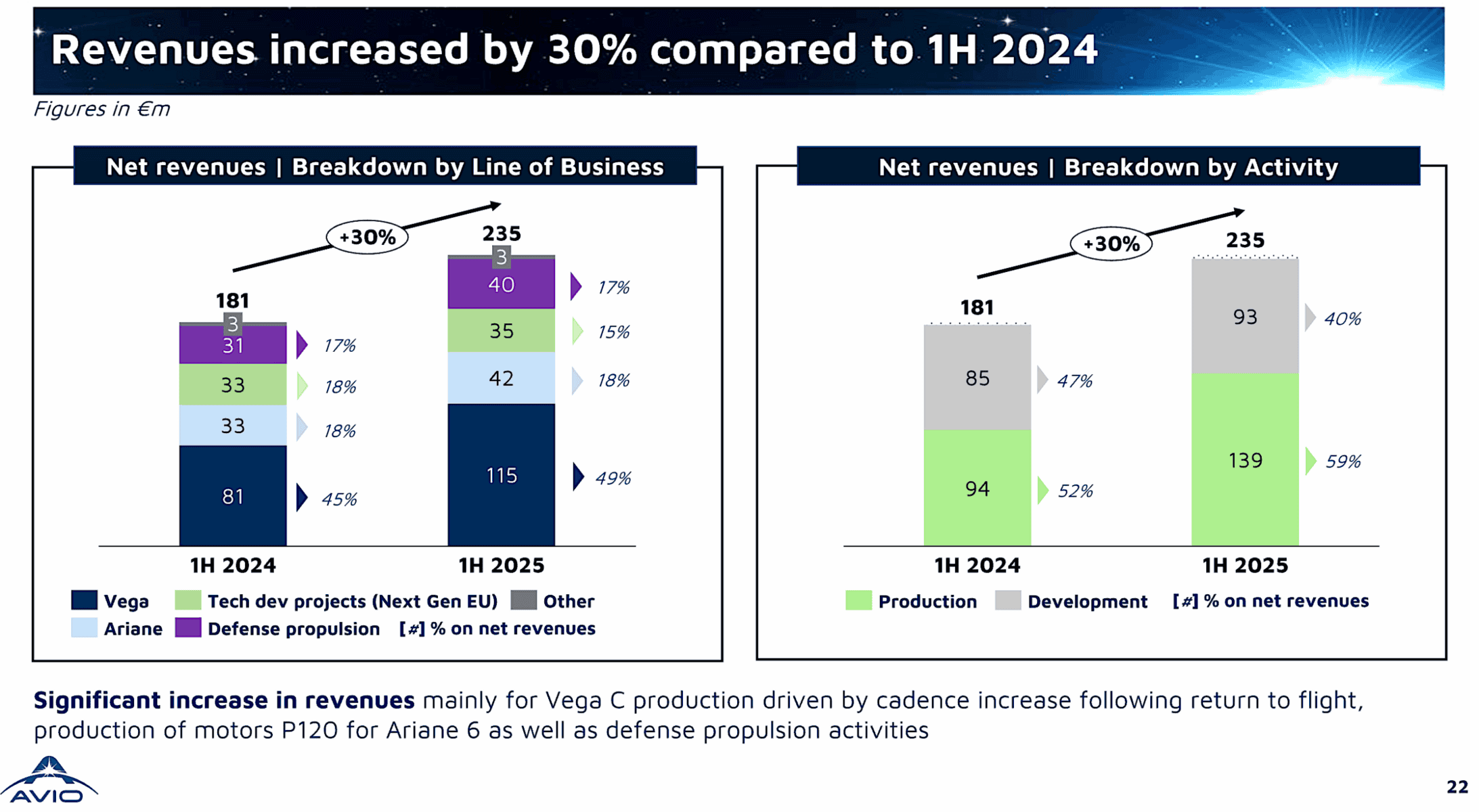
LA PLATA, Maryland — Rocket and tactical-missile producer Avio SpA reported a 30% increase in revenue and a 23% increase in reported EBITDA for the six months ending June 30 and said that it would raise 400 million euros ($468 million) to capture the growth in missile demand.
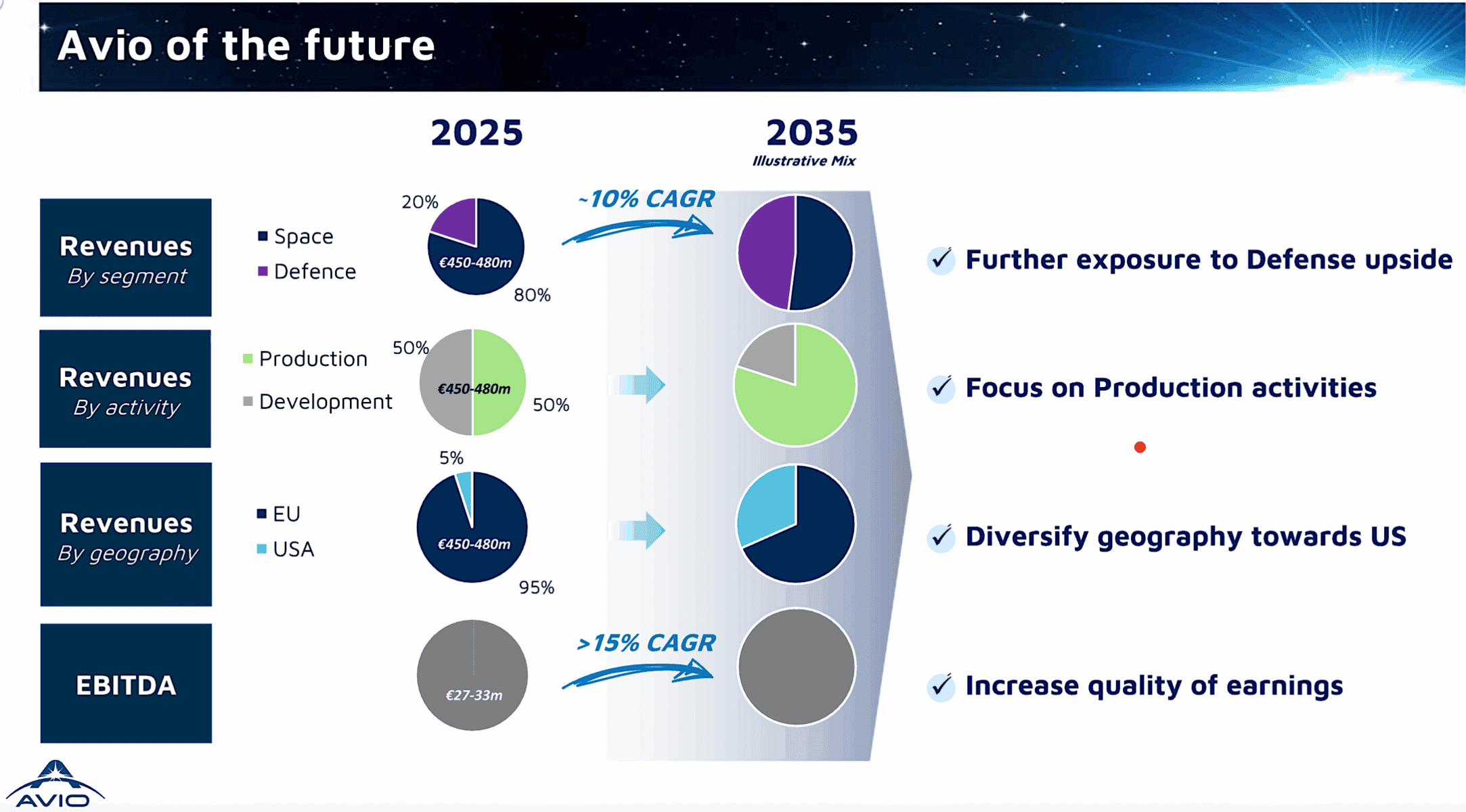
Italy-based Avio, which in addition to its role as prime contractor for Europe’s Vega-C rocket recently took over Vega-C launch-service authority from ArianeGroup’s Arianespace, said tactical missile production, which was 17% of its revenue in H1 2025, could climb to nearly 50% by the end of the decade.
Vega-C-related work was 49% of revenue for the first six months of 2025. Work on Europe’s heavy-lift Ariane 6 rocket accounted for 18%.
Credit: Avio Sept. 12, 2025, investor presentation
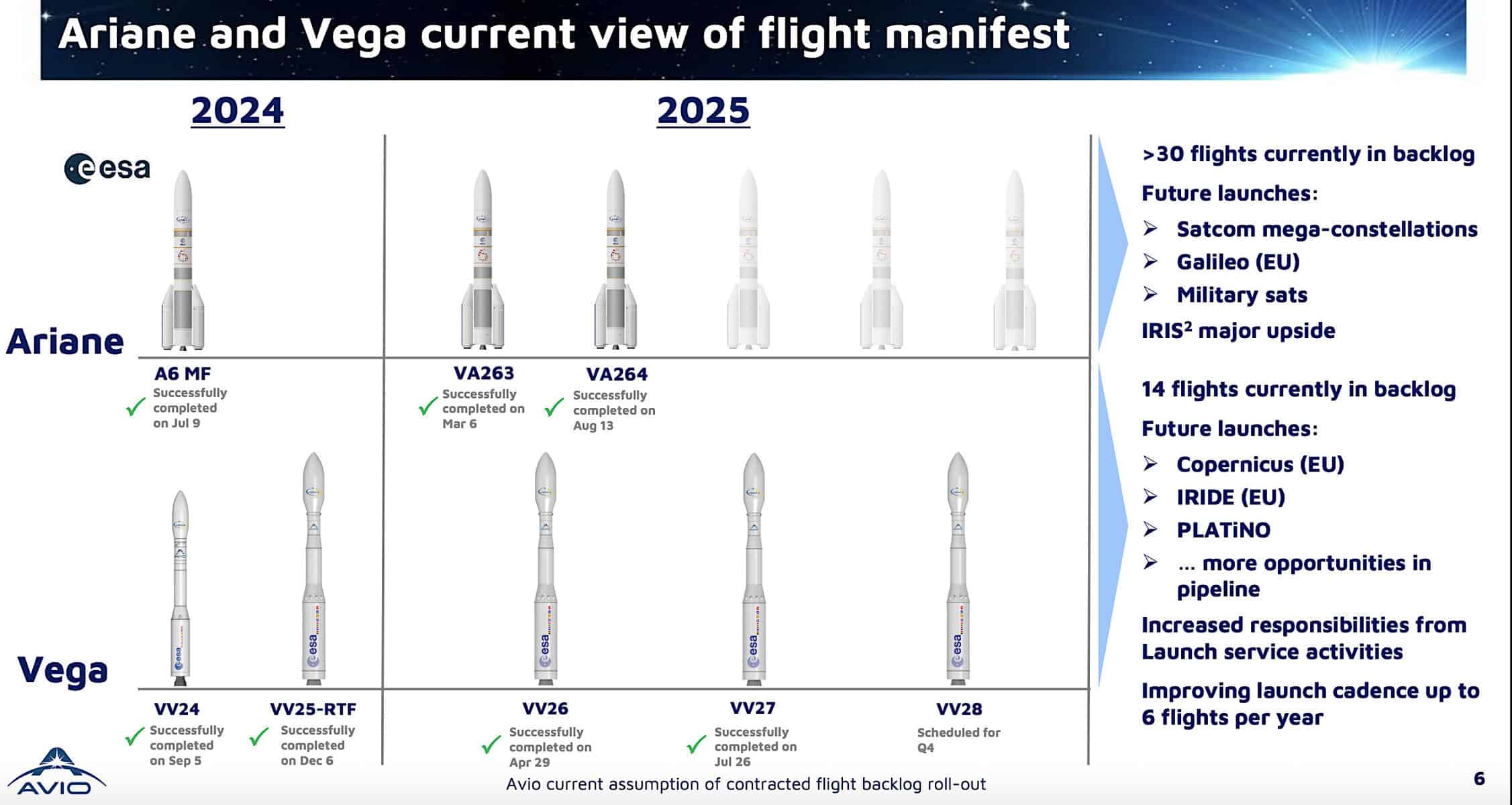
In a Sept. 12 investor presentation, Avio Chief Executive Giulio Ranzo said that with a planned November Vega-C flight, Avio will have demonstrated the ability to conduct four Vega-C missions in a 12-month period. The vehicle launched in December 2024 and in April and July of this year.
Avio also builds turbo pumps and the strap-on solid-rocket motors for Ariane 6, with the Vega-C first stage production being used for the Ariane 6 strap-ons.
European governments have set a near-term goal of ramping the vehicles’ production to 9-10 Ariane 6 launches and six Vega-C missions per year within 2-3 years Both rockets are facing full manifests. Vega-C focuses on European government missions for lighter payloads. Ariane 6 handles the larger satellites and will be launching 18 missions for Amazon’s Project Kuiper broadband constellation.
Credit: Avio Sept. 12, 2025, investor presentation
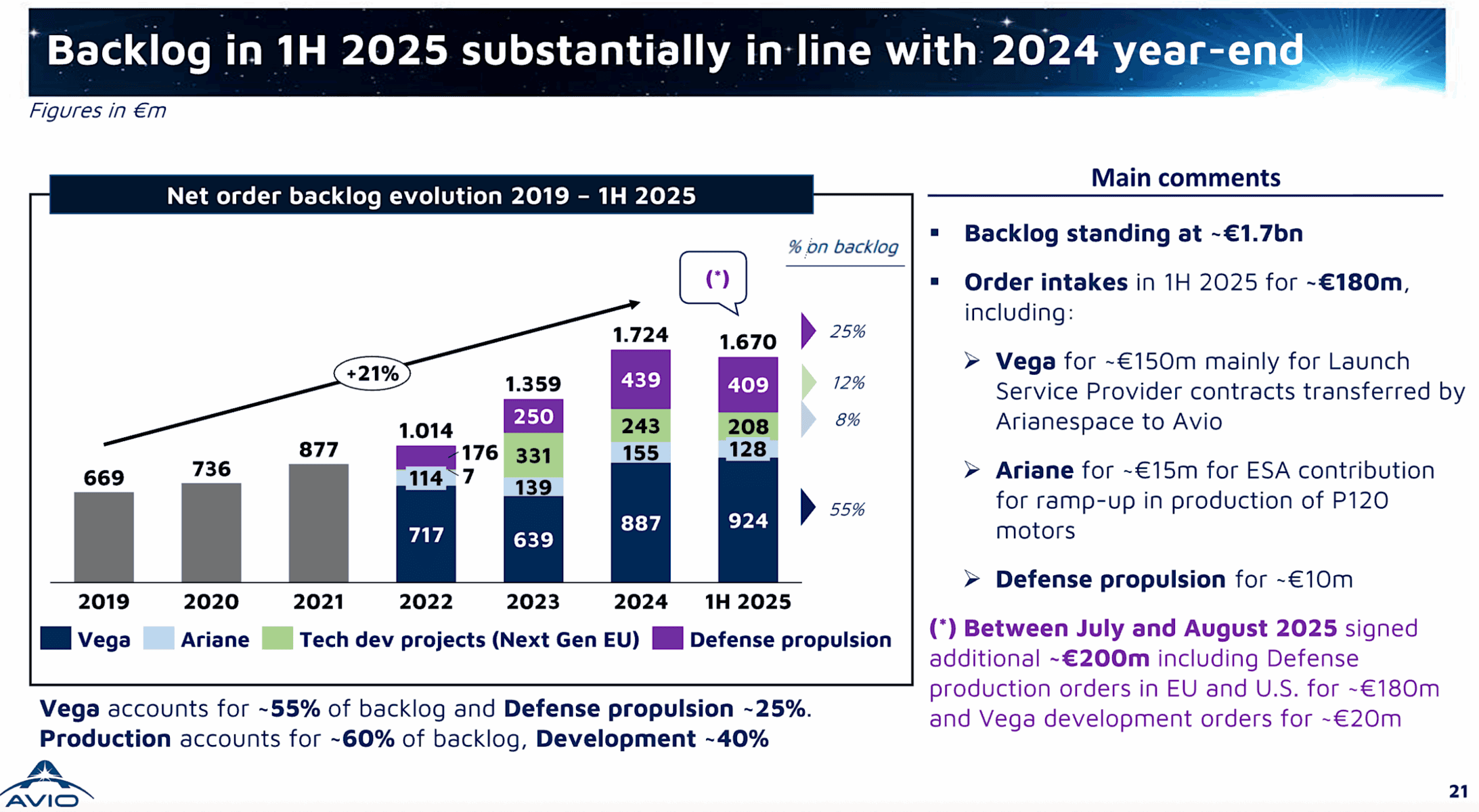
Avio backlog stood at 1.67 billion euros on June 30, of which 25% was for defense propulsion, 12% for technology-development work for the European Commission; 8% was for Ariane 6 and 55% was for Vega.
Avio added 150 million euros to its backlog during the period as a result of the transfer of 150 million euros in Vega contracts from Arianespace. The 23-nation European Space Agency (ESA) and the French space agency, CNES, this summer completed the work of transferring legal authority for Vega launches to Avio.
Credit: Avio Sept. 12, 2025, investor presentation
Avio and Italian government officials wanted the move to enable Avio to capture more of the revenue from Vega launches and to separate Vega from Arianespace, whose parent company, ArianeGroup, is financing development of Maia Space. Maia is developing its own rocket which, if successful, will eventually be a direct competitor to Vega.
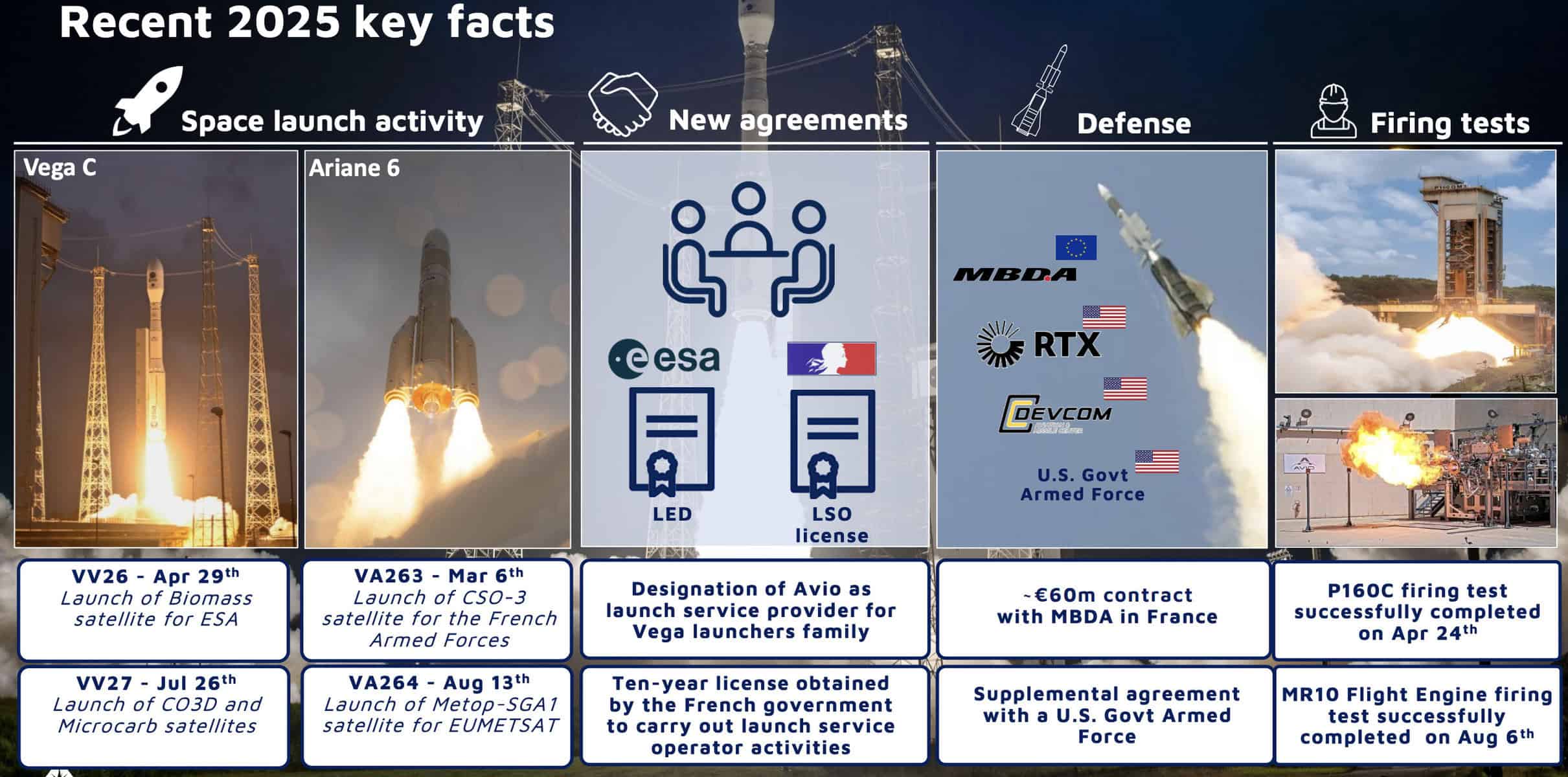
The French government on Aug. 19 announced it had granted to Avio a 10-year license to conduct Vega operations from Europe’s Guiana Space Center, which is on French territory on the northeast coast of South America.
Avio is developing, with ESA support, a more-powerful Vega-E rocket to be equipped with a LOx-Methane stage. A first test of this MR10 stage’s flight module was successfully concluded in August.
Also preparing to enter service is an upgraded Vega first stage, the P160C, which like its predecessor, the current P120C, will be used as the solid-rocket strap-on for Ariane 6, improving the performance of both vehicles with little or no increase in the rockets’ sales price.
“There is a substantial backlog for both vehicles and we see a lot of commercial momentum that we hope to be able to announce in the form of new contracts,” Ranzo said.
Credit: Avio Sept. 12, 2025, investor presentation
But it’s the growth in tactical propulsion, in Europe but especially in the United States, that will provide the revenue increase that Avio now expects will average of 10% growth for the coming decade.
The company will be using most of the proceeds from its rights offering, expected by the end of this year, to build a solid-rocket propulsion plant in the United States, planned to be in operations by 2028. A smaller investment will be made in Europe to increase existing capacity, Ranzo said.
“We will be blending two different types of businesses,” Ranzo said. “Vega launches have a completely different margin compared to defense. Vega includes lots of external suppliers, and profit is diluted. With defense propulsion, we have a much higher content, so the margin is higher.”