
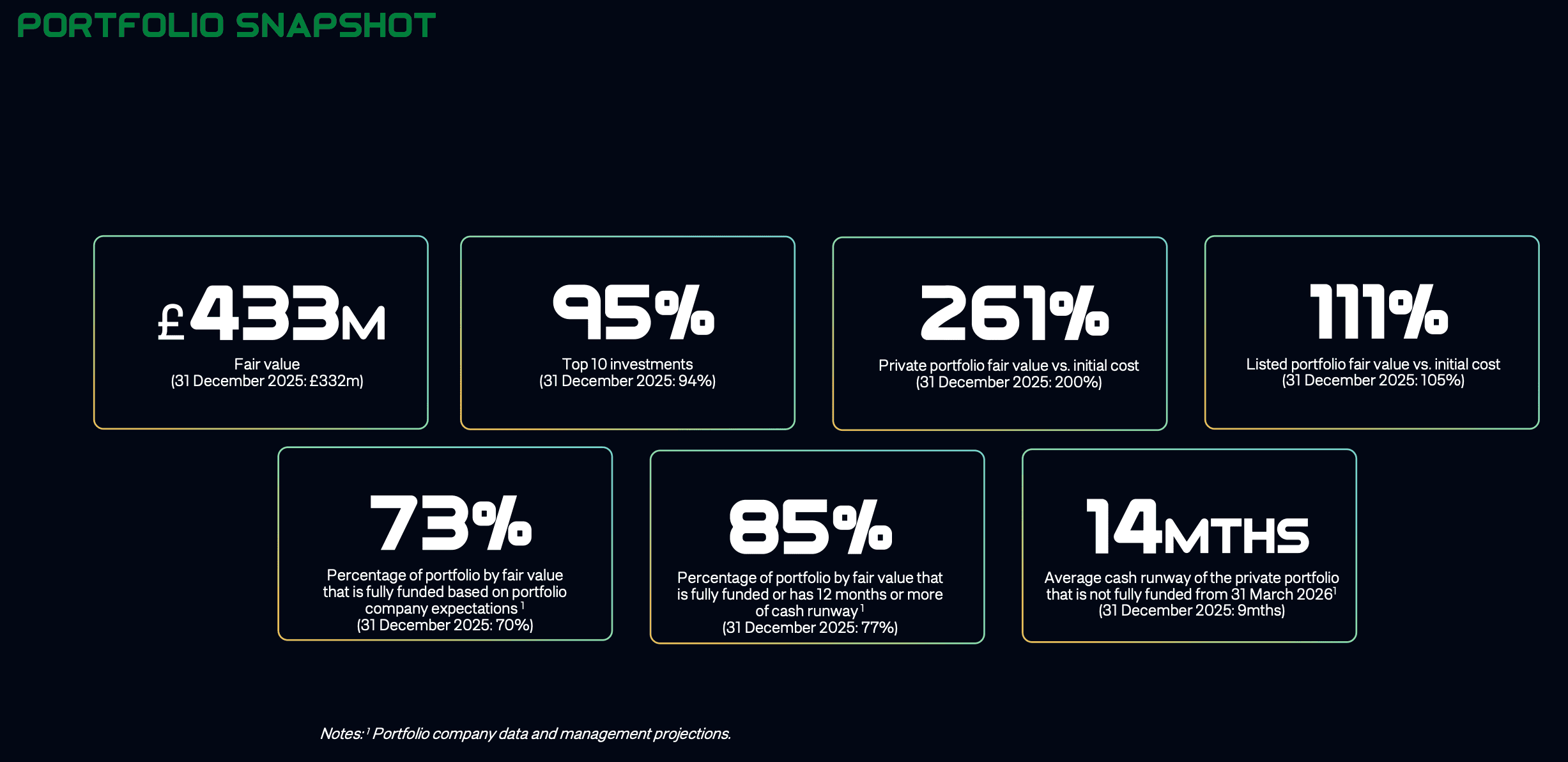
Credit: Seraphim Space Investment Trust June 3, 2026, investor presentation
LA PLATA, Maryland — Seraphim Space Investment Trust (SSIT), which surprisingly reminds the only publicly traded space-focused investment fund, saw its portfolio’s value increase by 31% in the three months ending March 31 compared to the previous quarter as its star performers benefited from market tailwinds.
Given the run-up in space-technology stocks in recent months, partly due to the reflected glow from SpaceX’s coming massive IPO, it is curious that no one else has sought to mimic SSIT’s business model, at least for late-stage companies.
SSIT runs an accelerator program and a private venture fund that includes early-stage space companies, reserving the publicly traded fund for companies that have revenue and have passed initial fund raises. The combined portfolio includes more than 150 companies.
This model gives Seraphim an egg-to-chick-to-chicken view of space startups, which may be hard to duplicate.
In a June 3 presentation on SSIT’s quarterly results, Chief Executive Mark Boggett said this “information asymmetry” allows SSIT to invest with a conviction that other investors might not understand.
The volatility of young space companies is another factor. SSIT has lived through the lean period of a couple of years ago when space companies went public, only to underperform their forecasted earnings results.
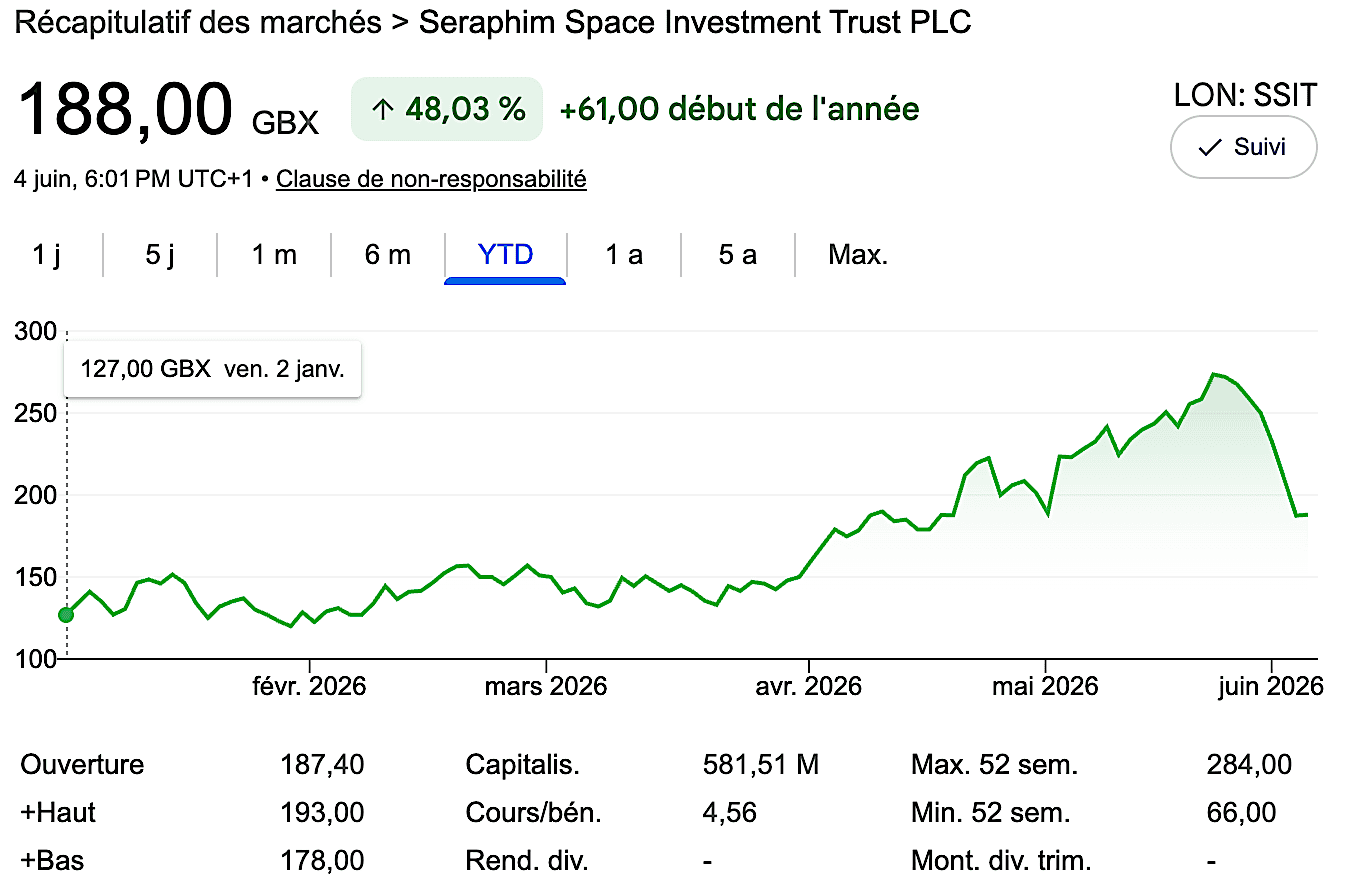
Credit: Google Finance
In the past week, perhaps as an effect of the SpaceX IPO, young publicly traded space companies have seen a sharp downturn. Seraphim’s stock was not spared. It had climbed from GBP 1.50 on March 31 to GBP 2.70 on May 26 before falling to GBP 1.88 at the close of trading June 4.
Boggett said he was hopeful that the SpaceX IPO would attract investor attention to the space industry and benefit SSIT.
SSIT raised 137 million British pounds (GBP) on May 7 through a C-share issue that Boggett said attracted existing and new shareholders including family offices, institutions and endowment funds.
Entering FTSE 250 index as of June 22
Of more concrete benefit to Seraphim is its scheduled June 22 entry into the FTSE 250 index, which is a market capitalization-weighted grouping of the capitalization-weighted stock market index consisting of the 250 companies just below the FTSE 100 index listed on the London Stock Exchange.

“This is a positive step for Seraphim,” Boggett said. “All index players will be acquiring the shares, providing a short-term uplift in value and exposing Seraphim to a broader group of investors. It could lead to new companies joining the cap table.”
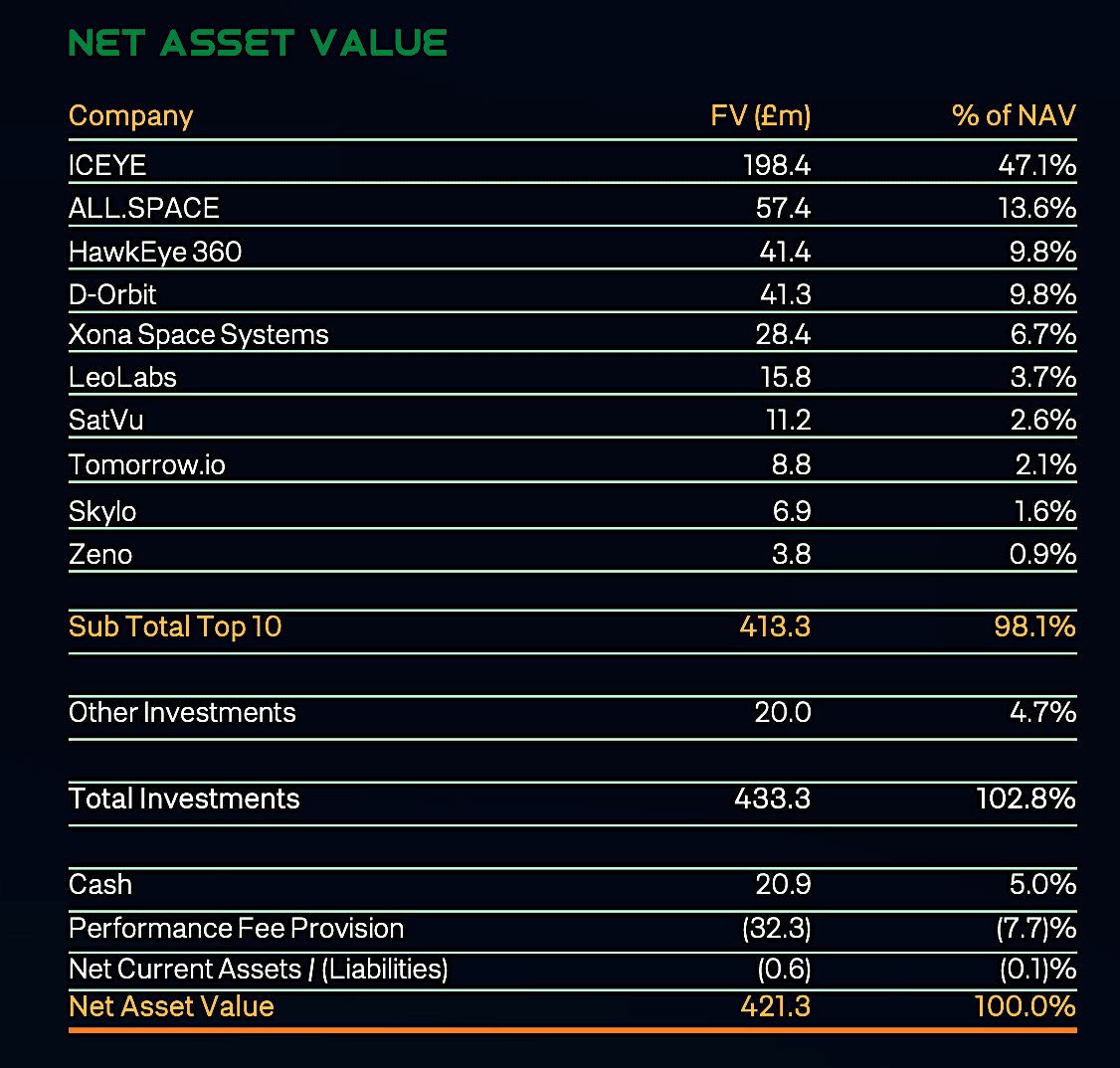
Credit: Seraphim June 3, 2026, investor presentation
Finnish radar satellite fleet operator and merchant manufacturer Iceye Oy has been a showcase space startup in Europe for several years. SSIT got in early enough to ride the company’s valuation upward to where it now accounts for 47% of the index’s net asset value (NAV).
Iceye’s recent statement that it had 1.5 billion euros ($1.75 billion) in backlog as of Dec. 31 and expected to double its revenue this year, to 500 million euros, has given it added lift. The company said in January that it had no immediate plans for a stock-market listing, but whether that may change after the SpaceX IPO is an open question.
Satellite broadband user terminal manufacturer All.Space of Britain is SSIT’s second-largest holding, at 13.6% of NAV. All.Space has agreed to be acquired by U.S.-based York Space Systems in $355 million transaction to be paid in cash and stock.
SSIT Co-Founder and Chief Investment Officer James Bruegger said a significant portion of the deal is in York stock and that the amount of the cash payment to SSIT remains unknown until US and UK regulators have approved the transaction.
SSIT holding Hawkeye 360, which accounted for 9.8% of the funds NAV as of March 31, conducted a successful IPO May 7 on the New York Stock Exchange, raising $416 million. Hawkeye 360 operates a fleet of satellites to monitor radio frequencies.

Credit: Seraphim June 3, 2026, investor presentation
SSIT invests in multiple space-tech areas with the notable exception of launch services. Currently, satellite constellations — mainly for intelligence, surveillance and reconnaissance and communications, account for two-thirds of the portfolio’s value, with the defense sector the primary customer.
Europe-based companies account for more than half the portfolio, with the United States accounting for most of the rest. Companies that have conducted Series D and E or later financing rounds make up a large share.
Bruegger sought to reassure investors looking for cash or IPOs as proof of value that many of the indexes largest holdings “are already profitable or will be this year. Hawkeye and Iceye are EBITDA-positive and we see a transition in the last year of companies becoming profitable.”
Seraphim said that 85% of the portfolio’s fair value had sufficient cash to support operations for at least 12 months, with most being fully funded beyond that.