
Karim Sabbagh. Credit: CNBC
PARIS —Satellite fleet operators Viasat Inc. and Space42 are pooling their combined 100 MHz-plus of globally harmonized mobile satellite (MSS) spectrum and inviting other MSS spectrum holders to join them in a bid to lower direct-to-device (D2D) costs while accommodating national sovereignty concerns.
The two companies said they have both committed to the venture but hope to win partners — including regional satellite operators and mobile network operators — that share their view that the global D2D market cannot be left to SpaceX and perhaps a Chinese entrant.
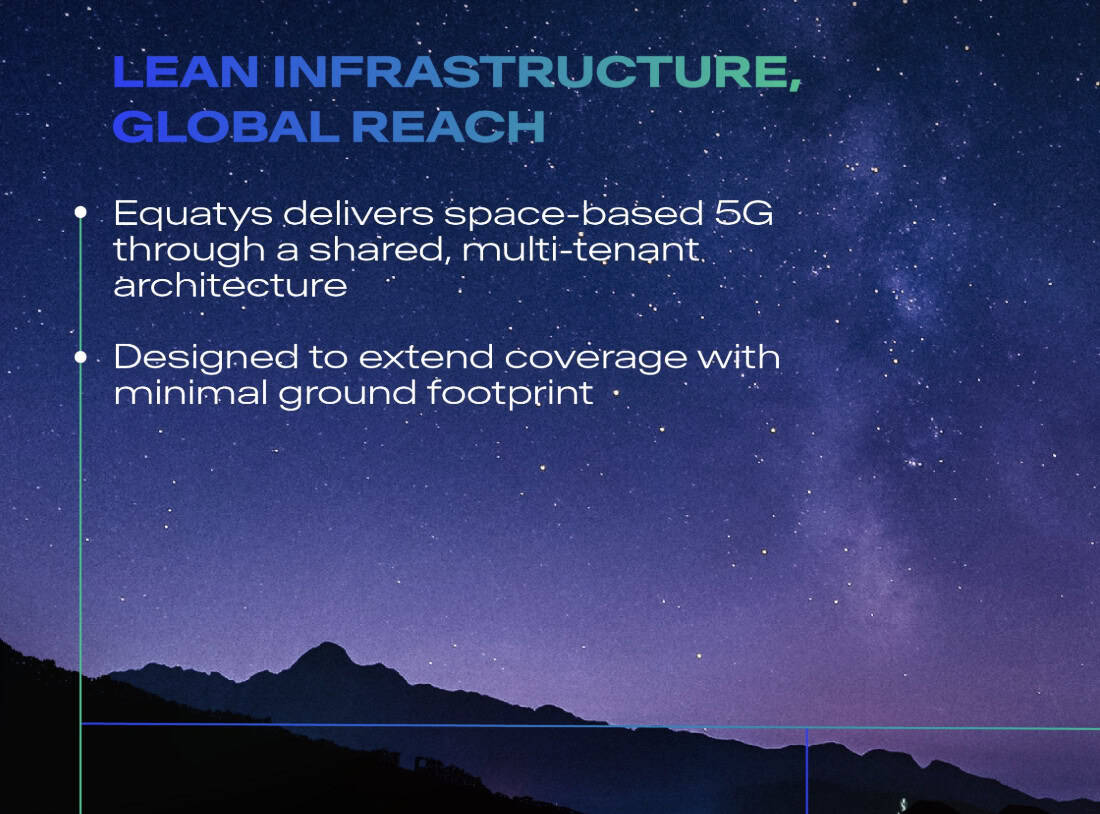
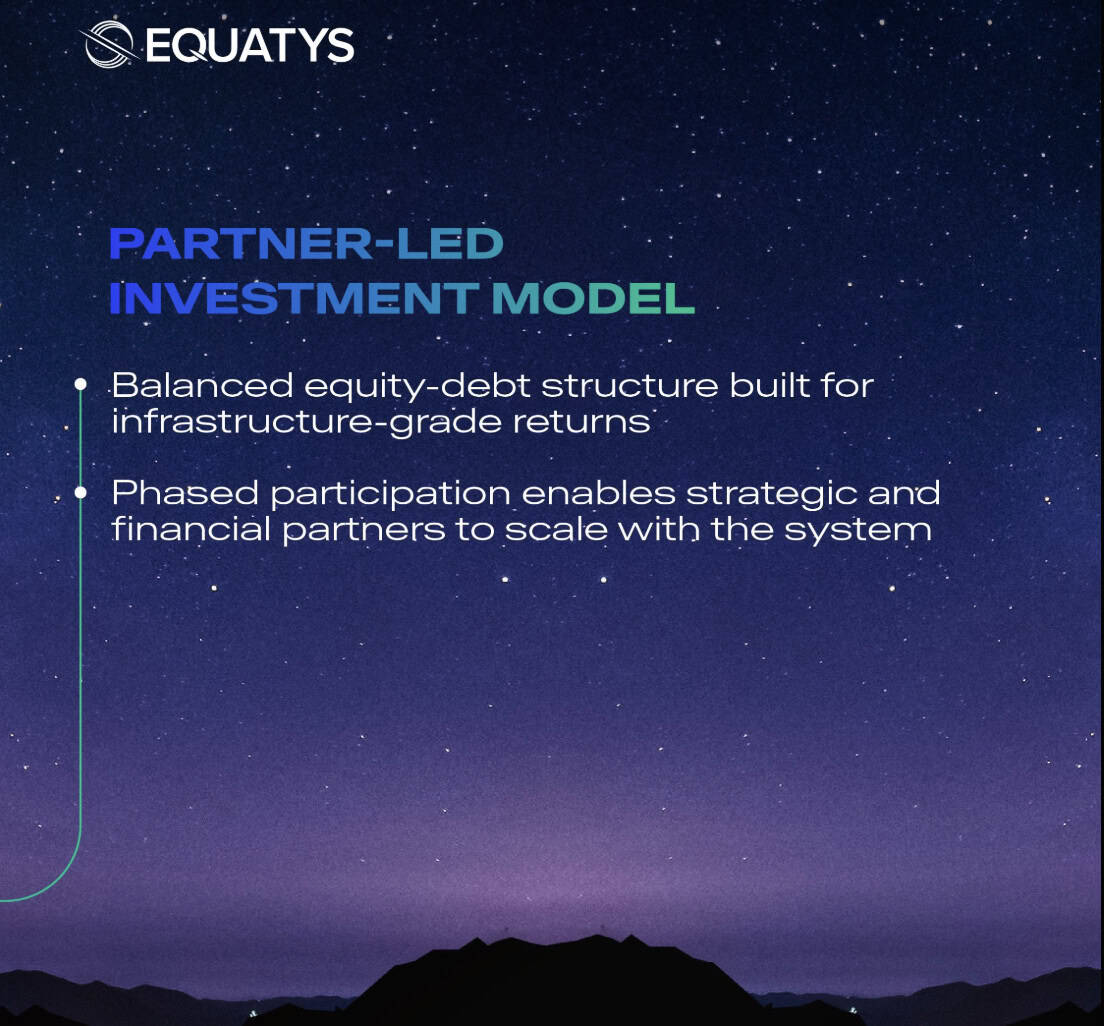
Their joint-venture company, Equatys, will hold the spectrum rights contributed by Viasat and Space42 and, eventually, other satellites operators, plus financial investors that see an attractive return. The satellite service provider investors will retain ownership of their assets.
Credit: Equatys
Space42 owns the Thuraya L-band mobile satellite network in geostationary orbit. Viasat owns the L-band assets of the former Inmarsat.
“The way it is set up, it is de-risked, because we are committing to buying this capacity from Equatys,” Karim Sabbagh, Space42’s managing director, said here Sept. 16 at World Space Business Week (WSBW), organized by Novaspace.
“Equatys has a deployed infrastructure, a book of business for the next five years and a guaranteed return that can produce for financial shareholders.”
Viasat and Space42 are providing their spectrum as the starting Equatys asset pool.
Mark Dankberg. Credit: Viasat
The Equatys founding principle is three-fold: that the terrestrial telecom model of joint ownership of towers and subsea cables can work with space spectrum; that spectrum, not power, that is the key to business success in D2D; and that a global D2D play needs to account for nations’ sovereignty concerns.
“You’re much better off being able to create a business model where you can aggregate secure spectrum rather than one where you need larger and larger satellites,” Viasat Chief Executive Mark Dankberg said.
“The satellite that is eight times bigger might have only 50% more throughput. But if I had eight times the spectrum, I would have eight times the throughput.”
Dankberg said chip makers have expressed interest in Equatys because of its promise to lower the cost of service for the industry. But the full potential of Equatys will only be reached if it can attract other satellite operators, which already have spectrum from their national regulators.
“The thing that will make this success is that other operators bring their spectrum into play because this is the lowest-cost vehicle,” Dankberg said. “There is a positive flywheel effect. The more people that join, the more valuable it becomes.”
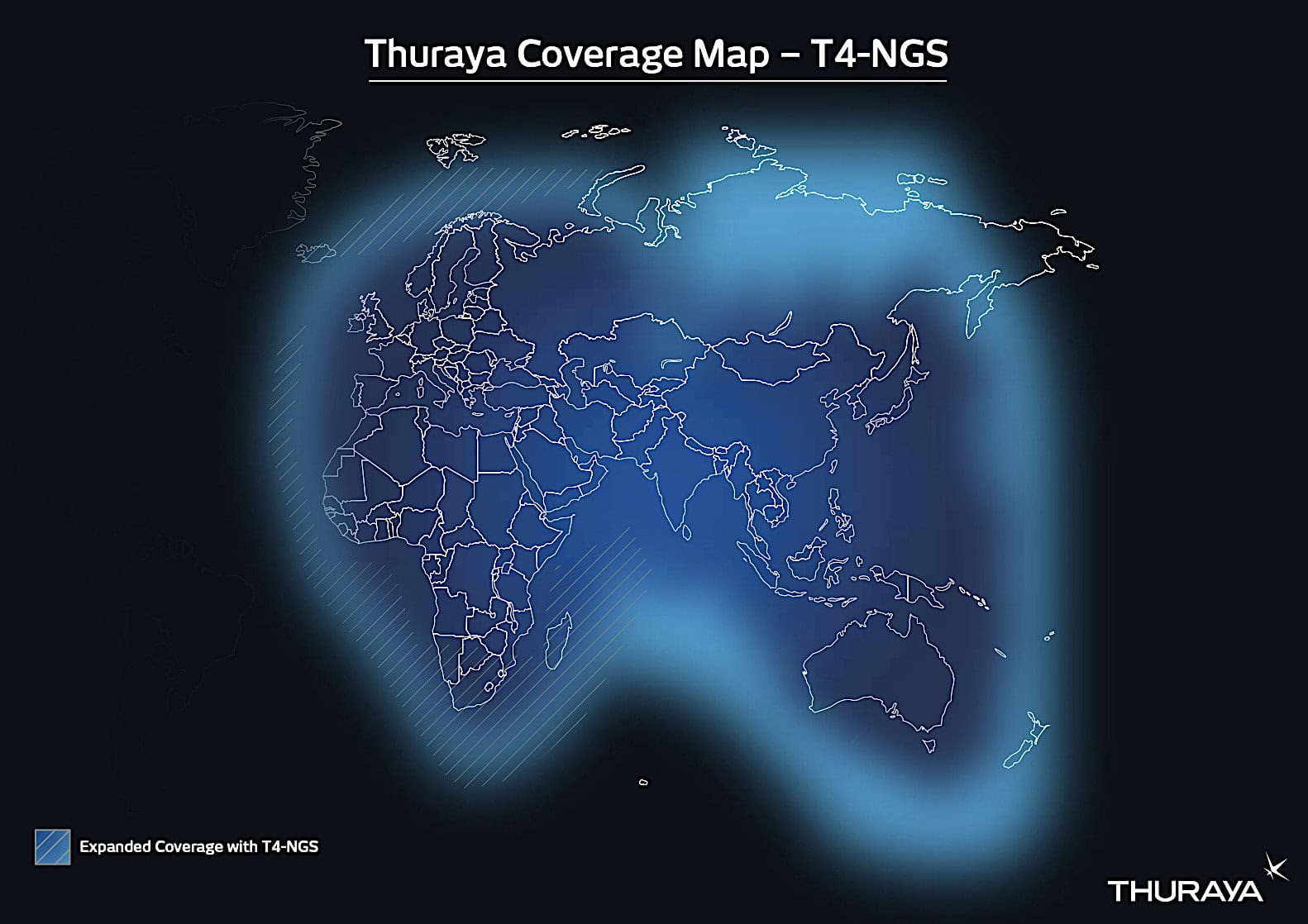
The coverage footprint of Space42’s Thuraya 4 satellite. Credit: Space42
UAE-based Space42 and US- and London-based Viasat operate their L- and S-band spectrum satellites in some 170 nations now. The two companies said mobile network operators interested in having their customers roam on satellite networks do not want to be tied to a particular technology or a single operator.
That is also the case for chipmakers and auto companies that will be part of the future D2D ecosystem.
Space42 and Viasat announced Equatys just days after SpaceX concluded an agreement to purchase EchoStar Corp.’s 50 MHz of mainly S-band spectrum for $17 billion. The deal, expected to close by November 2027, sharpens SpaceX’s D2D service with satellite frequencies in addition to spectrum licensed by mobile network operators in areas beyond the telcos’ current coverage.
Credit: Equatys
SpaceX applied to the US Federal Communications Commission (FCC) for a license to operate 15,000 D2D satellites using the EchoStar spectrum.
AST SpaceMobile, the other company that is actively investing in a satellite D2D network, is also pivoting toward satellite spectrum with its intended purchase of L-band assets held by Ligado.
“It has become evident that having access to satellite spectrum is valuable,” Dankberg said. “So now you have the two that built satellites first trying to by spectrum.
“Rather than build satellites first and say the satellites will capture spectrum, it’s easier to go to the people that have spectrum, that are in business already, and say: Here’s a way for you to use it. Nobody’s doing that.”
Working with regional operators and national regulators on sovereignty
SpaceX’s Starlink has been an unqualified success but it has also created friction with national governments by allowing Starlink terminals to operate in their territory without a license.
A large nation like India was able to force Starlink to back down and wait until it was licensed. A smaller country like Iran has been unable to achieve that result despite months of complaints to the International Telecommunication Union (ITU).
These events have left their mark on many governments. The prospect of SpaceX, now with its EchoStar mobile satellite spectrum, equipped with the means to bypass mobile satellite networks will not sit well with these governments.
Equatys is counting on this contrast to win partners.
“You can’t have sovereignty of data, data centers, cloud, private or standards if you don’t control communications in and out of your country,” Dankberg said.
“We believe countries will want to allocate spectrum to service providers that comply with their laws. The idea here is that instead of starting with a constellation to try to get rights everywhere, let’s start with the rights that countries want, and create a system they can work with. And it needs to be truly equitable.”
The two companies avoided talking about SpaceX’s EchoStar spectrum purchase and the way it would be perceived around the world.
Ali Al Hashemi. Credit: WSBW
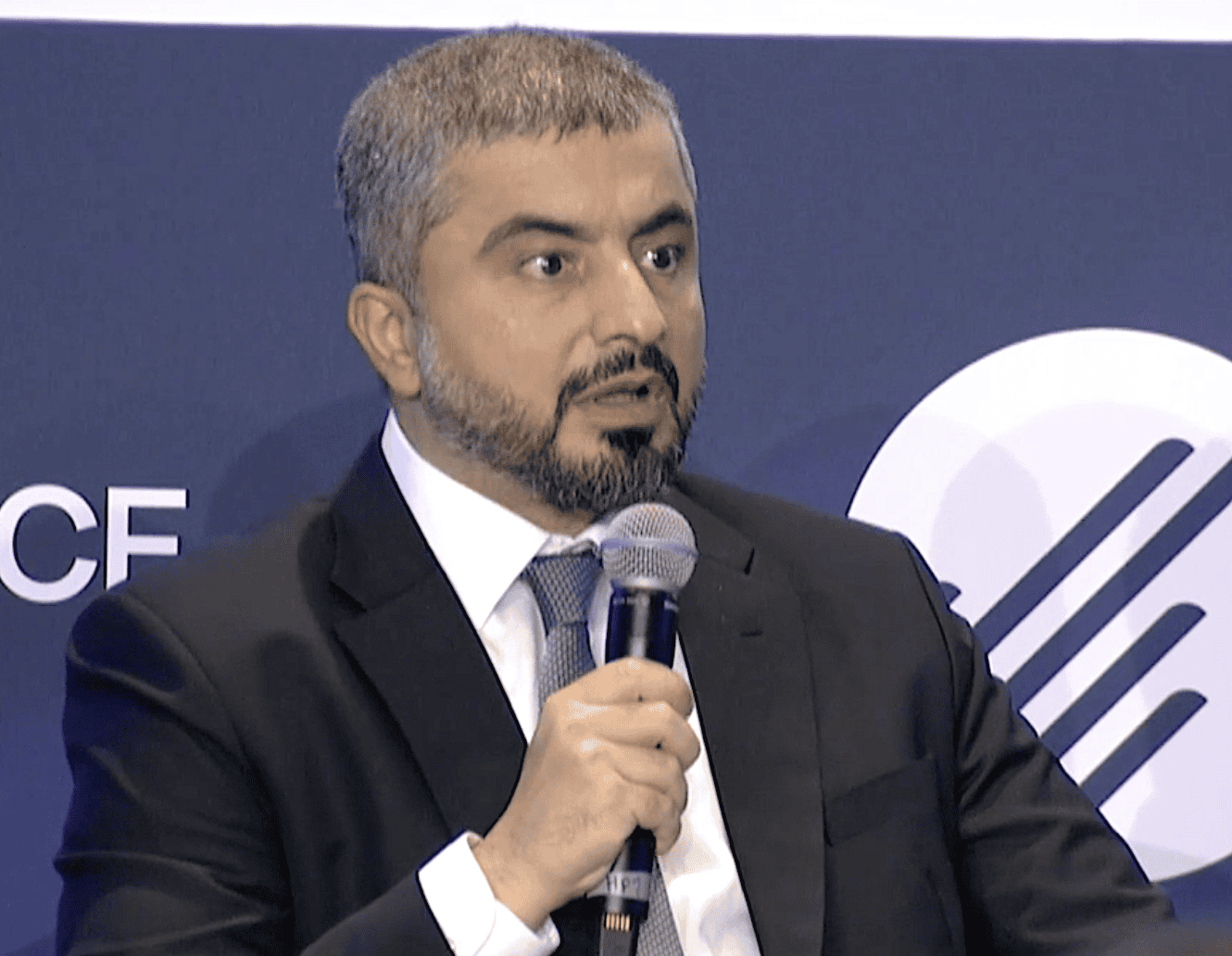
But Ali Al Hashemi, chief executive of Space42’s space services division, clearly had SpaceX in mind in explaining Equatys.
“In strategy, we say that the best move is to do what the competition is not doing,” Hashemi said. “We are doing that perfectly. From Day 1, we are bringing 100 MHz of spectrum. We are following the issue of sovereignty from Day 1. We are solving the issue of devices and we are solving it within a three-year period.”
The companies said Equitys would begin commercial service within three years, with a constellation of LEO satellites to form the core network for the business, in addition to the existing GEO-orbit satellites.

Credit: Equatys
They declined to say how much they have committed to the venture, but said their investment was definitive and that Equatys would be started with or without partners contributing their own spectrum.
“We could selfishly ring-fence this thing and say, ‘We have over 100 MHz of globally harmonized spectrum. We have the means to stand up this system and there is going to be more than one financial investor interested in the kinds of returns we can deliver.
“But what we want to create is much, much bigger. And it has to be scalable, to continue to densify the system with a constant evolution of its space segment for technology insertions that will make it more productive.”