
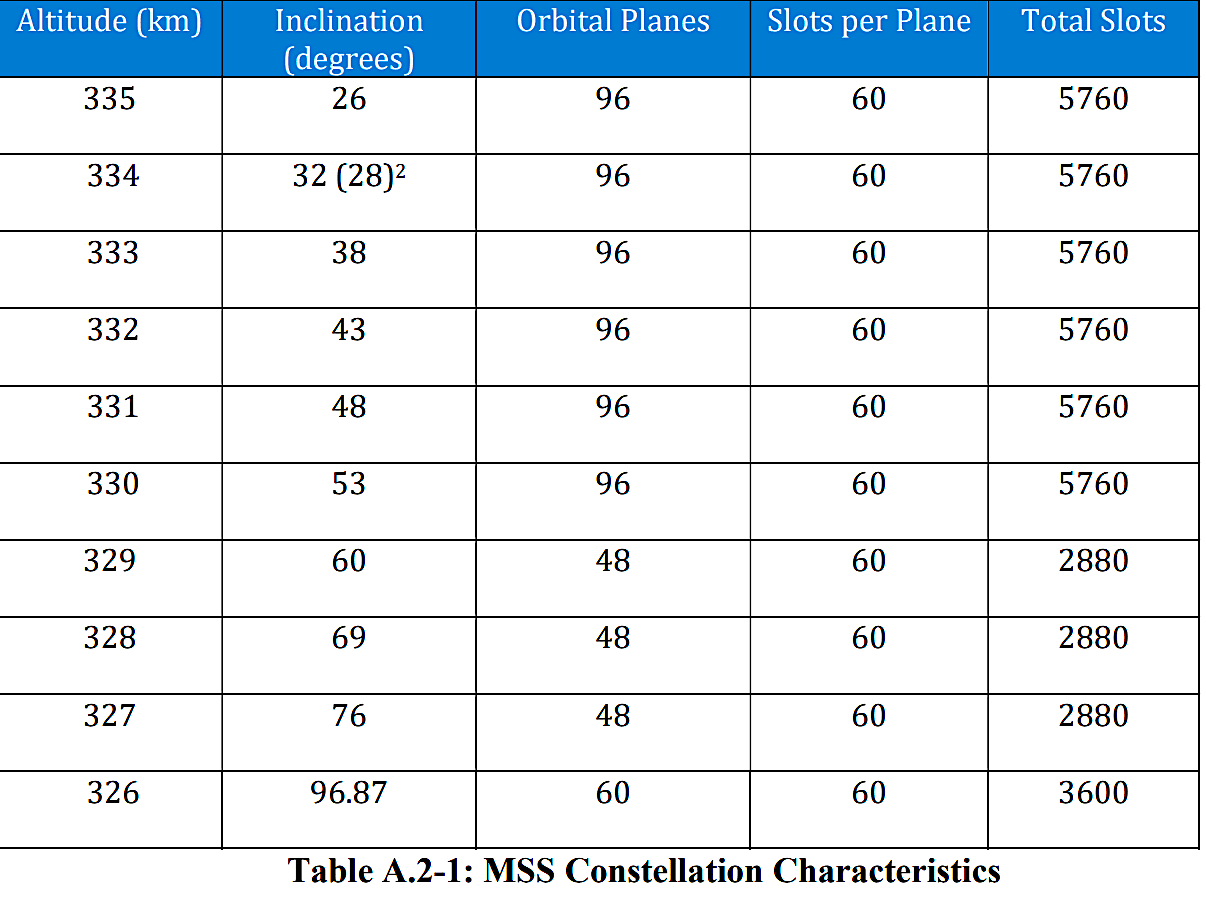
The graphic totals more than 15,000 satellites but SpaceX said it’s just to preserve options for deployment. The total will be no more than 15,000 satellites. Credit: SpaceX Sept 17 FCC filing.
PARIS — SpaceX expects to use the mobile satellite spectrum rights it’s purchasing from EchoStar Corp. to deploy a constellation of 15,000 satellites into a 330-km-altitude orbit to provide worldwide direct-to-device (D2D) services.
Weighing some 2,500 kg and measuring 250 square meters, the satellites would operate for between five and seven years, SpaceX said in a Sept. 17 filing with the US Federal Communications Commission (FCC) asking for operating approval.
EchoStar had exclusive FCC authorization for operating in both the 2-GHz and AWS-4 frequency bands, an exclusivity that had caused the FCC to reject an earlier SpaceX application to use the spectrum. EchoStar’s Sept. 8 announcement to sell the spectrum for $17 billion in cash and stock should enable a swift FCC approval as SpaceX “is now the only operator capable of deploying services in the band under the existing [regulatory] framework,” SpaceX said.
SpaceX and EchoStar have said they expect their transaction to close by November 2027, but SpaceX has said it could launch demonstration satellites as soon as 2026.
The constellation, freed from the constraints of the current SpaceX D2D fleet, which uses spectrum licensed to mobile network operators for a satellite service in areas these operators do not cover, the 2-GHz-enabled constellation “will offer a new generation MSS connectivity, supporting voice, texting and high-speed data,” SpaceX Said.
“And because SpaceX will be the only co-channel MSS or terrestrial mobile services licensee in the 50 [US] states in the relevant bands, it can do so without presenting any material risks of interference.
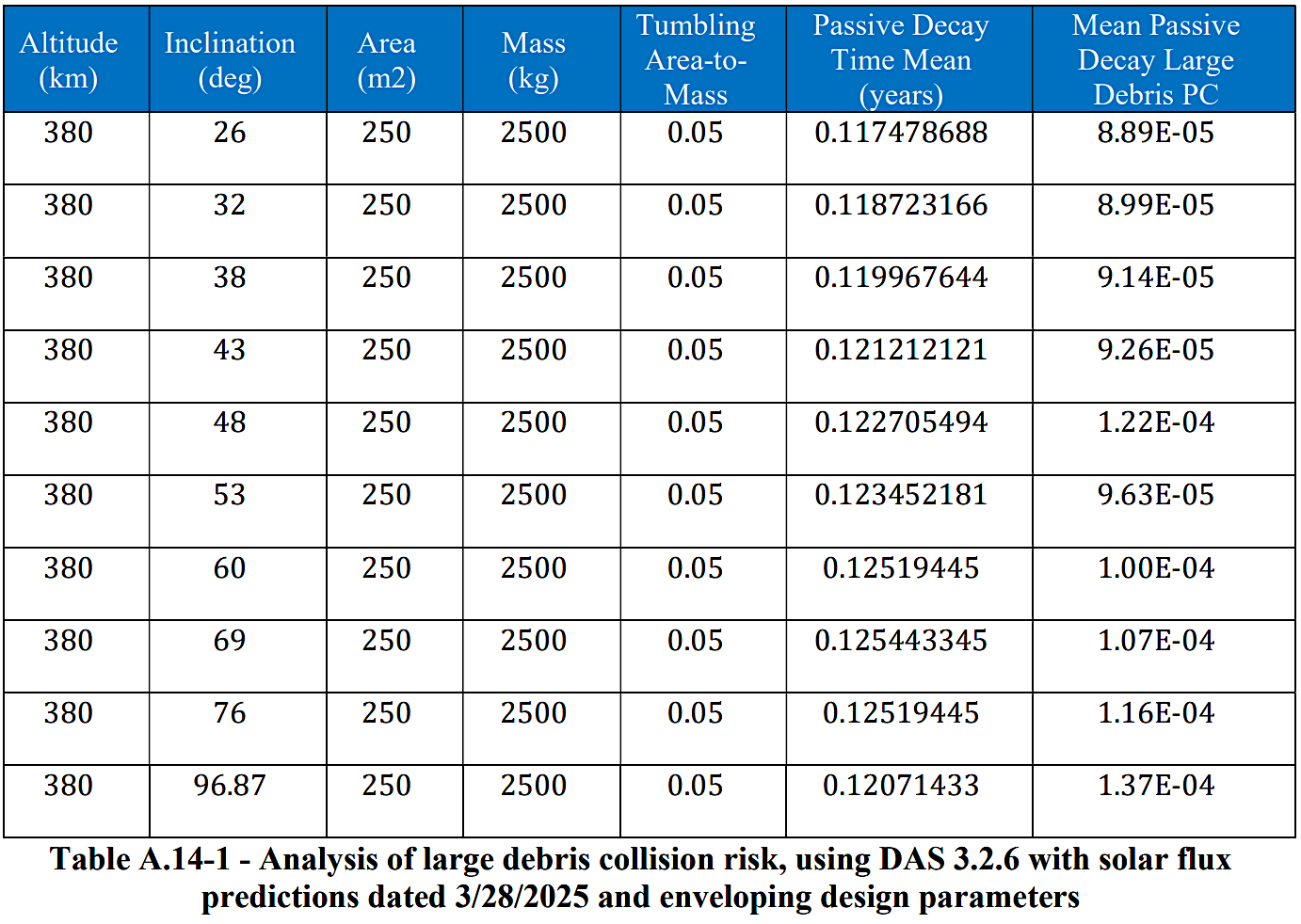
Credit: SpaceX Sept 17, 2025, submission to the FCC.
The D2D constellation will route its traffic using SpaceX’s existing Gen 1 and Gen 2 Starlink broadband infrastructure using optical inter-satellite links now on the network. The two constellations will also share gateway Earth stations and just the same backhaul spectrum as the Starlink Gen 2, the company said.
“Additionally, as spaceX has acquired EchoStar’s terrestrial AWS-4 licenses in the 2-GHz band, SpaceX may deploy ground-based systems in the US, creating a hybrid satellite/terrestrial network to expand the coverage and capacity of these services,” the company said.
Services will also be delivered through the PCS G-block spectrum, which it already uses as part of its current constellation of D2D satellites using terrestrial spectrum. Ka-, V-, E- and W-band frequencies will be used for backhaul.