

Robin Huber. Credit: WSBW video
PARIS — Scottish and Swedish startup spaceport operators called for more coordination among European spaceports to make their operations more efficient for launch-service providers and prepare for an consolidation of the current oversupply.
The draft EU Space Act, released by the European Commission in June and now facing more than a year of feedback and eventual modification, is partly designed to harmonize the many national regulatory regimes in Europe.
It may eventually do that. But in the short term, it risks adding a fresh layer of regulatory complexity and cost on spaceports whose business model is already challenged.
German rocket at UK spaceport launching Luxembourg satellite for Japanese customer
Robin Huber, head of European and commercial director for Scotland’s SaxaVord Spaceport, offered an example of regulatory confusion and overlap.
“As an example: We have a German rocket launching from a UK spaceport with Luxembourg or Spanish satellites, that may be operated out of Japan,” Huber said here Sept. 16 at World Space Business Week, organized by Novaspace.
The regulators seem to be in inflation mode, meaning they want their regulations to be applied universally. Using this example, we would have to comply with five or six regulatory regimes that may contract each other
I am a little bit worked about the EU landscape. I attended a panel on EU space law, and I fear it will be adding another layer” of licensing. And which state is liable under the [UN] Outer Space Act?”
Startup launch providers Skyrora of Britain and and Rocket Factory Augsburg (RFA) of Germany have received UK licenses for their vehicles. Orbex of Britain is on course to get its license as well, and Huber said SaxaVord was negotiation with a four launch provider as well.
Sweden’s Esrange facility, with a long history of sounding rocket launches, is preparing to expanding into an orbital-launch facility and expects to begin launching US-based Firefly Aerospace’s small vehicle in a year or two.

Charlotta Sund. Credit: SSC
Charlotta Sund, chief executive of the state-owned Swedish Space Corp. (SSC), agreed that Europe’s competing spaceports need to find common ground for the common benefit.
“From a European point of view we should come together with a common strategy. We are going to have a few in Europe, and there will be rockets for those spaceports. But it would be good to have a clear European strategy.
“The administration and permitting you need for licensing is too much,” Sund said. “For a true strategy for launches from Europe, it has to be much easier and faster. The administration around building up these capabilities needs to be simplified.”
Sweden earlier this year completed a Technology Safeguards Agreement (TSA) with the US government that went a long way to getting Firefly to Esrange.
Sund said it’s likely that, over time, the current number of spaceports in Europe will need to shrink to adapt to the size of the market.
“We will see consolation and that’s why its important that Europe comes together with a clear strategy,” Sund said. “We will need a combination of different spaceports. You need the political backing from nations, that’s a necessity, and at Estrange we have all this. Esrrange will be one of the spaceports that will survive.”
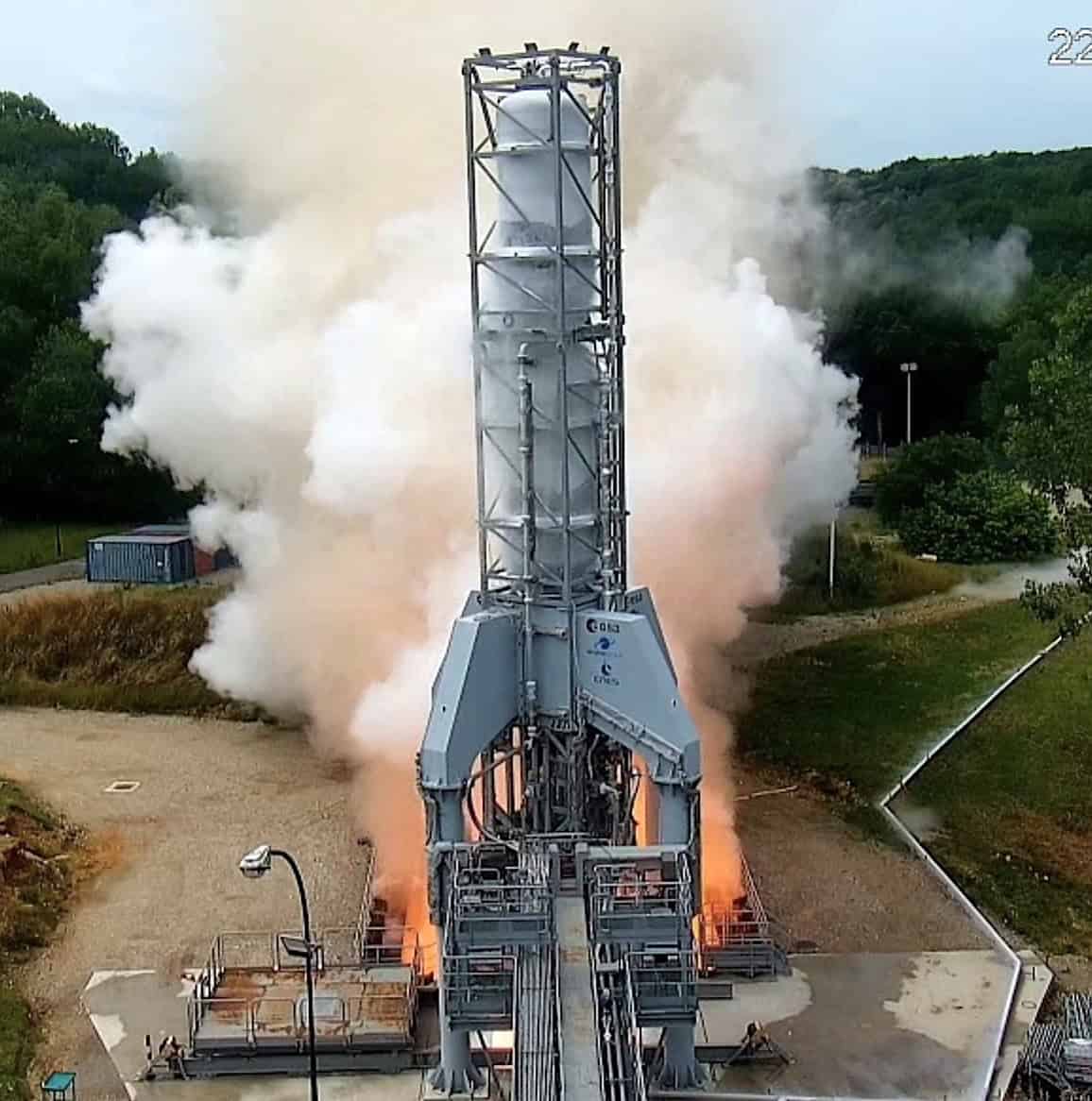
Test firing of the Themis reusable rocket stage for ArianeGroup at Esrange. Credit: SSC
Huber said engine testing is an example of regulatory confusion.
“We have hosted engine tests and there is a gray area in licensing. If it’s for R&D, you don’t need a specific license. If it’s an engine test in preparation for a launch, it falls under the spaceport license.
“Layers of licensing mean layers of compliance and regulatory tasks and as a lunch operator that adds costs. If you want to be commercially viable, please make it less costly.”
Huber said SaxaVord is an example of a commercial spaceport that is living up to its billing: It is not relying on much government funding. But government support is important in regulatory harmonization and clearing the path toward an operating license.
“Public funding is not a constraint. We have received very limited funding, about 5 million [British pounds, or $6.7 million] last year from the UK government. Do we need public funds? No. Do we want it? Possibly yes, for strategic reasons, not economic ones.”
Norway’s Andoya Spaceport is viewed as one of the more credible spaceports and was home to the failed inaugural launch of Isar Aerospace of Germany.
In early September, Andoya and Rheinmetall Nordic AS announced a letter of intent to form a strategic partnership to provide rapid-turnaround launch services for European governments from Andoya. It was a rare example of an established European industrial giant deciding to enter the space launch business.