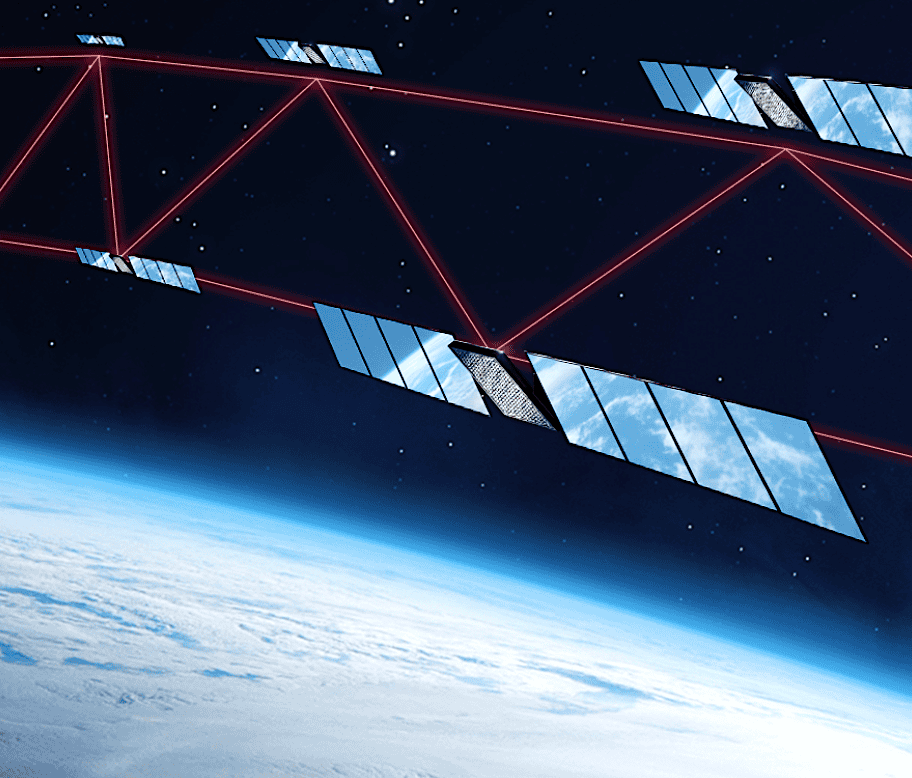
Company Overview: Project Kuiper now rebranded as Amazon Leo is Amazon’s upcoming low Earth orbit (LEO) satellite broadband network, designed to deliver fast, affordable internet service to communities and businesses around the world. The constellation will include more than 3,200 satellites operating in LEO to provide high-speed, low-latency connectivity for homes, enterprises, government agencies, aviation, and maritime customers. Backed by Amazon’s global scale and integration with AWS (Amazon Web Services), Kuiper is positioned to deliver cloud-optimized connectivity and edge services in addition to broadband access. After successfully launching prototype satellites in 2023, Amazon plans to begin deploying the operational constellation in the coming years, with commercial service expected to go online by mid-2026. Once operational, Project Kuiper will compete with SpaceX’s Starlink and OneWeb, expanding Amazon’s role in global communications.
Indonesia's PSN says it was Rocket Lab mystery customer, with 6 IoT/D2D satellites launched to equatorial LEO orbit
PSN launched six IoT/D2D satellites in equatorial LEO orbit via Rocket Lab's Electron rocket, targeting 15°N to 15°S latitude.
The Nusantara Lima satellite, built by Boeing, provides 355 Gbps capacity and began commercial operations on May 13, 2025.
PSN plans to deploy additional IoT/D2D satellites by late 2027 or 2028, with ground terminals the size of an Apple Tag.
Arianespace: 7-8 Ariane 6 missions in 2026, including 2-3 Amazon Leo launches starting in February
Arianespace plans 7-8 Ariane 6 flights in 2026, including 2-3 Amazon Leo launches using the Ariane 64 variant.
Arianespace is under contract for 18 Ariane 6 launches for Amazon Leo, with the first on February 12, 2026.
Iris2 constellation requires 10-15 Ariane 6 launches, with potential slots reserved for 2029 launches.
4 Takeaways: Quilty Space Provides a 2025 Year in Review
Golden Dome program proposed $25 billion initial funding, with a $151 billion budget over 10 years for space-enabled defense.
Starlink's V3 satellites expected to increase throughput from 100 Gbps to 1,000 Gbps, enhancing competitive capacity.
SpaceX's $17 billion spectrum deal with EchoStar highlights the value of direct-to-device service in the evolving market.
Starlink: Here's what we did in 2025, & what's up in 2026: 10x downlink/24x uplink boost; lowering orbit for solar minimum
Starlink plans to lower 4,400 satellites from 550 km to 480 km by end of 2026 to reduce collision risk.
Starlink V3 satellites, launching in 2026, aim for over 1 Tbps downlink and 200 Gbps uplink, enhancing performance significantly.
Starlink's production capacity reached 70 satellites per week in Washington and 170,000 terminals per week in Texas.
SpaceX: 148,696 Starlink collision maneuvers in 6 months ending Nov 30, continued issues with operators' slipshod reporting
Starlink performed 148,696 collision-avoidance maneuvers from June to November 2025, with 70% involving Gen 2 satellites.
SpaceX plans to lower 4,400 Starlink satellites from 550 km to 480 km in 2026 for performance and safety benefits.
Honghu-2 satellite caused 1,143 Starlink maneuvers; launched August 2023 as part of a planned large constellation.
Rocket Lab: We'll wait for Neutron rocket to prove its reusability before we start investing in our future constellation
Rocket Lab plans to assemble the Neutron rocket by March 2026, with a first launch potentially in June 2026.
Neutron is designed for 20 reuses, with a target turnaround time of three months between launches.
Rocket Lab aims for 16 launches per year with a fleet of four Neutron rockets, assuming a three-month turnaround.
News
When time is not a friend: Regulatory deadline looms for Open Cosmos Ka-band broadband constellation
Open Cosmos plans to deploy Ka-band satellites in a 1,050-km orbit for broadband connectivity.
The company aims to launch 50% of its constellation by June 10 and September 28, 2024.
Satellites feature software-defined payloads, allowing operational flexibility without needing hundreds of units.
Indonesia's PSN says it was Rocket Lab mystery customer, with 6 IoT/D2D satellites launched to equatorial LEO orbit
PSN launched six IoT/D2D satellites in equatorial LEO orbit via Rocket Lab's Electron rocket, targeting 15°N to 15°S latitude.
The Nusantara Lima satellite, built by Boeing, provides 355 Gbps capacity and began commercial operations on May 13, 2025.
PSN plans to deploy additional IoT/D2D satellites by late 2027 or 2028, with ground terminals the size of an Apple Tag.
Indonesian ISPs and satellite operators ask regulators to assure that global constellations follow the rules
Indonesia aims to develop domestic satellites and launch services by 2045, focusing on telecommunications and Earth observation capabilities.
Starlink holds a 45% market share in Indonesia's satellite connectivity, competing against GEO systems that account for 55%.
Initial talks with Russia for a spaceport on Biak Island are underway, with a government decision expected this year.
Arianespace: 7-8 Ariane 6 missions in 2026, including 2-3 Amazon Leo launches starting in February
Arianespace plans 7-8 Ariane 6 flights in 2026, including 2-3 Amazon Leo launches using the Ariane 64 variant.
Arianespace is under contract for 18 Ariane 6 launches for Amazon Leo, with the first on February 12, 2026.
Iris2 constellation requires 10-15 Ariane 6 launches, with potential slots reserved for 2029 launches.
Blue Origin: We're building a 5,408-satellite constellation in LEO and MEO orbit for corporate, government connectivity
Blue Origin plans a 5,408-satellite constellation with 5,280 in LEO and 128 in MEO for global connectivity.
TeraWave's LEO network offers data speeds of 144 Gbps using Q- and V-band links; MEO links can reach 6 Tbps.
Deployment of TeraWave satellites is expected to begin in late 2027, facing launch supply challenges until 2028.
4 Takeaways: Quilty Space Provides a 2025 Year in Review
Golden Dome program proposed $25 billion initial funding, with a $151 billion budget over 10 years for space-enabled defense.
Starlink's V3 satellites expected to increase throughput from 100 Gbps to 1,000 Gbps, enhancing competitive capacity.
SpaceX's $17 billion spectrum deal with EchoStar highlights the value of direct-to-device service in the evolving market.
Starlink: Here's what we did in 2025, & what's up in 2026: 10x downlink/24x uplink boost; lowering orbit for solar minimum
Starlink plans to lower 4,400 satellites from 550 km to 480 km by end of 2026 to reduce collision risk.
Starlink V3 satellites, launching in 2026, aim for over 1 Tbps downlink and 200 Gbps uplink, enhancing performance significantly.
Starlink's production capacity reached 70 satellites per week in Washington and 170,000 terminals per week in Texas.
SpaceX: 148,696 Starlink collision maneuvers in 6 months ending Nov 30, continued issues with operators' slipshod reporting
Starlink performed 148,696 collision-avoidance maneuvers from June to November 2025, with 70% involving Gen 2 satellites.
SpaceX plans to lower 4,400 Starlink satellites from 550 km to 480 km in 2026 for performance and safety benefits.
Honghu-2 satellite caused 1,143 Starlink maneuvers; launched August 2023 as part of a planned large constellation.
Rocket Lab: We'll wait for Neutron rocket to prove its reusability before we start investing in our future constellation
Rocket Lab plans to assemble the Neutron rocket by March 2026, with a first launch potentially in June 2026.
Neutron is designed for 20 reuses, with a target turnaround time of three months between launches.
Rocket Lab aims for 16 launches per year with a fleet of four Neutron rockets, assuming a three-month turnaround.
Eutelsat CEO on German Iris2 duplicate, GEO for Ukraine, Elon Musk as OneWeb's 'best thing,' & the future need for Falcon 9
Eutelsat's Konnect VHTS satellite provides 500 Gbps capacity in GEO at 2.7 degrees east for Ukraine's broadband needs.
Eutelsat requires 44 gateway Earth stations for OneWeb global coverage, with three stations operational by late 2026 in Senegal, Tanzania, and Marshall Islands.
Eutelsat's 10-year, billion-euro contract with the French Defense Ministry includes OneWeb capacity, influencing other European defense agencies.
Amazon Leo on how it'll work with AWS, says 2026 deployments with 'bigger, badder rockets' to assure 2026 service start
Amazon Leo plans to deploy 1,436 satellites by July 31, 2026, as part of a 2,232-satellite constellation.
Amazon Leo will utilize Ariane 64, New Glenn, and Vulcan Centaur rockets for increased launch cadence in 2026.
The network will feature 300 gateway Earth stations, primarily near AWS facilities, to reduce latency to approximately 10 milliseconds.
Future Launches/Service Articles
When time is not a friend: Regulatory deadline looms for Open Cosmos Ka-band broadband constellation
Open Cosmos plans to deploy Ka-band satellites in a 1,050-km orbit for broadband connectivity.
The company aims to launch 50% of its constellation by June 10 and September 28, 2024.
Satellites feature software-defined payloads, allowing operational flexibility without needing hundreds of units.
Indonesian ISPs and satellite operators ask regulators to assure that global constellations follow the rules
Indonesia aims to develop domestic satellites and launch services by 2045, focusing on telecommunications and Earth observation capabilities.
Starlink holds a 45% market share in Indonesia's satellite connectivity, competing against GEO systems that account for 55%.
Initial talks with Russia for a spaceport on Biak Island are underway, with a government decision expected this year.
Blue Origin: We're building a 5,408-satellite constellation in LEO and MEO orbit for corporate, government connectivity
Blue Origin plans a 5,408-satellite constellation with 5,280 in LEO and 128 in MEO for global connectivity.
TeraWave's LEO network offers data speeds of 144 Gbps using Q- and V-band links; MEO links can reach 6 Tbps.
Deployment of TeraWave satellites is expected to begin in late 2027, facing launch supply challenges until 2028.
For SpaceX, Amazon and other LEO satellite constellations, spectrum and landing rights issues remain
SpaceX's Starlink operates at 550 km altitude with 60 satellites launched on May 23, pending ITU approval.
OneWeb has launched six satellites and plans regular launches for global coverage starting late 2023.
WRC-19 in Egypt will discuss milestone-deployment requirements for LEO constellations, affecting spectrum licenses.
China's SatNet operator joins Starlink, Kuiper (maybe), Eutelsat OneWeb and Telesat to support binding space-traffic regulation
China Satellite Network Group plans to deploy Guowang constellation with over 12,000 satellites at 1,000 km altitude by 2028.
SatNet currently operates around 100 satellites and is considering a secondary architecture at 500-600 km altitude.
Eutelsat's OneWeb and Amazon's Project Kuiper have launched 129 of 3,200 planned satellites for their respective constellations.
ITU Secretary-General takes stock of space sustainability efforts - the hill just climbed, the mountain still to come
ITU's Space Sustainability Forum held its second event in Geneva on Oct. 7-8, 2024, focusing on space traffic coordination.
The UN Pact for the Future, adopted in September 2024, emphasizes satellite infrastructure and equitable access to orbit.
Requests for spectrum and orbit resources have increased 5.5 times over the past decade, highlighting growing demand.
KT Sat, Hispasat, Thaicom: Diversification, regulatory help are tools to staying viable in today's satelilte market
KT Sat plans to launch a software-defined GEO satellite in 2027, enhancing its multi-orbit service capabilities.
Hispasat offers a 200 Mbps broadband product in Spain for €35, supported by government funding for affordability.
Thaicom's geospatial intelligence revenue is projected to grow from 5% to 20% as it expands broadband services in Thailand and India.
Amazon Project Kuiper: Our problem is not satellites, it’s launch. If you had a slingshot now, we’d probably use it’
Amazon’s Project Kuiper has 102 satellites in orbit (targeting 200 by year-end) but faces major launch delays from suppliers like ULA, Arianespace, and Blue Origin, putting its July 2026 regulatory deadline at risk.
The deployed satellites are exceeding expectations with 1.8 Gbps download, 450 Mbps upload, and 100 Gbps optical inter-satellite links established within seconds.
Kuiper aims to serve as an open, interoperable “network of networks,” enabling partnerships, hosted payloads, and third-party constellation integration, positioning itself as a flexible infrastructure provider rather than a closed system.
For SpaceX, Amazon and other LEO satellite constellations, spectrum and landing rights issues remain
SpaceX's Starlink operates at 550 km altitude with 60 satellites launched on May 23, pending ITU approval.
OneWeb has launched six satellites and plans regular launches starting late 2023 for global coverage.
WRC-19 in Egypt will establish milestone-deployment requirements for LEO constellations, starting countdown in October or November.
Atlas V 551 | Project Kuiper (KA-02)
2025-06-23 10:54 UTC
Space Launch Complex 41 — Cape Canaveral SFS, FL, USA
Atlas V 551 | Project Kuiper (KA-01)
2025-04-28 23:01 UTC
Space Launch Complex 41 — Cape Canaveral SFS, FL, USA
Scheduled Launches
Ariane 64 | Amazon Leo (LE-02)
2026-06-29 20:00 America/New_York
Ariane Launch Area 4 — Guiana Space Centre, French Guiana
Ariane 64 Block 2 | Amazon Leo (LE-03)
2026-06-29 20:00 America/New_York
Ariane Launch Area 4 — Guiana Space Centre, French Guiana
Atlas V 551 | Amazon Leo (LA-07)
2026-12-30 19:00 America/New_York
Space Launch Complex 41 — Cape Canaveral SFS, FL, USA
Atlas V 551 | Amazon Leo (LA-06)
2026-12-30 19:00 America/New_York
Space Launch Complex 41 — Cape Canaveral SFS, FL, USA
New Glenn | Amazon Leo (New Glenn #1)
2026-12-30 19:00 America/New_York
Launch Complex 36A — Cape Canaveral SFS, FL, USA
Atlas V 551 | Amazon Leo (LA-08)
2026-12-30 19:00 America/New_York
Space Launch Complex 41 — Cape Canaveral SFS, FL, USA
Ariane 64 | Amazon Leo (LE-02)
2026-06-29 20:00 America/New_York
Ariane Launch Area 4 — Guiana Space Centre, French Guiana
Ariane 64 Block 2 | Amazon Leo (LE-03)
2026-06-29 20:00 America/New_York
Ariane Launch Area 4 — Guiana Space Centre, French Guiana
Atlas V 551 | Amazon Leo (LA-07)
2026-12-30 19:00 America/New_York
Space Launch Complex 41 — Cape Canaveral SFS, FL, USA
Atlas V 551 | Amazon Leo (LA-06)
2026-12-30 19:00 America/New_York
Space Launch Complex 41 — Cape Canaveral SFS, FL, USA
New Glenn | Amazon Leo (New Glenn #1)
2026-12-30 19:00 America/New_York
Launch Complex 36A — Cape Canaveral SFS, FL, USA
Atlas V 551 | Amazon Leo (LA-08)
2026-12-30 19:00 America/New_York
Space Launch Complex 41 — Cape Canaveral SFS, FL, USA
Previous Launches
Atlas V 551 | Project Kuiper (KA-02)
2025-06-23 10:54 UTC
Space Launch Complex 41 — Cape Canaveral SFS, FL, USA
Atlas V 551 | Project Kuiper (KA-01)
2025-04-28 23:01 UTC
Space Launch Complex 41 — Cape Canaveral SFS, FL, USA
Financial Sumary
Amazon Kuipers Financial Summary is not currently available