Back
Print Slick SheetDownload xlsx
Hide Overview
Hide Leadership
Hide Services
Hide Contracts
Hide News
Hide Future Launches
Hide Financial Summary
Show All
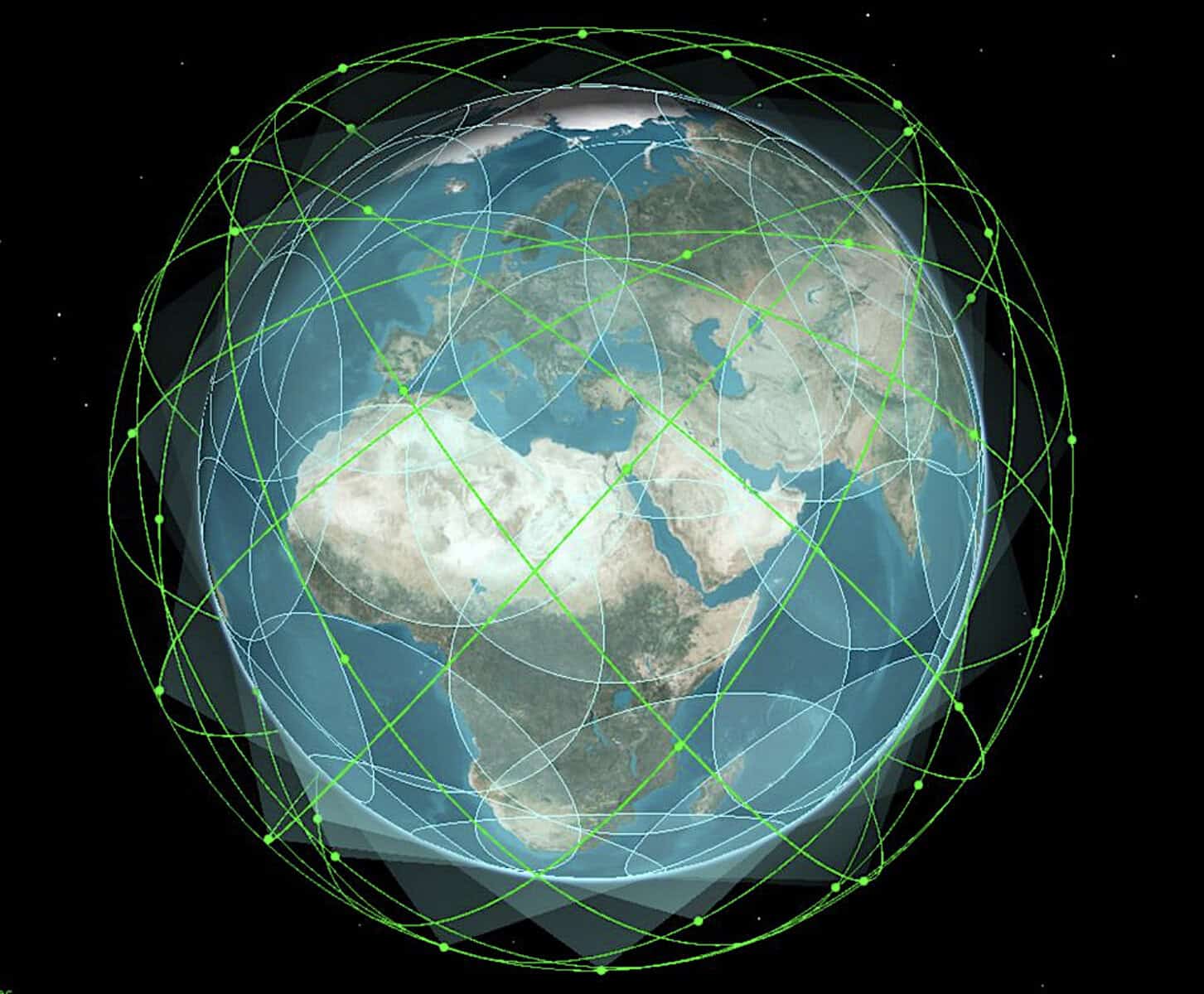
Company Overview: Iridium Communications is a U.S.-based satellite operator headquartered in McLean, Virginia, best known for its unique low Earth orbit (LEO) constellation of 66 cross-linked satellites. Unlike geostationary systems, Iridium’s network enables truly global coverage, including remote oceans, polar regions, and other hard-to-reach areas where terrestrial or GEO-based services often fall short. The company provides a wide range of services, including voice, data, push-to-talk, and IoT connectivity, with a strong emphasis on mission-critical and safety-of-life communications. Its customers span industries such as aviation, maritime, land-mobile, utilities, emergency services, and defense, with Iridium often serving as a lifeline in remote or hostile environments. The Iridium NEXT program, completed in 2019, modernized its entire satellite constellation and enabled new broadband and IoT capabilities. With its resilient architecture and focus on reliable global service, Iridium has established itself as a leader in satellite communications for critical operations where coverage and reliability are non-negotiable.

Services

  • Iridium NEXT: Iridium’s next-generation global satellite constellation, providing enhanced L-band communications with improved speed, capacity, reliability, and security to support voice, data, and IoT services worldwide, including polar coverage.
  • Iridium Certus: a high-speed, L-band satellite communications service that delivers reliable voice and broadband data connectivity worldwide — including the poles — using the Iridium NEXT constellation.
  • Global Maritime Distress & Safety System (GMDSS): an international maritime safety system that uses satellite and radio communications to ensure ships can send distress alerts and receive safety information anywhere at sea, enabling rapid emergency response and improved maritime safety.
  • Enhanced Mobile Satellite Service (EMSS): a next-generation satellite communications capability that delivers improved mobile connectivity with higher data rates, lower latency, and enhanced resilience for government, defense, and mission-critical users operating in mobile and remote environments.

Leadership

Services

Contract Articles

Globalstar outlines its planned 48-satellite constellation, part of a $1-billion investment, as it pursues US license
  • Globalstar's C-3 constellation will consist of 54 satellites, including 6 spares, operating at 1,414 km orbit.
  • Launch of 17 satellites on two SpaceX Falcon 9 rockets is scheduled by 2026.
  • Globalstar plans to deploy 90 new Earth station antennas across 25 nations for the C-3 system.

News

Globalstar outlines its planned 48-satellite constellation, part of a $1-billion investment, as it pursues US license
  • Globalstar's C-3 constellation will consist of 54 satellites, including 6 spares, operating at 1,414 km orbit.
  • Launch of 17 satellites on two SpaceX Falcon 9 rockets is scheduled by 2026.
  • Globalstar plans to deploy 90 new Earth station antennas across 25 nations for the C-3 system.
For SpaceX, Amazon and other LEO satellite constellations, spectrum and landing rights issues remain
  • SpaceX's Starlink operates at 550 km altitude with 60 satellites launched on May 23, pending ITU approval.
  • OneWeb has launched six satellites and plans regular launches for global coverage starting late 2023.
  • WRC-19 in Egypt will discuss milestone-deployment requirements for LEO constellations, affecting spectrum licenses.
Maritime connectivity providers Speedcast, Tototheo, KVH: LEO has changed the world as we know it, and we feel fine
  • Speedcast reported 50 Gbps throughput from GEO satellites and sold over 10,000 Starlink kits for maritime connectivity.
  • KVH's LEO terminals cost under $2,500, offering 200 Mbps compared to previous VSAT speeds of 20 Mbps.
  • Tototheo expanded its contract with SES for GEO high-throughput satellites while integrating LEO options for maritime customers.
Direct-to-device players AST SpaceMobile, Globalstar, Iridium & TerreStar react to SpaceX's $17-billion thunderclap
  • SpaceX acquired 50 MHz of EchoStar S-band spectrum for $17 billion, impacting direct-to-device satellite services.
  • Iridium plans to launch global NTN Direct D2D service in 2026, utilizing its existing 66-satellite LEO constellation.
  • TerreStar holds S-band spectrum covering Canada and seeks integration into a broader LEO constellation for enhanced service.
For SpaceX, Amazon and other LEO satellite constellations, spectrum and landing rights issues remain
  • SpaceX's Starlink operates at 550 km altitude with 60 satellites launched on May 23, pending ITU approval.
  • OneWeb has launched six satellites and plans regular launches starting late 2023 for global coverage.
  • WRC-19 in Egypt will establish milestone-deployment requirements for LEO constellations, starting countdown in October or November.
Viasat: Viasat-3 F2 satellite launch slips to late this year, co's US fixed broadband business badly needs it; a maritime turnaround?
  • Viasat-3 F2 satellite, with 1 Tbps capacity, scheduled for launch in late 2025 aboard an Atlas 5 rocket.
  • Viasat plans to spend $250 million on Viasat-3 program in FY 2026, ending March 31, 2026.
  • NexusWave combines GEO and LEO capacity, with 1,000 ships under contract as of July 1, 2025.
Telesat: Our GEO satellite backlog, on the way down, is now surpassed by Lightspeed LEO, 2+ years from commercial launch
  • Telesat's Lightspeed LEO constellation will operate at 1,300 km altitude, targeting government and industry broadband services.
  • Telesat's GEO backlog is nearly 1 billion CAD, while Lightspeed's backlog is slightly over 1 billion CAD as of June 30.
  • Commercial service for Lightspeed is expected to begin in late 2027, with initial contracts showing strong early interest.
Space Development Agency Award Continues Iridium's Commercial Innovation Delivery Strategy for Government
  • This is a bullet point that will be used to describe the article
  • This is a bullet point that will be used to describe the article
  • This is a bullet point that will be used to describe the article

Future Launches/Service Articles

No Launch Articles are currently available.

Scheduled Launches

No Launches are currently scheduled

Previous Launches

No Previous Launches Found

Financial Sumary

Financial Summary

Iridium Communications Inc (IRDM) 2024-12-31
T
Total Sales Revenue
830,682,000 (🟢+39,959,000)
Gross Profit Margin
72.24% (🟢+0.71 pp)
Operating Margin
24.12% (🟢+13.80 pp)
Net Profit Margin
13.58% (🟢+11.63 pp)
Earnings Per Share (EPS)
1.02 (🟢+0.90)
Price-to-Earnings Ratio (P/E)
21.30 (🟢-152.09)
Debt-to-Equity Ratio
3.11 (🔴+1.44)
Current Ratio
1.73 (🔴-0.33)
Free Cash Flow (FCE)
306,065,000 (🟢+64,639,000)
Return on Equity (ROE)
19.56% (🟢+17.82 pp)

Previous Financial Summary

Iridium Communications Inc (IRDM) 2024-12-31
T
Total Sales Revenue
830,682,000
Gross Profit Margin
72.24%
Operating Margin
24.12%
Net Profit Margin
13.58%
Earnings Per Share (EPS)
1.02
Price-to-Earnings Ratio (P/E)
21.42
Debt-to-Equity Ratio
3.11
Current Ratio
1.73
Free Cash Flow (FCE)
306,065,000
Return on Equity (ROE)
19.56%
Iridium Communications Inc (IRDM) 2024-12-31
830,682,000
72.24%
24.12%
13.58%
1.02
21.42
3.11
1.73
306,065,000
19.56%
Iridium Communications Inc (IRDM) 2023-12-31
790,723,000
71.53%
10.32%
1.95%
0.13
174.31
1.67
2.06
241,426,000
1.74%
Iridium Communications Inc (IRDM) 2022-12-31
721,034,000
72.10%
10.63%
1.21%
0.07
315.91
1.32
2.16
273,462,000
0.77%
Iridium Communications Inc (IRDM) 2021-12-31
614,500,000
75.53%
7.54%
-1.52%
-0.07
-308.45
1.24
3.90
260,727,000
-0.72%